
- Need Help?
 Virtual Appointment
- Book Appointment
- 0
 Your shopping cart is empty
Login to view previously saved items or track a recent order.
Login to view previously saved items or track a recent order.
 Back
Back09/04/2026
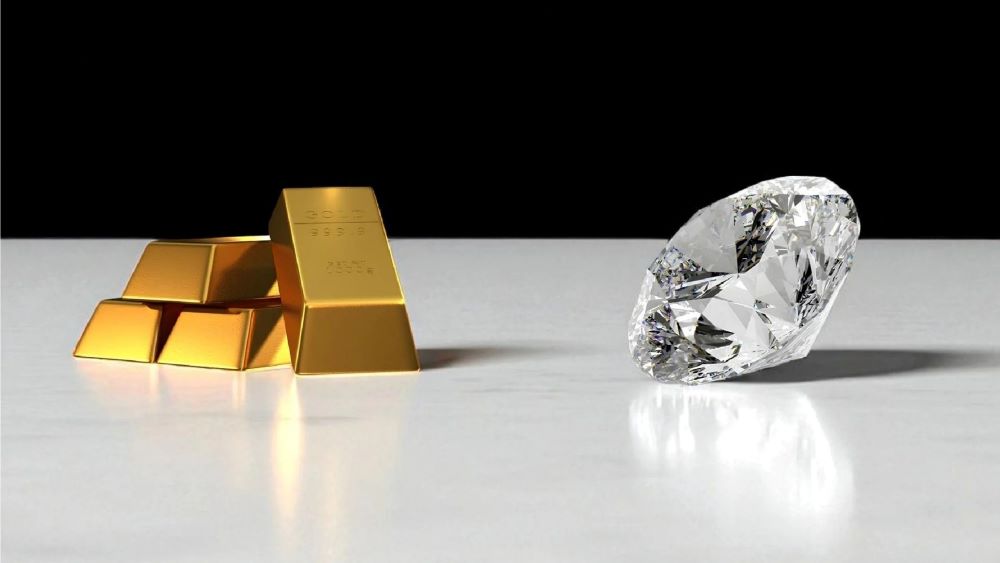
Carat and karat sound almost identical, and it is easy to see why so many people mix them up. But they describe two completely different things about a piece of jewellery. One tells you how much a diamond weighs. The other tells you how pure the gold is. Once you know the difference, reading a jewellery spec sheet becomes simple.
Carat (ct) is a unit of weight used for diamonds and gemstones. It has nothing to do with size or shape on its own; it simply tells you how much the stone weighs. A 1 ct diamond weighs more than a 0.50 ct diamond, and generally appears larger, though the exact visual size also depends on the diamond shape and cut.
This is one of the most searched questions in fine jewellery: does a higher carat diamond mean a better diamond? Not automatically. Carat is only one part of the picture. Cut, colour and clarity all play a major role in how a diamond actually looks and performs on the hand. A smaller, beautifully cut diamond can easily outshine a larger stone with a poor cut. You can read our full breakdown of how carat weight affects diamond value for a deeper look at how the four factors work together.
Karat (K) measures the purity of gold; specifically, how much pure gold is present in an alloy. Pure gold is 24 karat, so anything below that has been mixed with other metals such as silver, copper, zinc or palladium to make it stronger and more wearable.
A quick reference:
Higher karat gold is not automatically the better choice for every piece. Purer gold is also softer, which is why 14 karat and 18 karat gold each suit different lifestyles and different pieces of jewellery. We cover this in detail in our guide to 14K vs 18K gold, including which one holds up better to daily wear.
The easiest way to remember the difference:
So when you see a listing for a 1 ct diamond in 18K gold, you now know exactly what both numbers are telling you: the weight of the stone, and the purity of the setting around it. Neither number on its own tells you whether a piece is right for you; together with cut, colour, clarity and how a metal wears over time, they give you the full picture. Our guide to comparing loose diamonds is a good next step if you are choosing a centre stone.
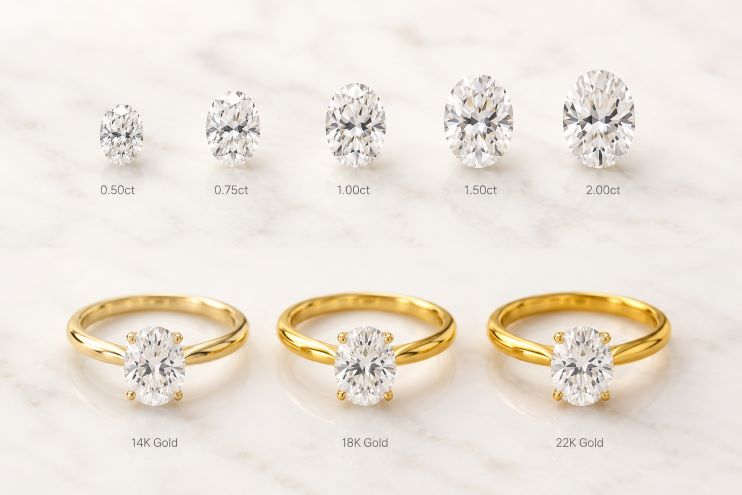
Many buyers assume bigger and higher numbers always mean better quality. It is one of the most common jewellery buying mistakes, and one worth avoiding before you commit to a design. Quality always comes down to balance; between the four Cs on the diamond side, and between purity and durability on the gold side. Our guide to diamond buying mistakes goes further into how to shop with confidence.
No. Carat only measures weight. Cut, colour and clarity have just as much influence on how a diamond looks and performs, so a well cut smaller diamond can outshine a larger one.
Not necessarily. Higher karat gold is purer but softer, while lower karat gold is more durable for everyday wear. The right choice depends on the piece and your lifestyle.
Yes. A ring is typically described using both; for example, a 1 ct diamond set in 18K gold. Carat refers to the stone, karat refers to the metal.
Total carat weight (t.c.w.) refers to the combined weight of every diamond or gemstone in a piece, used when more than one stone is set, such as in a pave band or a pair of earrings.
Jewellery becomes much easier to understand once you know what the numbers actually mean; carat for weight, karat for purity, and everything else built around your own taste. If you are ready to put those numbers into a ring made entirely for you, book a complimentary appointment with our Hatton Garden team and start designing today.