
- Need Help?
 Virtual Appointment
- Book Appointment
- 0
 Your shopping cart is empty
Login to view previously saved items or track a recent order.
Login to view previously saved items or track a recent order.
 Back
Back06/12/2026
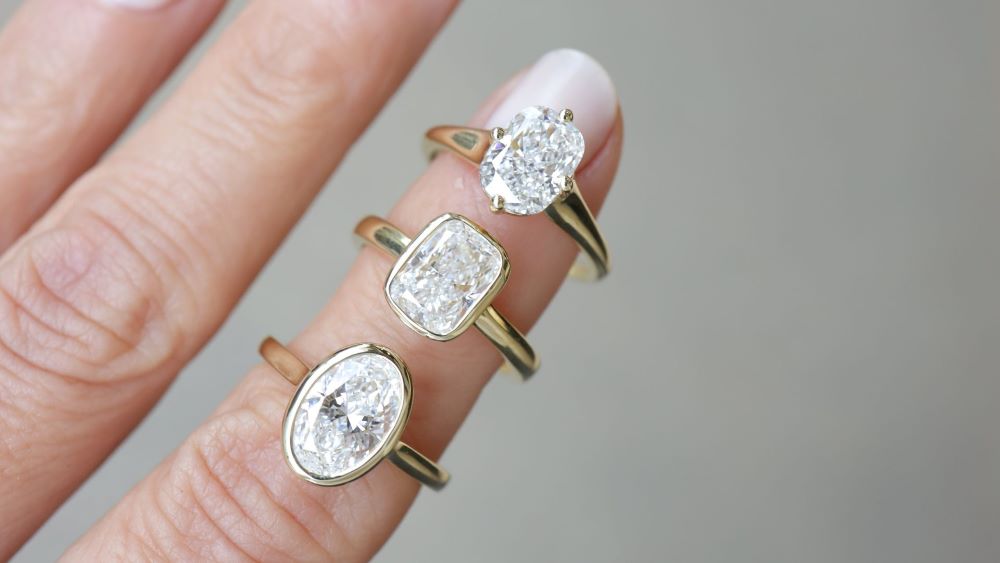
There is no single best engagement ring setting; but there is a best one for you.
The setting is the architecture of your ring: it determines how your diamond sits, how much it sparkles, how practical it is to wear every day, and how it looks on your hand. Get it right, and it elevates everything. Get it wrong, and even a beautiful stone can feel like it is working against you.
This guide covers every major setting style: what it is, who it suits, and what to consider before you commit.
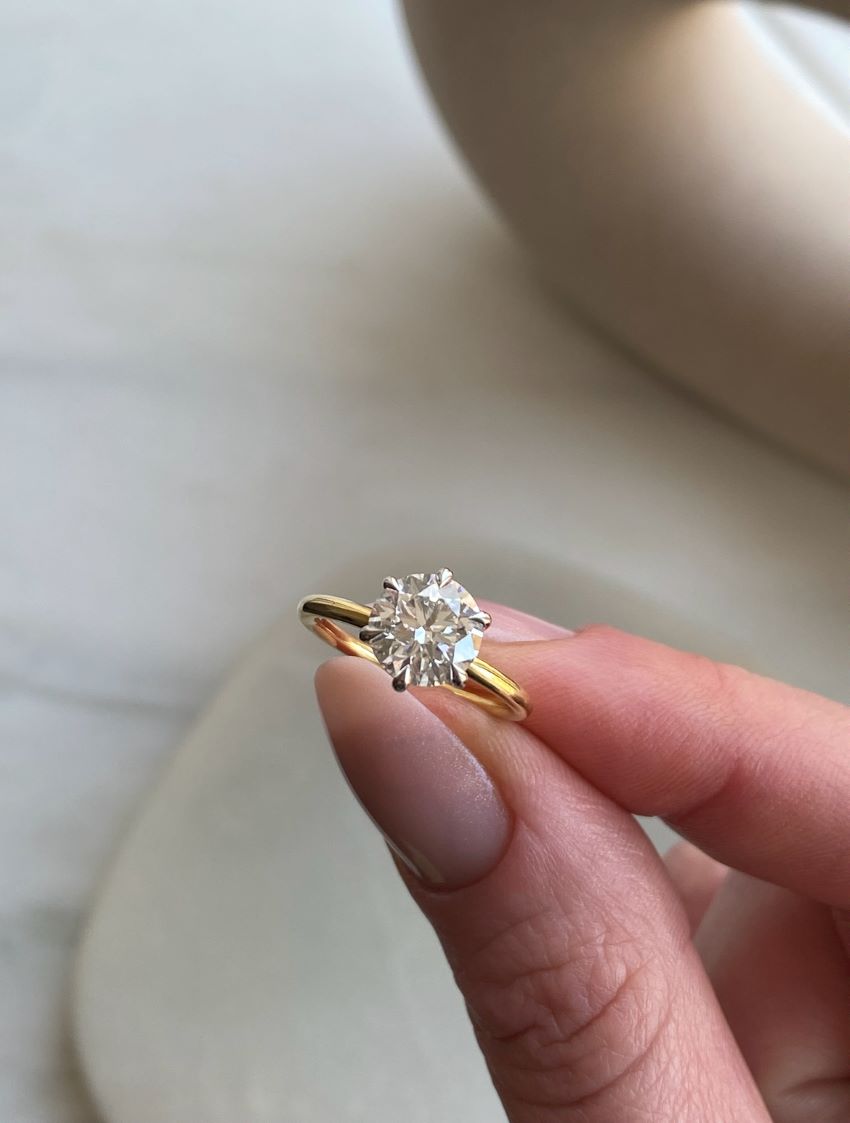
The prong setting is the most iconic in fine jewellery. Metal claws, either four or six, grip the stone from below, lifting it above the band and allowing light to flood in from every angle. The result is maximum brilliance and that instantly recognisable elevated silhouette.
Four prongs give the diamond a cleaner, more geometric appearance and let more of the stone be seen. Six prongs add a slightly more traditional, rounded look and provide a little extra security, which some prefer for larger or more valuable stones.
Best for: anyone who wants a timeless, classic ring where the diamond does all the talking. Works beautifully across every diamond shape, though round brilliants and ovals are particularly well suited. For a deeper look at how prong count affects a ring’s appearance, see our guide to Four Prongs vs Six Prongs. For pairing and styling ideas, our How to Pair Your Round Solitaire Engagement Ring guide is worth a read.
Worth knowing: the exposed stone requires periodic checks to ensure the prongs haven’t worn or loosened. A small price for a setting this beautiful.
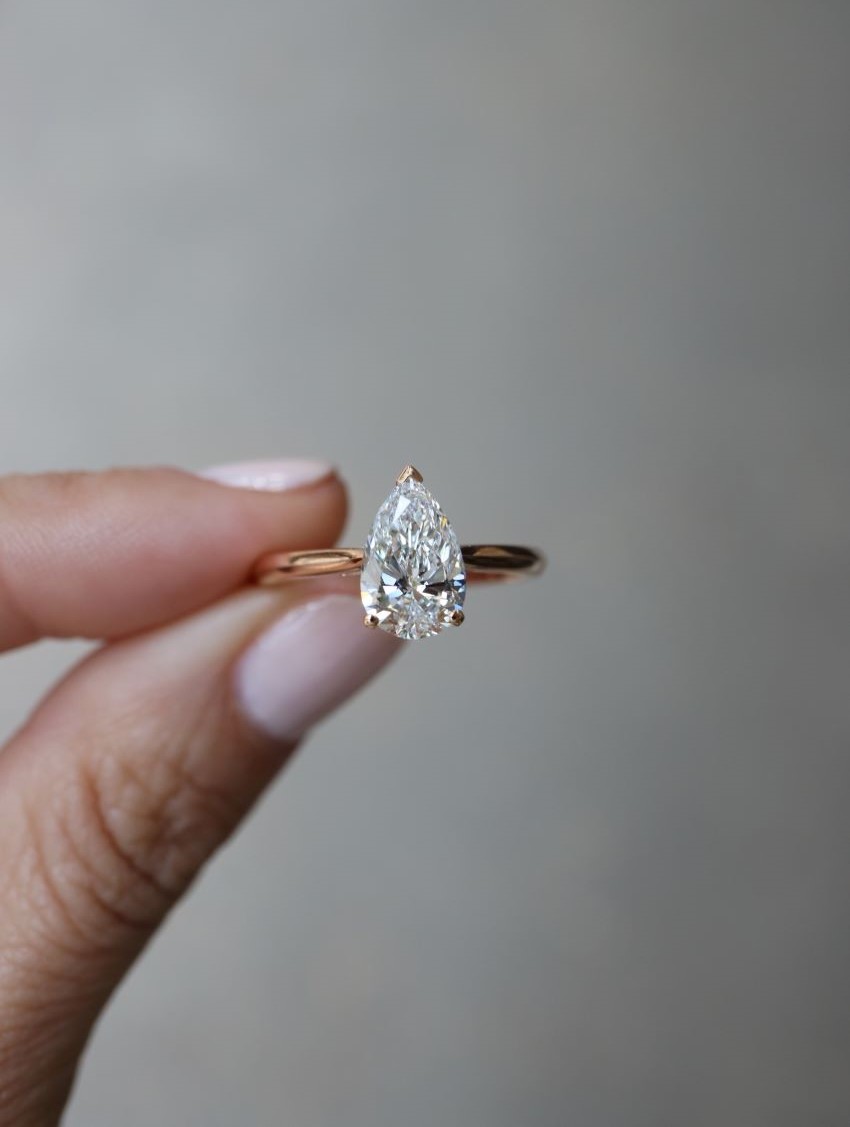
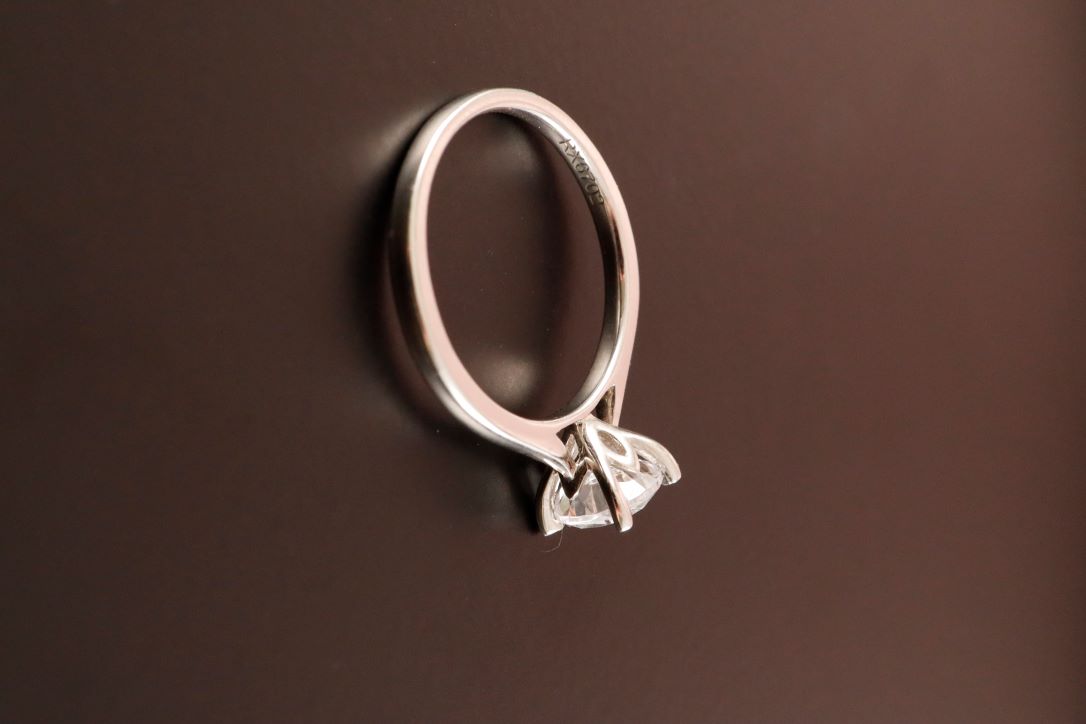
In a cathedral setting, the band arches upward on either side of the centre stone, forming sweeping curves that echo the soaring lines of a cathedral window. The stone sits elevated above the band, making it the undisputed focal point of the ring, while the arched shoulders add graceful structure beneath it.
Best for: those who want height and presence. The cathedral silhouette flatters longer fingers and makes round, oval, and princess cut diamonds look particularly regal. It pairs well with both plain and pavé-set shoulders.
Worth knowing: the raised profile can catch on fabric or hair more than a lower-set design. For a full comparison of profile heights, our High Setting vs Low Setting guide covers everything you need to know.
A continuous rim of metal wraps around the girdle of the stone, holding it flush and secure within the band. Clean, architectural, and understated, the bezel is the modern minimalist’s setting of choice.
Best for: active lifestyles, those who work with their hands, or anyone who prefers a sleek, contemporary aesthetic with minimal maintenance. Also a particularly flattering choice for oval and round diamonds. For more on why oval cuts are so wearable, see our guide to Oval Cut Diamond Rings.
Worth knowing: the metal surround limits light entry slightly compared to a prong setting, and can make the stone appear marginally smaller. The trade-off is a ring that is exceptionally secure and virtually maintenance-free. For care tips, see our guide on How to Clean Diamond Jewellery.
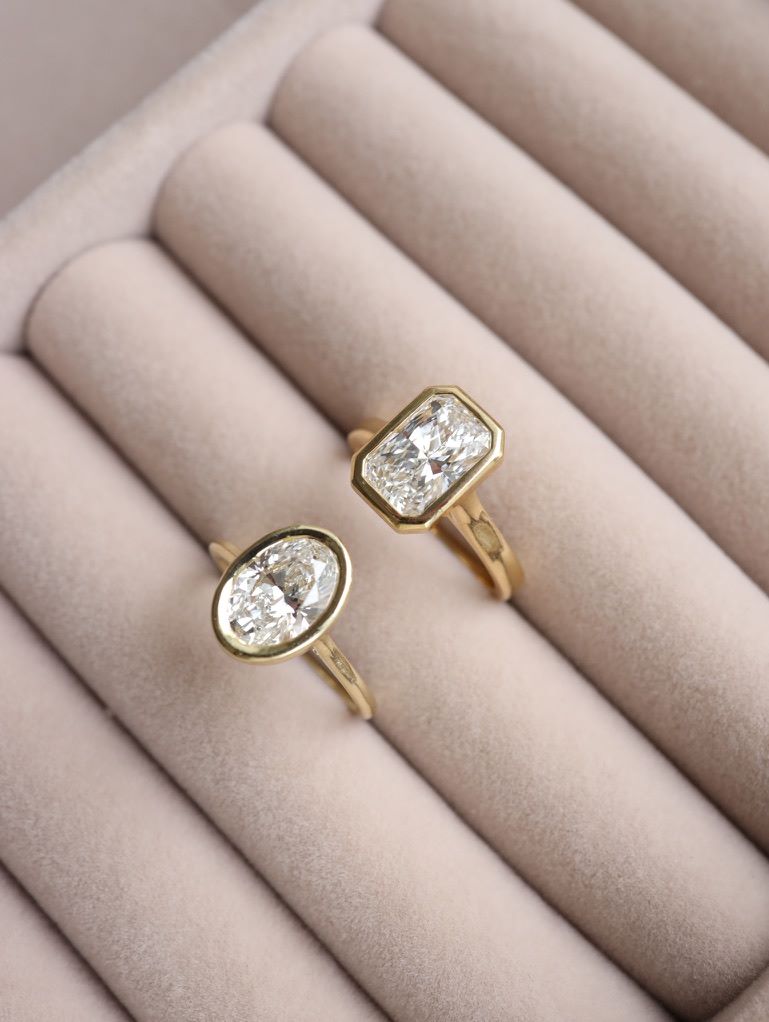
A frame of smaller diamonds encircles the centre stone, extending its apparent size and creating a ring that commands attention. The halo is one of the most popular engagement ring styles in the UK for good reason: it delivers considerable visual impact and makes a smaller centre stone look significantly larger.
Best for: those who want drama, brilliance, and presence. Particularly effective with round, oval, and cushion cut centres. See our full guide to Halo Engagement Rings, or if you’re deciding between one halo and two, our Single Halo vs Double Halo guide breaks down both options clearly.
Worth knowing: the additional diamonds add some cost, and the setting requires a little more care when cleaning. Our guide on How to Clean Diamond Jewellery covers everything you need to keep it looking its best.
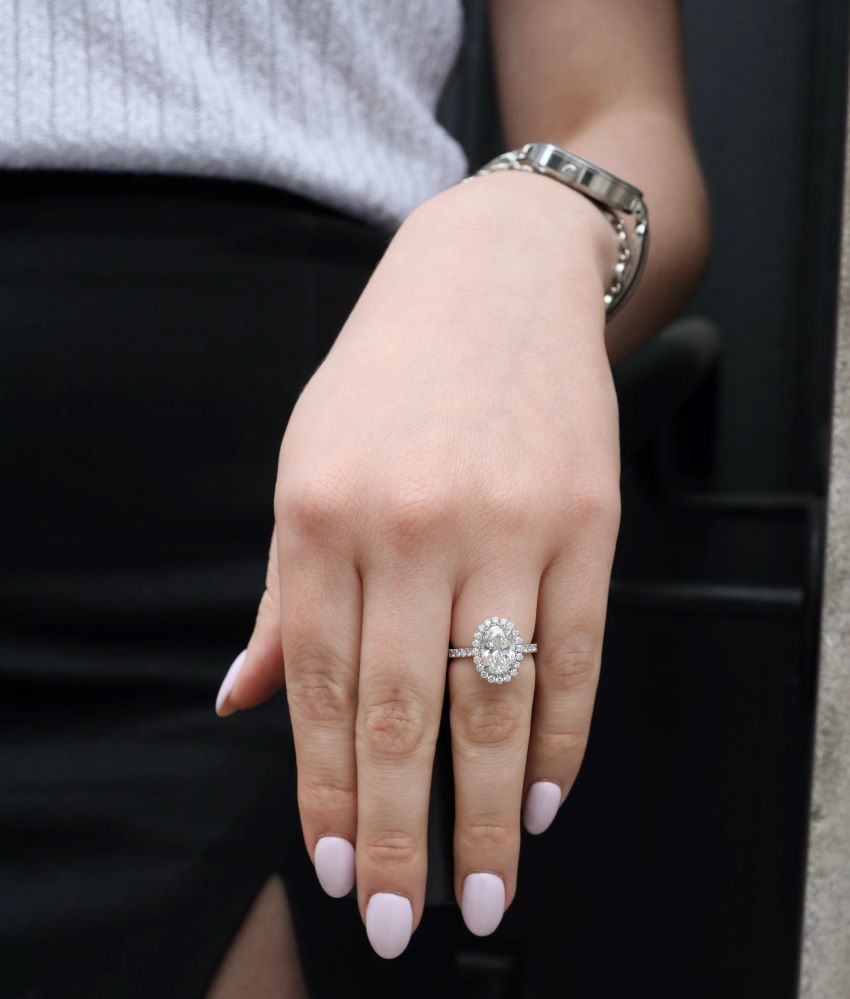
The hidden halo takes the brilliance of a traditional halo and tucks it beneath the centre stone, where it sits invisibly from above but catches the light from the side and below. The result is a ring that appears to be a clean solitaire at first glance, with a secret layer of sparkle that reveals itself in motion.
Best for: those who love the idea of extra brilliance but prefer the streamlined look of a solitaire from above. For a comprehensive look at the style, see our Hidden Halo Rings guide.
Worth knowing: the concealed diamonds require careful cleaning to prevent product build-up in the recessed setting. Our guide on How to Clean Diamond Jewellery covers everything.
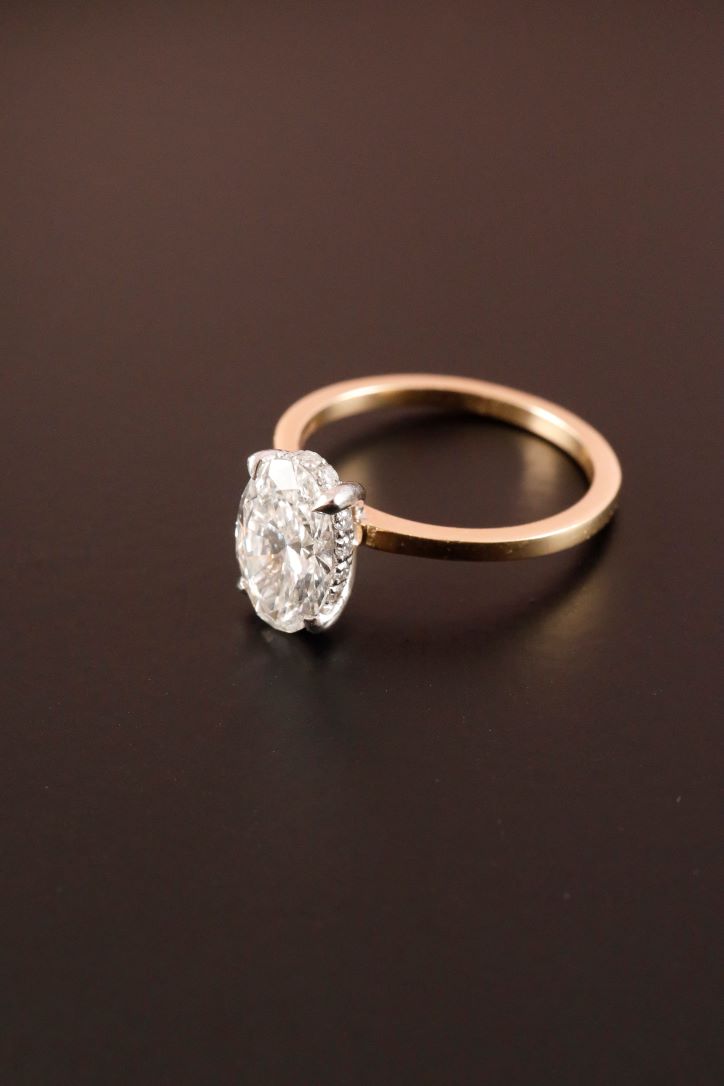
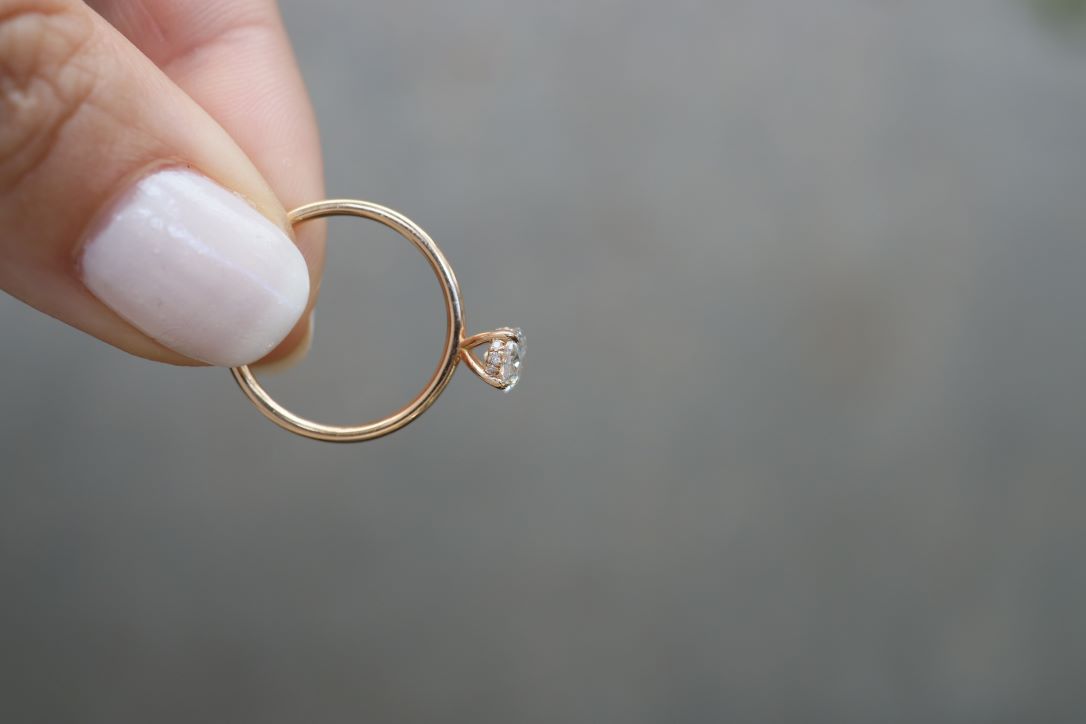
Three stones, one ring. The trilogy setting places a centre diamond flanked by two matching side stones, traditionally symbolising the past, present, and future of a relationship. The result is a ring with real presence: bold, balanced, and full of meaning.
Best for: those who want a statement ring with symbolic depth. For everything you need to know, see our guide to Trilogy Engagement Rings, our edit of The 7 Most Stunning Trilogy Engagement Rings, and How to Pair Your Trilogy Engagement Ring.
Worth knowing: the two additional stones add cost relative to a single-stone ring of similar quality. The setting also tends to wear wider on the finger, which is worth considering alongside your personal style.
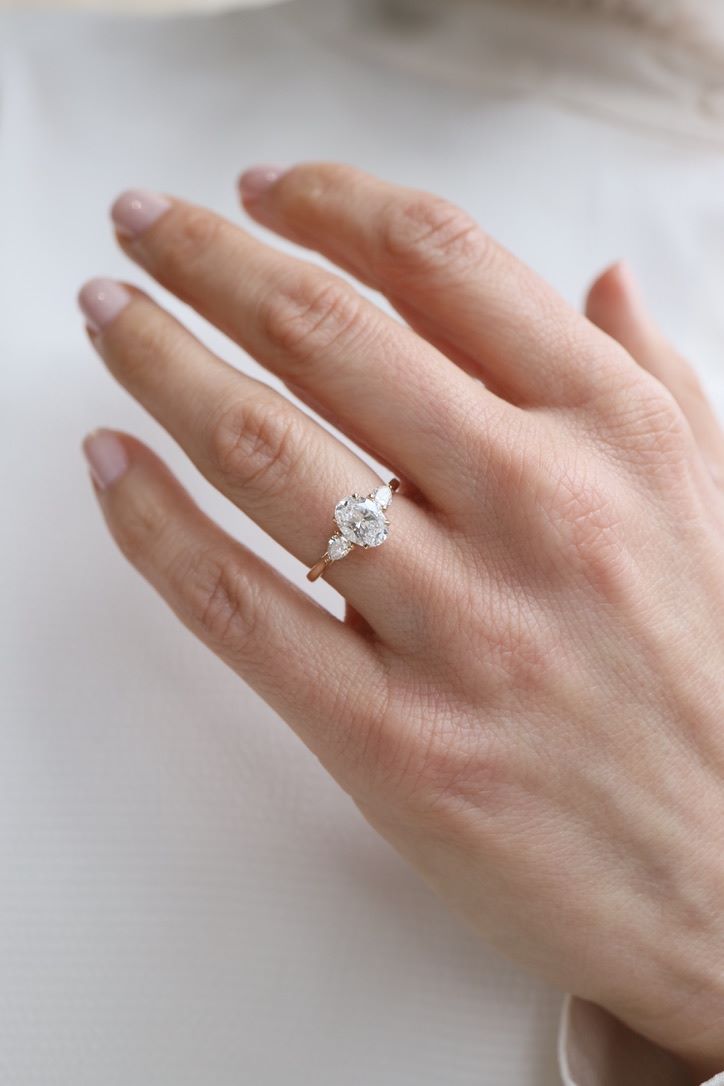
French for “you and me,” the Toi et Moi places two stones side by side on a single band, each as important as the other. It is one of the oldest and most romantic ring styles in jewellery history, with roots stretching back to Napoleon’s proposal to Joséphine, and it has never been more relevant than it is today.
Best for: those who want something distinctive, fashion-forward, and deeply personal. The two stones can be the same shape and size, or deliberately contrasting, such as a diamond paired with a coloured gemstone. For styling inspiration, see our How to Pair Your Toi et Moi Engagement Ring guide.
Worth knowing: because the two stones sit side by side rather than being anchored at a single central point, the ring tends to rotate on the finger slightly more than a traditional solitaire. Many wearers find this adds to its character.
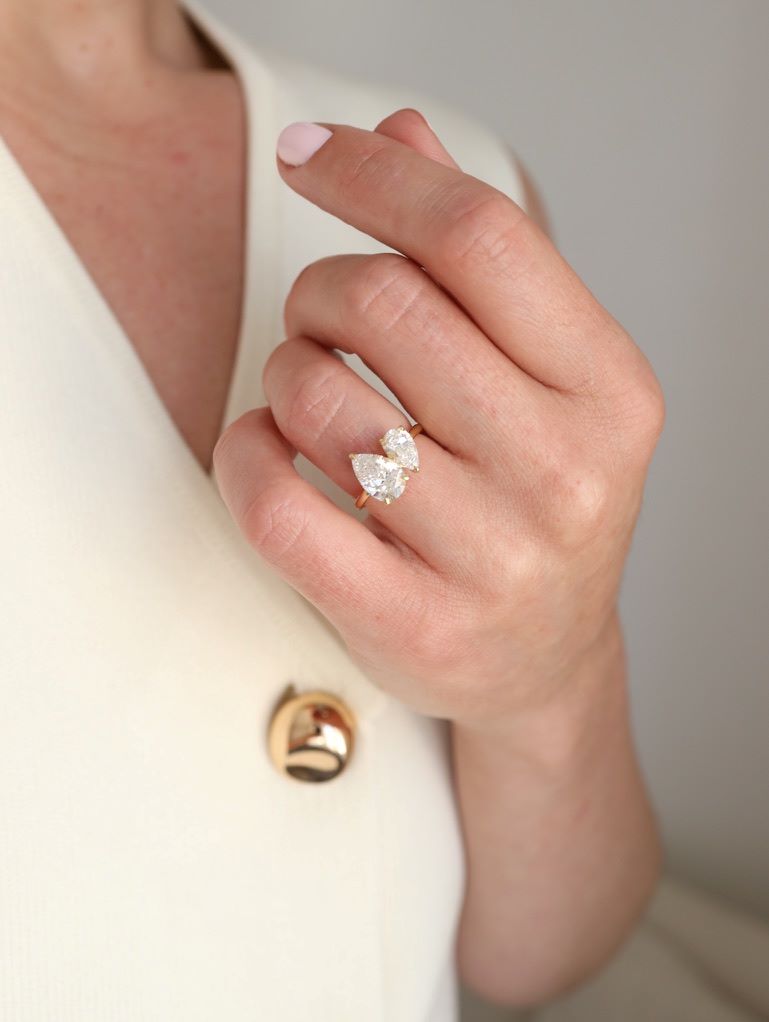
An East West setting rotates the centre stone 90 degrees, so it sits horizontally across the finger rather than pointing up toward the nail. It is a small shift with a significant visual effect: the ring feels contemporary, architectural, and quietly confident.
Best for: those who want a modern, editorial aesthetic. Elongated shapes, particularly ovals, emerald cuts, and marquises, work especially well. For everything you need to know, see our guide All About East West Settings, and for styling and pairing ideas, How to Pair Your East West Engagement Ring.
Worth knowing: an East West stone tends to sit closer to the finger than a traditionally oriented stone, which can actually make it feel more comfortable day to day. It is also less likely to catch on clothing or hair.
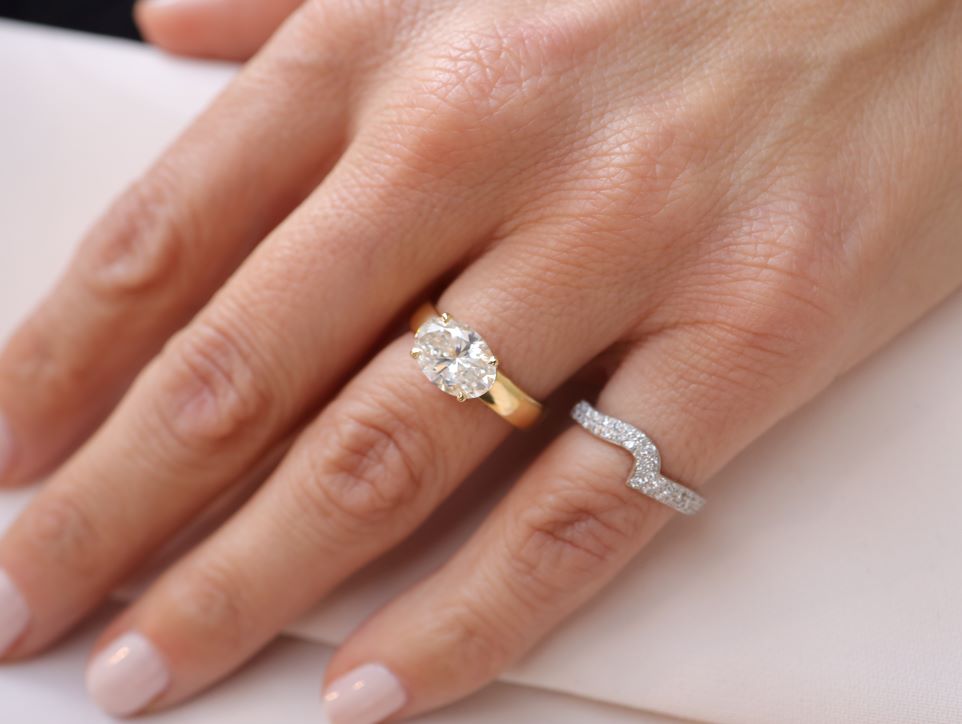
The Trifolium is a three-stone setting in which a round centre diamond is flanked by two smaller round diamonds, with the trio arranged to create a delicate clover-like silhouette. The name derives from the three-leaf clover, and the design carries that same sense of organic symmetry.
Best for: those who love the warmth of a multi-stone ring but prefer a softer, more romantic aesthetic than the linear drama of a traditional trilogy. The rounded arrangement of the stones creates a gentler, more intimate feel.
Worth knowing: the Trifolium is a distinctively styled setting and works best with round brilliant stones to honour the clover silhouette. It is a conversation piece as much as a ring.
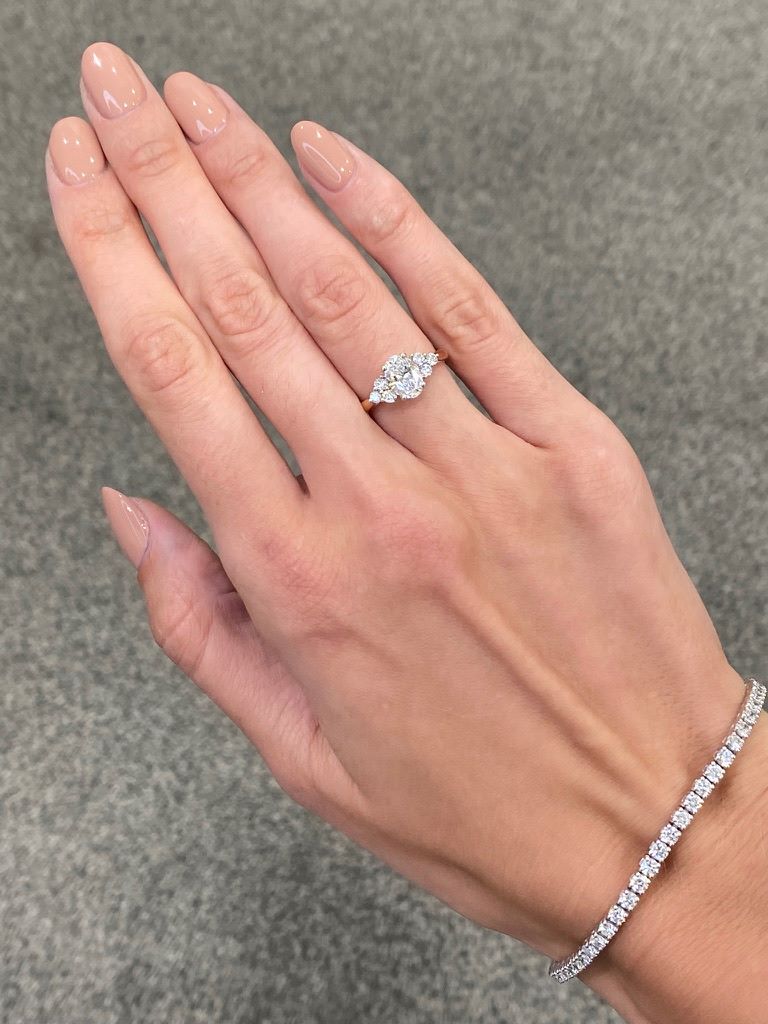
Vintage settings draw on the craftsmanship and aesthetic of earlier eras, particularly the Art Deco, Edwardian, and Victorian periods. They are characterised by intricate milgrain detailing, filigree metalwork, engraved shoulders, and ornate galleries beneath the stone. The result is a ring that feels inherited rather than simply bought.
Best for: those who love jewellery with depth, detail, and a sense of history. For a full exploration of the style, see our guide to The Timeless Charm of Vintage Engagement Rings.
Worth knowing: the level of hand-finishing on a true vintage-inspired setting takes considerably more craft time than a contemporary design, which is reflected in the making cost. The result is a ring of genuine individuality that no two people will wear in exactly the same way.
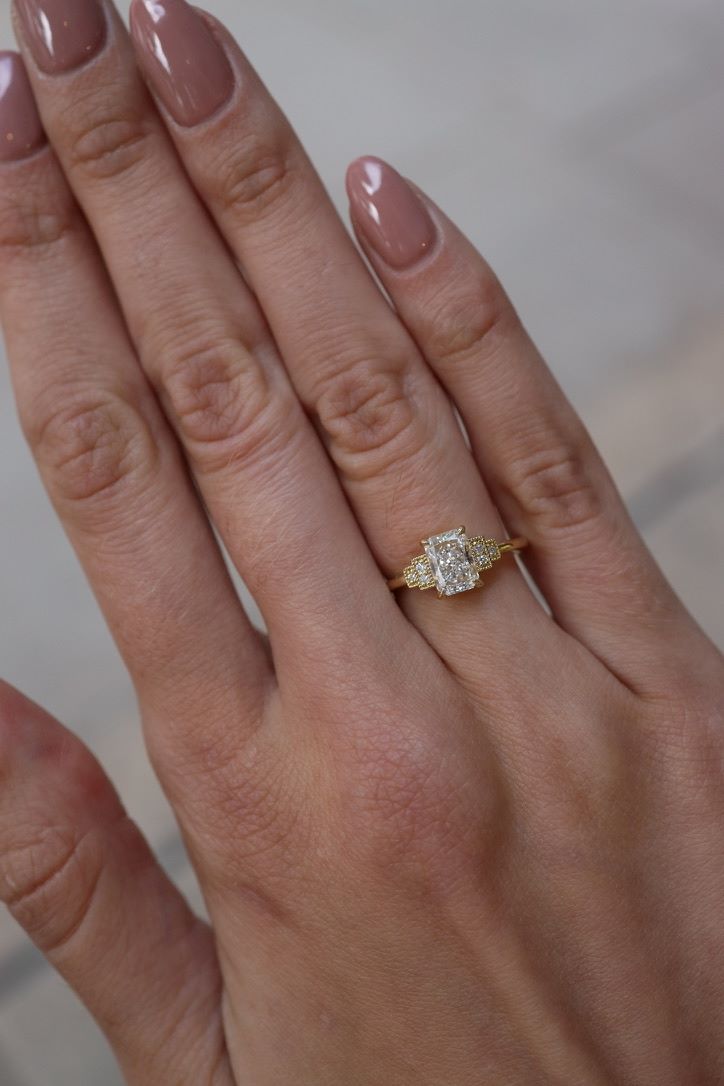
A diamond band centres the ring’s brilliance not on a single elevated stone but along the band itself, set with diamonds either continuously or as a prominent feature. The style is simultaneously understated and dazzling, making it one of the most versatile engagement ring choices available. Diamond bands appear in several distinct forms:
Microset: tiny diamonds are set so closely and precisely that the metal between them almost disappears, creating a continuous river of light along the band.
Channel set: stones sit within a smooth groove between two parallel walls of metal, producing a refined, flush surface with no protruding prongs.
Milgrain: a row of tiny metal beads lines the edges of the setting, adding a vintage-influenced texture that elevates a simple band into something more intricate.
Shared claw: a single prong sits between adjacent diamonds, shared by both, creating an open, light-filled setting that maximises the brilliance of each stone.
Grainset: small grains of metal are raised from the surface of the band and pushed over the girdle of each stone, securing them with a technique that has been used by master setters for centuries.
Best for: those who want sparkle without the height of a traditional solitaire, or who prefer a more modern, architectural ring profile. Diamond bands also make exceptional stacking companions. For inspiration on how they sit alongside a wedding band, see The Ultimate Guide to Choosing Your Wedding Band. For a deeper look at shoulder styles, our Guide to Different Diamond Shoulders is also worth reading.
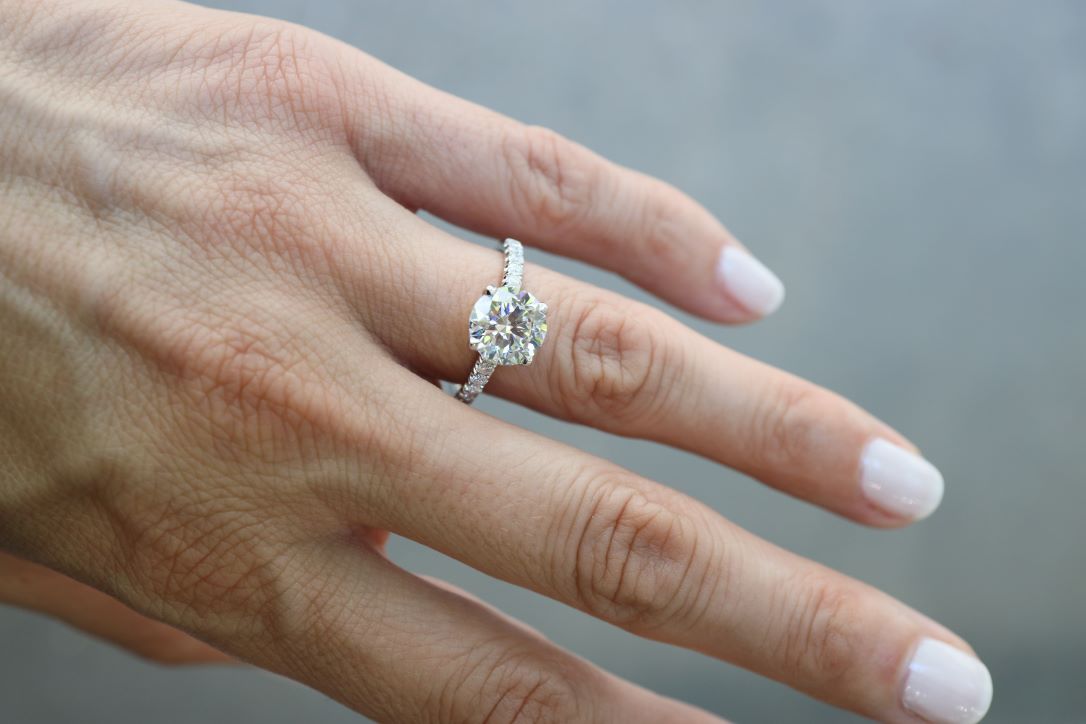
Microset
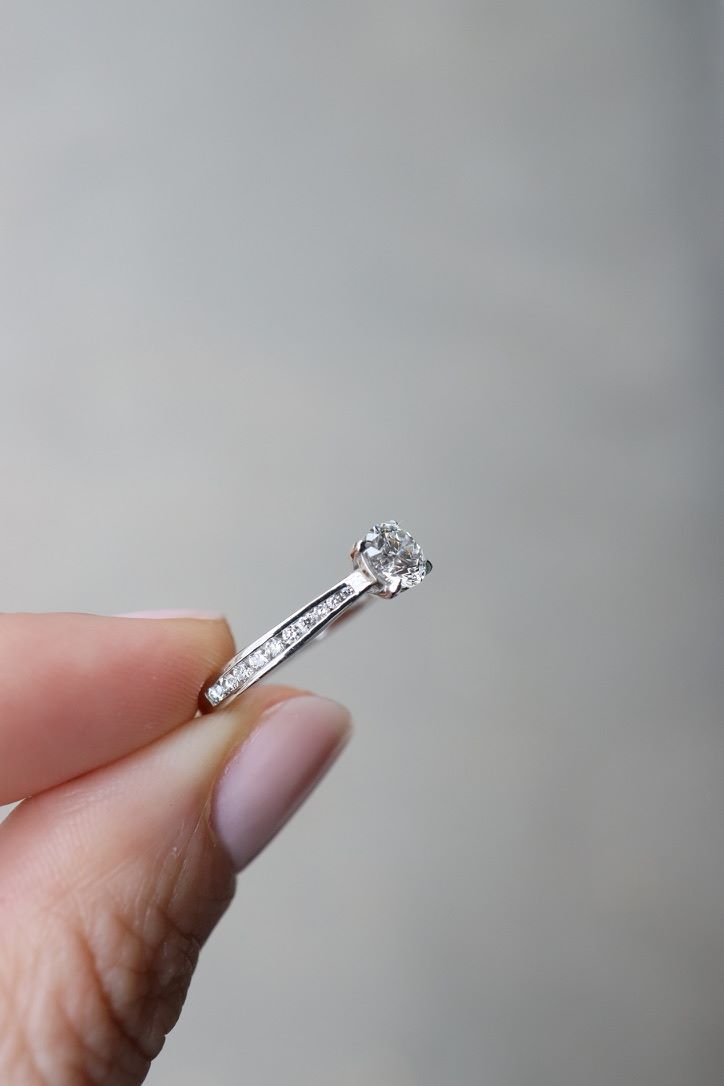
Channel Set
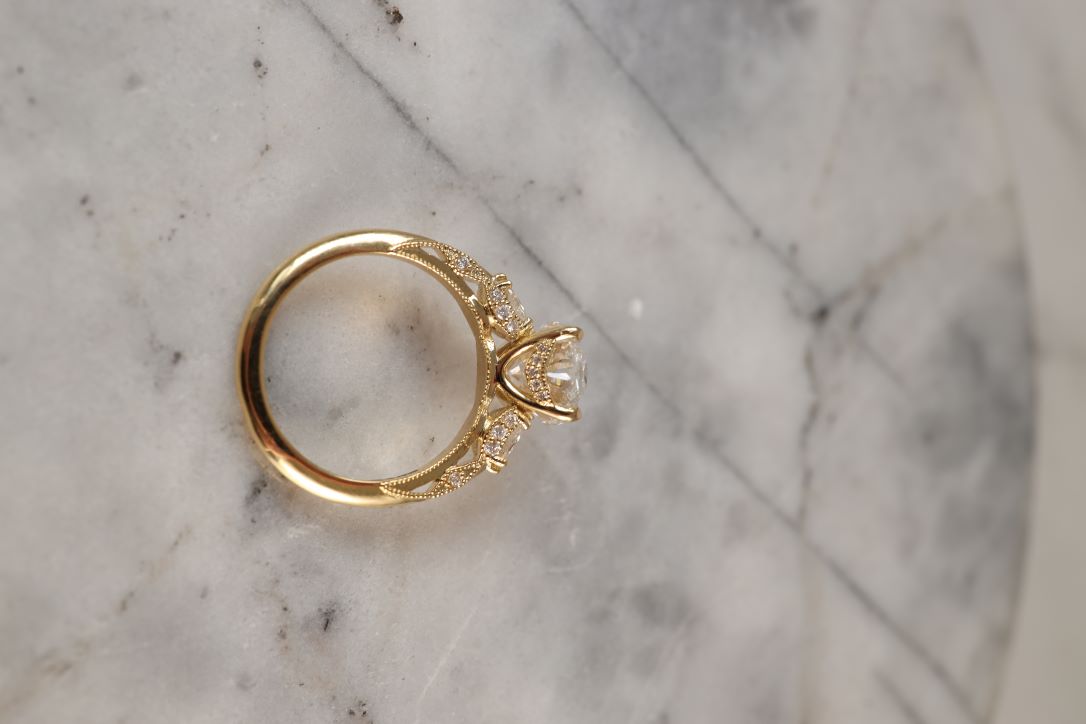
Milgrain
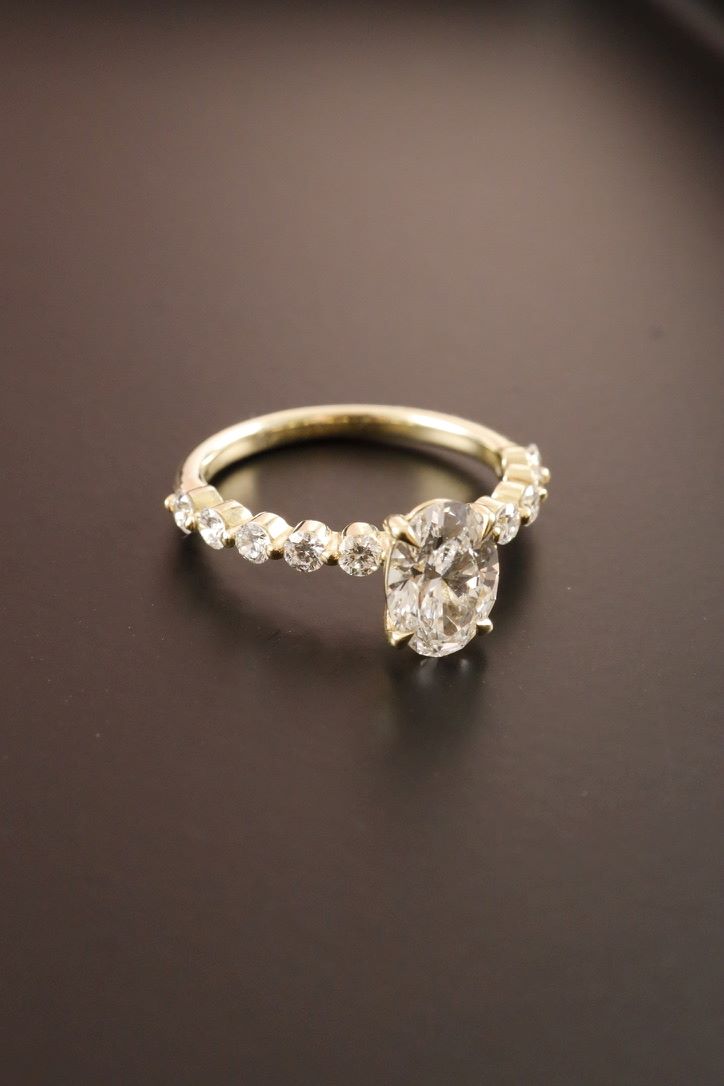
Shared Claw
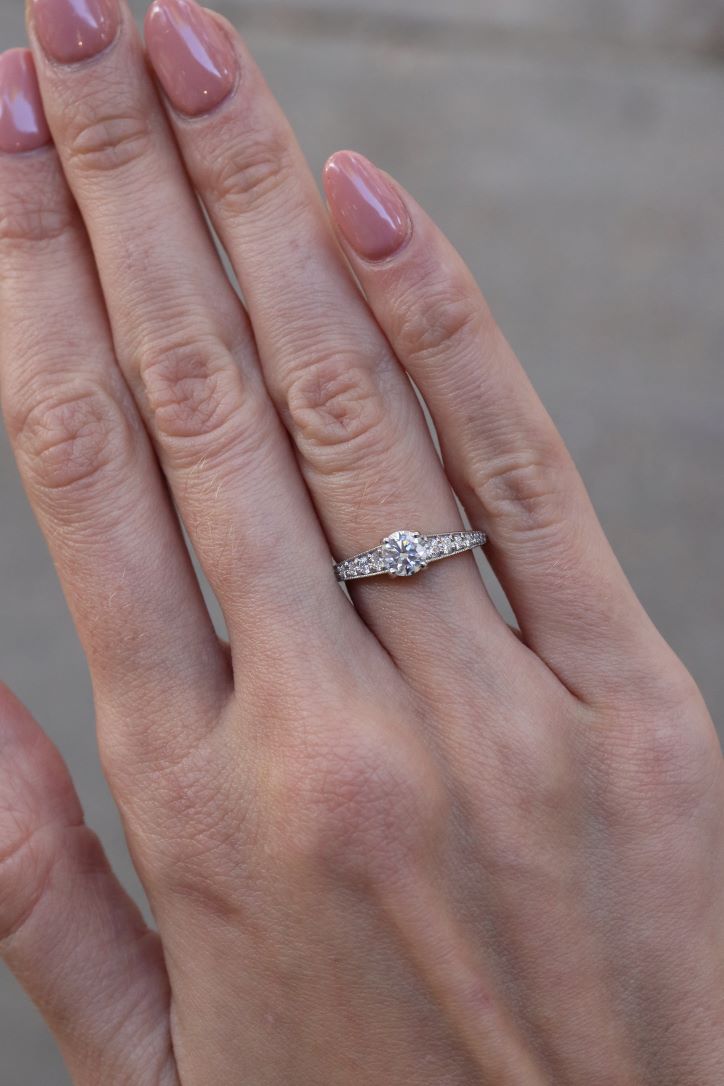
Grainset
The Ivi is a distinctive Harmony Jewels setting defined by two round centre stones sitting side by side, supported by a pair of marquise-cut diamonds on either shoulder. The combination creates a ring with inherent movement and contrast: the soft circles of the round stones are framed and elongated by the pointed arcs of the marquises, giving the ring a look that is both structured and fluid.
Best for: those who want a ring with genuine individuality. The Ivi suits wearers who gravitate toward jewellery that rewards a second look. The marquise shoulders add length to the finger in a way that few other side stones can. For marquise styling inspiration, see our guide How to Pair Your Marquise Cut Engagement Ring.
Worth knowing: as a signature Harmony Jewels design, the Ivi is made entirely to order at our Hatton Garden studio. Every detail, from metal choice to the exact proportions of the stones, is decided with you during your consultation.
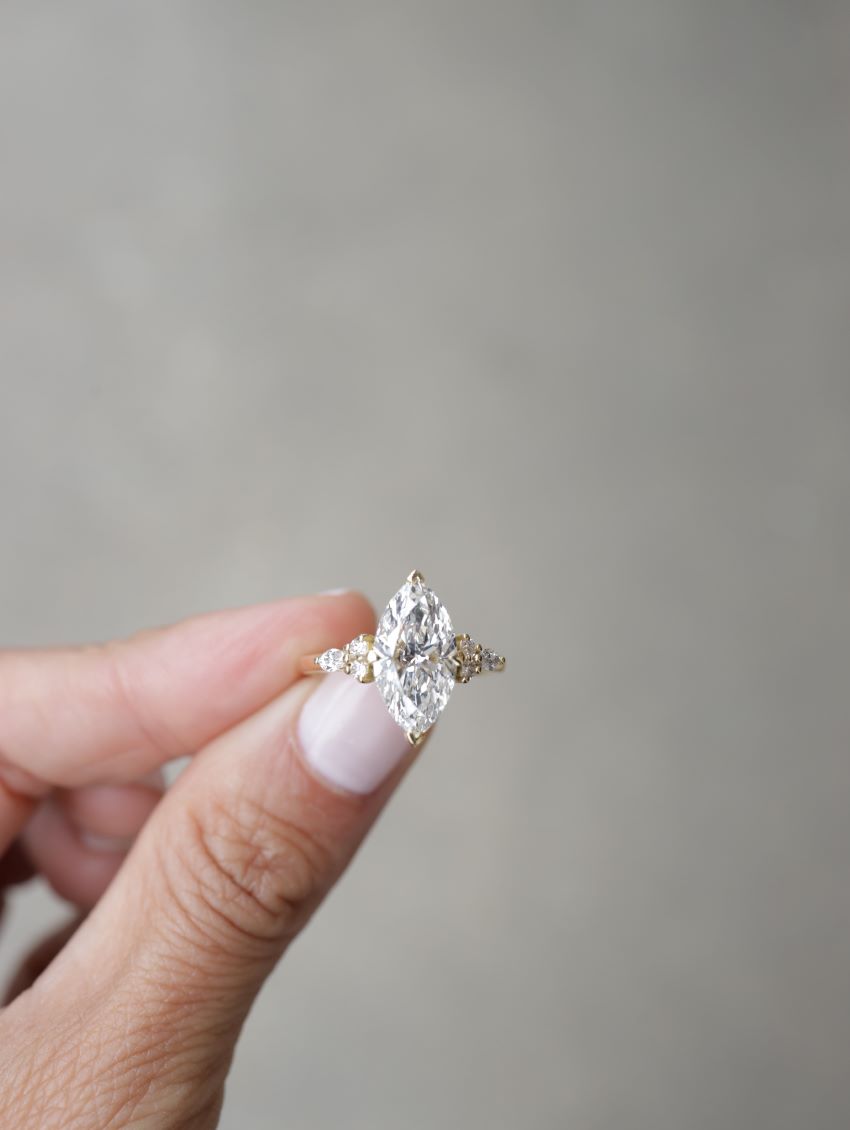
The honest answer is that the best engagement ring setting is the one that fits your life as much as it fits your style. A prong setting rewards those who love jewellery and don’t mind caring for it. A bezel suits those who want to wear their ring without thinking about it. A halo or diamond band is for those who want their ring to be noticed at every angle.
If you’re still exploring, our A Friendly Guide to Diamond Shapes and High Setting vs Low Setting guides are both good next steps, because the right setting and the right stone are decisions that belong together.
At Harmony Jewels, we design and craft bespoke engagement rings from our studio in Hatton Garden, London. Every setting is made to order, and every consultation is private and unhurried. Book an appointment and let’s find yours. You can also read more about Why Your Engagement Ring Deserves More Than a Click and what the Harmony Jewels consultation experience looks like.
The prong setting remains the most popular, particularly the four-claw solitaire. Halo settings are a close second, valued for their visual impact and the way they enhance a centre stone’s apparent size.
The bezel setting offers the greatest protection, as the metal fully encases the stone’s edge. Prong settings are also very secure when properly maintained, but require periodic checks.
The bezel. It holds the stone flush with no protruding prongs to catch on clothing or wear down over time.
The halo setting has the greatest effect on apparent size. Prong settings also maximise brilliance by allowing maximum light entry, which makes a diamond appear more vivid and alive.
The bezel is the most low-maintenance. Prongs need periodic checks and pavé stones benefit from regular gentle cleaning. See our How to Clean Diamond Jewellery guide for tips.
Absolutely. Many of the most beautiful bespoke rings combine a prong-set centre stone with a pavé band, or a bezel centre with a channel-set shoulder. At Harmony Jewels, every detail is decided together during your consultation.
Prong and bezel settings both work beautifully with coloured stones. For more on coloured stone engagement rings, see our Coloured Engagement Rings guide. For sapphire specifically, our Sapphire vs Diamond article is a good starting point.
The Ivi is a signature Harmony Jewels design featuring two round centre stones flanked by marquise diamonds on each shoulder. It is made entirely to order at our Hatton Garden studio.
At our Hatton Garden studio. Book a private consultation to explore settings, try on styles, and work with our team to design a ring that’s entirely your own. For more on visiting us, see The Ultimate Guide to Hatton Garden.