
- Need Help?
 Virtual Appointment
- Book Appointment
- 0
 Your shopping cart is empty
Login to view previously saved items or track a recent order.
Login to view previously saved items or track a recent order.
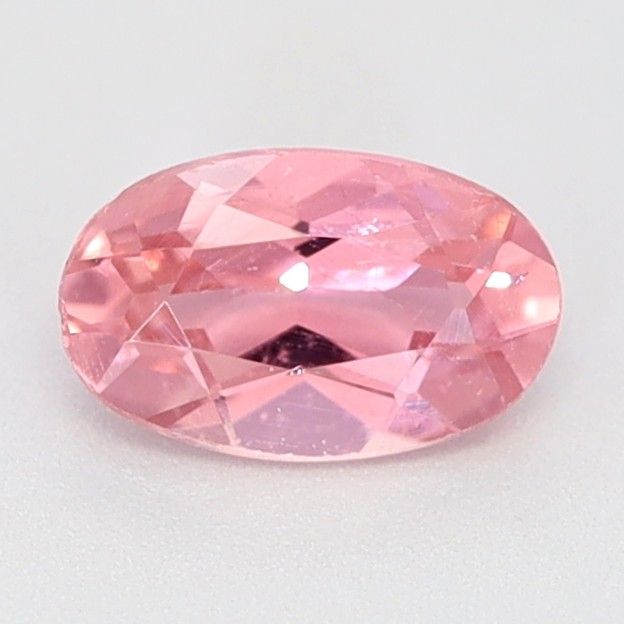
SKU: HJG_42221
| SKU | HJG_42221 |
| Shape | Oval |
| Carat | 0.23 |
| Color | Pink |
| Clarity | EC |
| Cut | Faceted |
| Lab | OTHER |
| Origin | Afghanistan |
| Treatment | None |
| Type | Tourmaline |
| Length | 5.07 |
| Width | 3.18 |
| Certificate | TKV260814 |
A Colorstone’s carat weight is directly related to its size, but it’s important to note that much of the original weight is lost during the cutting and polishing process—as much as two-thirds in some cases. Larger, high-quality rough colorstones are significantly rarer than smaller ones, which makes them more valuable. As a result, a single 2-carat colorstone of the same quality will typically be more expensive than two separate 1-carat colorstones.
Carat refers to the weight of a gemstone, which is directly proportional to its size. Use the sliders to see how sizes are shown in relation to the hand.
A colorstone’s colour is a key factor in determining its overall quality and value. For white colorstones, the less colour they display, the more valuable they tend to be. The Gemological Institute of America (GIA) uses a standardized scale ranging from D (colourless) to Z (noticeable colour) to grade colorstones based on the presence of body colour.
It is hidden by default, until the collapse plugin adds the appropriate classes that we use to style each element.
Clarity refers to the presence of imperfections, flaws and blemishes inside or on the surface of a colorstone.
The GIA grades diamond clarity under 10X magnification on a scale that ranges from Flawless (FL) to I2-3 (Included).
Included 1. Some inclusions could be visible to the naked eye.
