
- Need Help?
 Virtual Appointment
- Book Appointment
- 0
 Your shopping cart is empty
Login to view previously saved items or track a recent order.
Login to view previously saved items or track a recent order.
 Back
25/11/2026
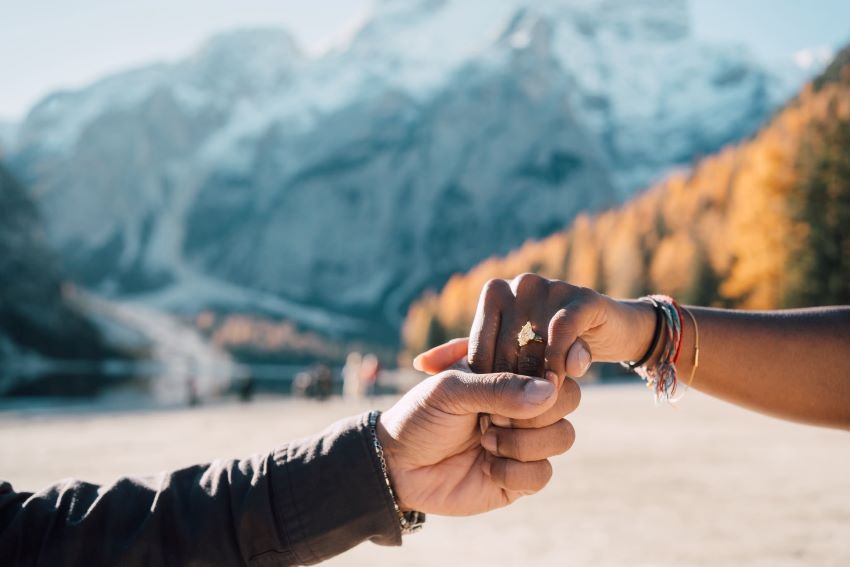
It is just a ring. A small circle of metal, maybe a stone. And yet the moment someone says “we’re engaged”, the first thing most of us ask is: can I see the ring?
So where did that instinct come from? Part of it is old, part of it is love, and a surprisingly big part of it was designed. Here is the story, told by a jeweller’s bench in Hatton Garden.
People have exchanged rings as pledges for thousands of years. In ancient Rome, a ring sealed an agreement between two families. It was less about romance and more about commitment you could see and wear.
The first diamond engagement ring on record arrived in 1477, when Archduke Maximilian of Austria gave one to Mary of Burgundy. For centuries after that, diamonds stayed rare and royal. Most people who married did so with a plain band, or with no ring at all.
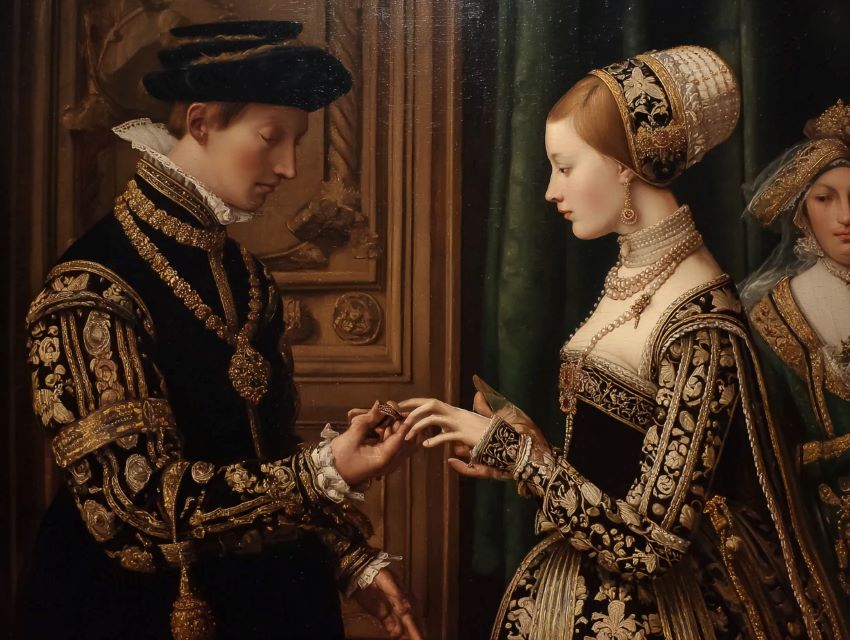
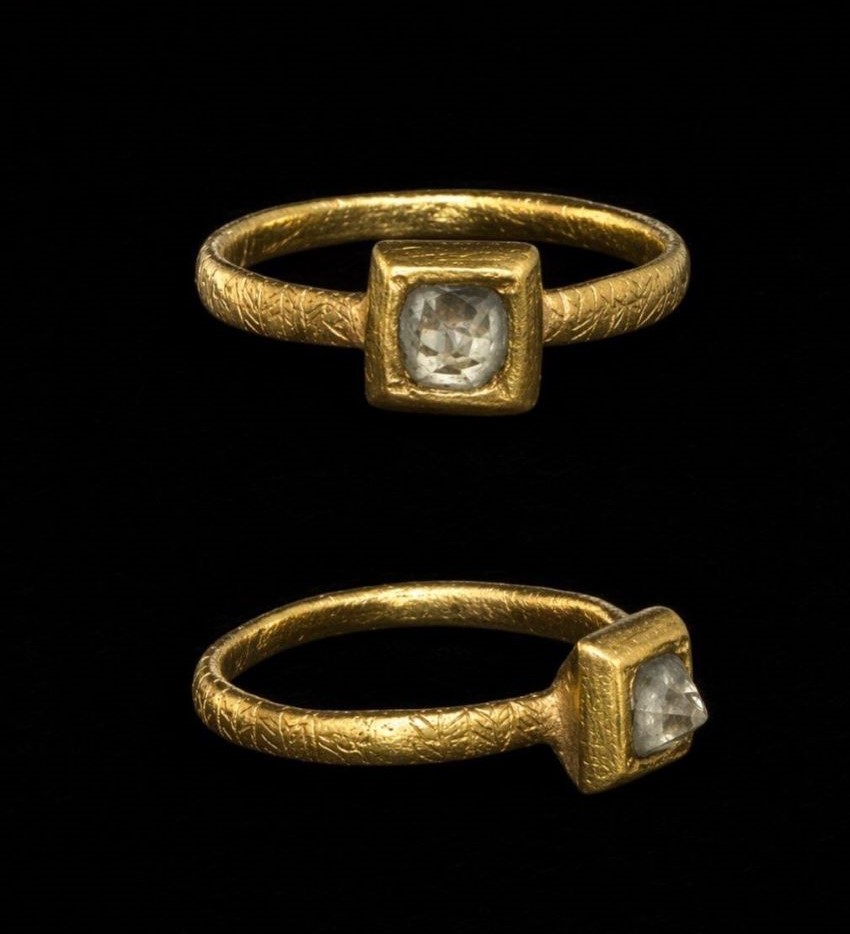
This is the part that is easy to forget. For a long time, an engagement ring was also security. Until the 20th century, a woman’s financial future often depended entirely on marriage. In England and Wales, a broken engagement could even be taken to court as a “breach of promise” claim, and that right was only abolished in 1971. A ring was proof of a promise, and sometimes protection.
So when we say women “learned to want” a ring, it is worth being fair. The wanting did not come from nowhere. For many women, the ring stood for being chosen, and for being safe.
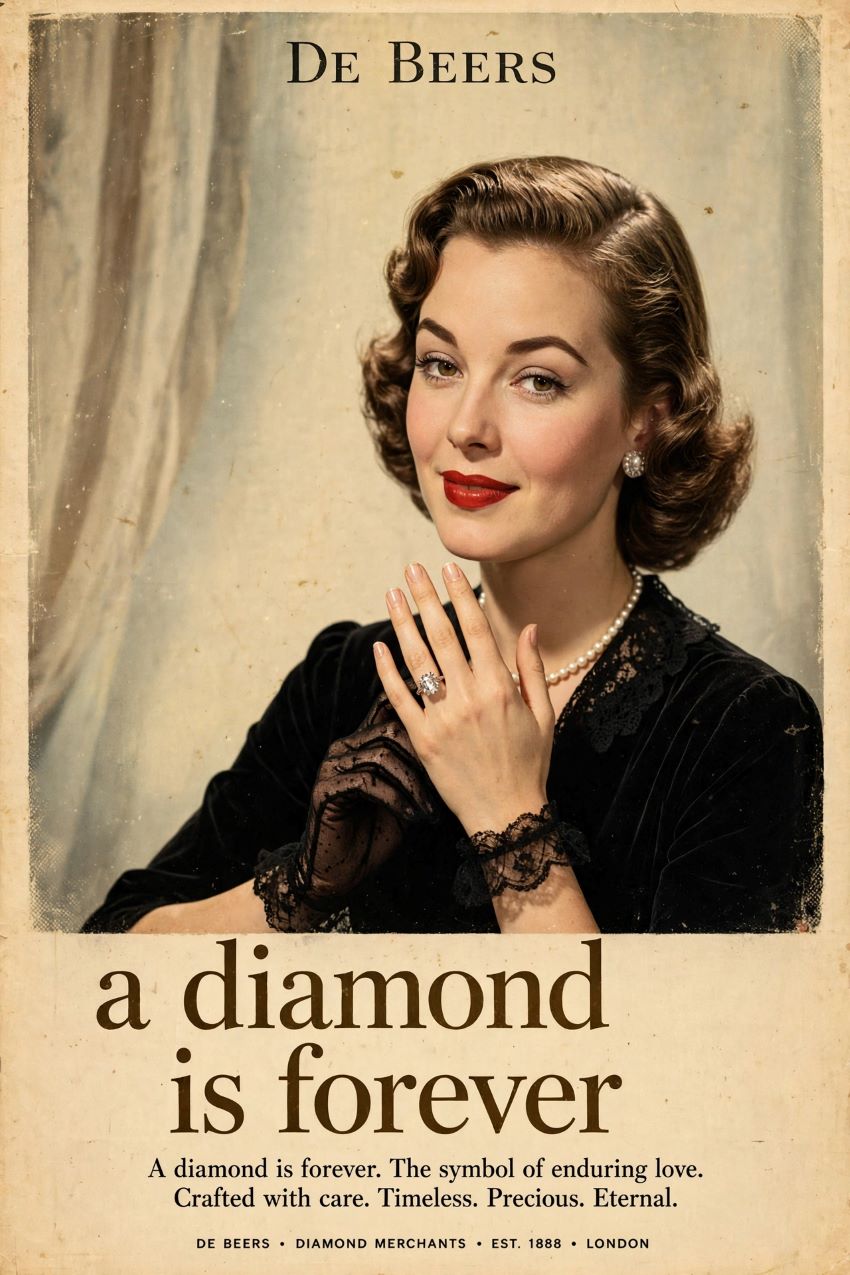
Here is where the story shifts. By the 1930s, diamond sales had slumped. In 1938, De Beers hired the advertising agency N.W. Ayer to change that, and it worked brilliantly. Diamonds appeared on film stars, in magazines and in carefully placed stories about romance. In 1947 a young copywriter named Frances Gerety wrote four words that would define the industry: “A Diamond Is Forever.”
The numbers tell the tale. Reportedly, around 10 percent of American brides wore a diamond engagement ring in 1939. By 1990, it was over 80 percent.
Later came a handy rule of thumb: spend two months’ salary on the ring. It sounded like tradition. It was a sales guideline.
No, and this is the heart of it. A feeling can be shaped by history and still be completely real. We learn to love lots of things through stories, songs and the people around us. Wanting a ring is not shallow, and it is not a trap. It is a way of saying: this promise matters, and I want to carry it with me.
What has changed is that we now get to ask better questions.
It is one of the most common things said about engagement rings, usually with a raised eyebrow: she just wants the ring.
It is a fair question to ask. But it is worth looking at where the focus really sits. For most people, the ring is not the point. It is the proof.
When someone looks at their ring, they are rarely thinking about carats or price. They are asking quieter questions. Did you listen? Do you know me? Did you think about my life, my taste, the way I actually live?
That is why price is the wrong measure, in both directions. Picture a partner who spends freely on holidays, gadgets and nights out, then arrives with a generic, last minute ring. The disappointment is rarely about money. It says: I did not stop to think about you. Now picture a modest ring with one detail only you would notice, like a birthstone from a grandmother’s jewellery box, or the shape you once admired in a shop window. That says: I was paying attention.
Care and cost are simply not the same thing.
To be fair to both sides, it works the other way too. It is possible to care more about the object than the person, and it is worth being honest with ourselves about that. A ring cannot repair a relationship that lacks kindness, time and attention. Love should never be measured in carats. The healthiest way to see it is this: the ring is a symbol of the relationship, never a substitute for it.
A few questions that help couples keep the focus in the right place:
This is where bespoke quietly solves the problem. Designing a ring together is attention made visible. Every choice, from the stone to the setting to the engraving, is a small way of saying I see you.
Today, couples are quietly rewriting the rules:
This is exactly why we love bespoke. When a ring is designed around the two of you, it stops being “what you are supposed to want” and becomes something that is simply, deeply yours.
Whether you want a classic diamond, something unexpected, or a ring you cannot quite describe yet, we would love to help. Book an Appointment at our Hatton Garden showroom, or browse our engagement ring settings for inspiration. And once your ring is on your finger, our Free Lifetime Cleaning keeps it looking as it did on day one.
No single person did. Rings have been exchanged as pledges since ancient times, and the first recorded diamond engagement ring was given by Archduke Maximilian of Austria to Mary of Burgundy in 1477.
A ring is a visible promise of commitment. Historically it also gave women financial and social security during an engagement.
Mainly in the 20th century. After De Beers launched its “A Diamond Is Forever” campaign in 1947, the diamond became the expected stone in many countries.
Not necessarily. For most people, a ring is a symbol of being chosen, known and cared for. What matters is the thought behind it, not the price. A modest ring chosen with care often means more than an expensive one chosen without it.
No. It is a tradition, not a requirement. Some couples choose a different stone, a different style, or no ring at all. What matters is that the choice feels right to you both.
There is no rule. The “two months’ salary” guideline came from advertising, not tradition. Choose a budget you are comfortable with.