
- Need Help?
 Virtual Appointment
- Book Appointment
- 0
 Your shopping cart is empty
Login to view previously saved items or track a recent order.
Login to view previously saved items or track a recent order.
 Back
12/11/2026
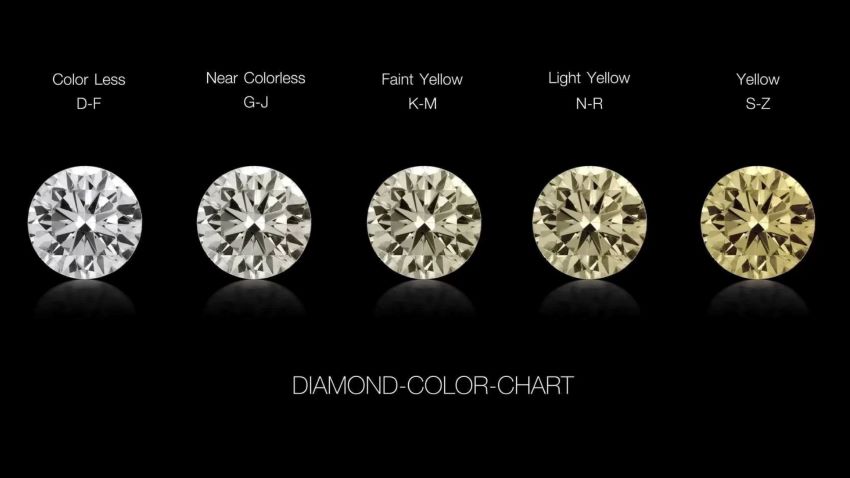
Diamond colour is graded from D (colourless) to Z (light yellow or brown), and the difference between neighbouring grades is subtle. On the hand, D to F stones look icy white, G to J look white to most people, and from around K to N a soft warmth starts to show. Brown stones such as champagne diamonds are graded separately as fancy colours.
A chart can only tell you so much, so this guide looks at real stones side by side on the hand, from the whitest grades down to a warm brown pear. If you have been wondering whether you would notice the difference, or whether a warmer stone could be the one for you, the photos below tell the story.
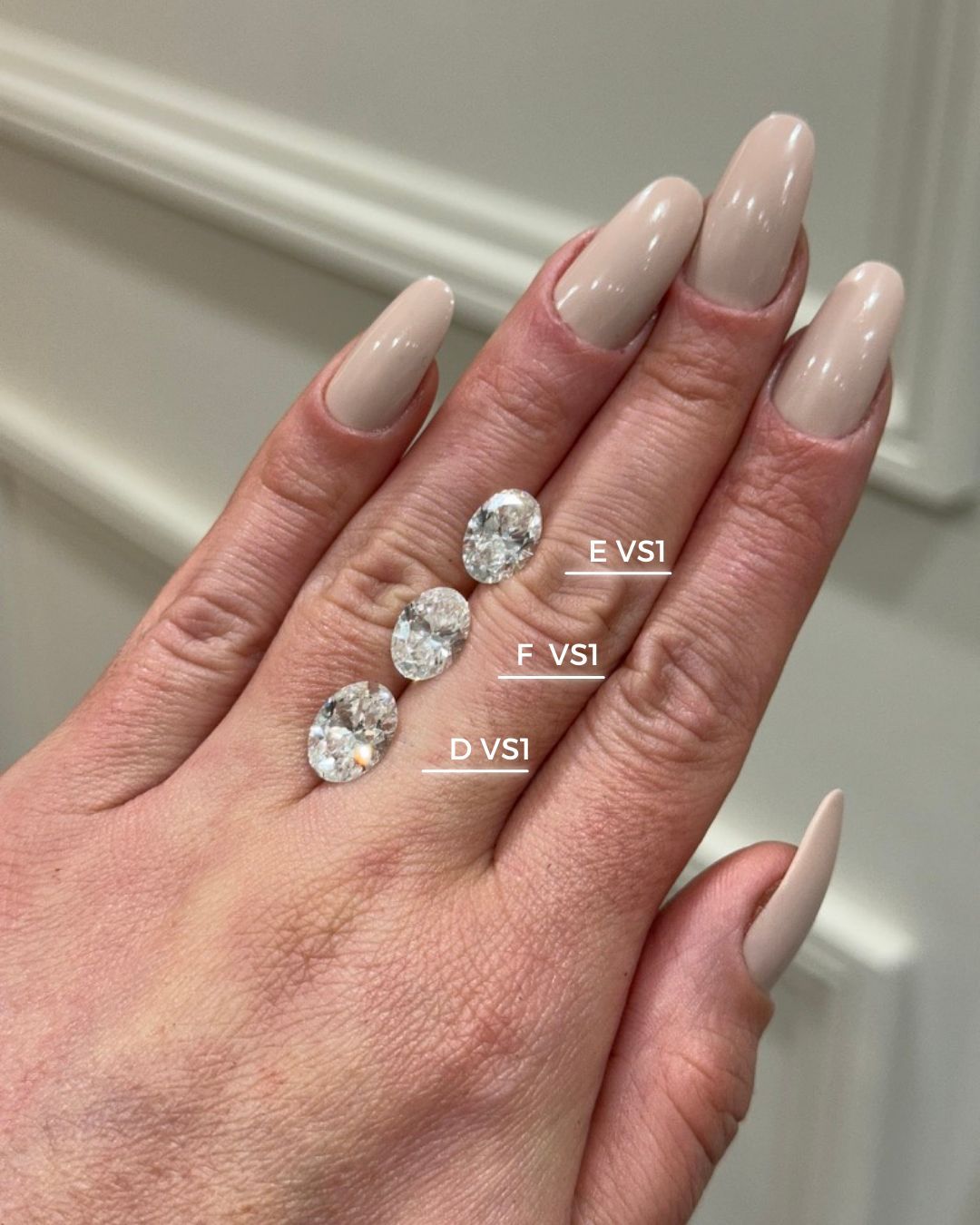
How to read the labels: each photo shows colour first, then clarity. So D VS1 means colour D and clarity VS1.
After years of chasing the whitest stone possible, more couples want a diamond with character. Vogue has called champagne diamonds a cool girl engagement ring trend, and jewellers report growing requests for subtly coloured stones such as pale buttery yellow, light champagne, soft grey and caramel. The appeal is quiet luxury: a glow that feels personal rather than icy, and a natural partner for the return of yellow and rose gold.
These three oval diamonds are all VS1 clarity, and they sit at the top of the colour scale. D, E and F are all graded colourless, which is why they look bright and icy white.
Look closely and you will struggle to name the whitest one. The difference between D, E and F is very small, and it is usually only visible to a trained eye with the stones side by side. For most people, F looks as white as D, and it often costs less.
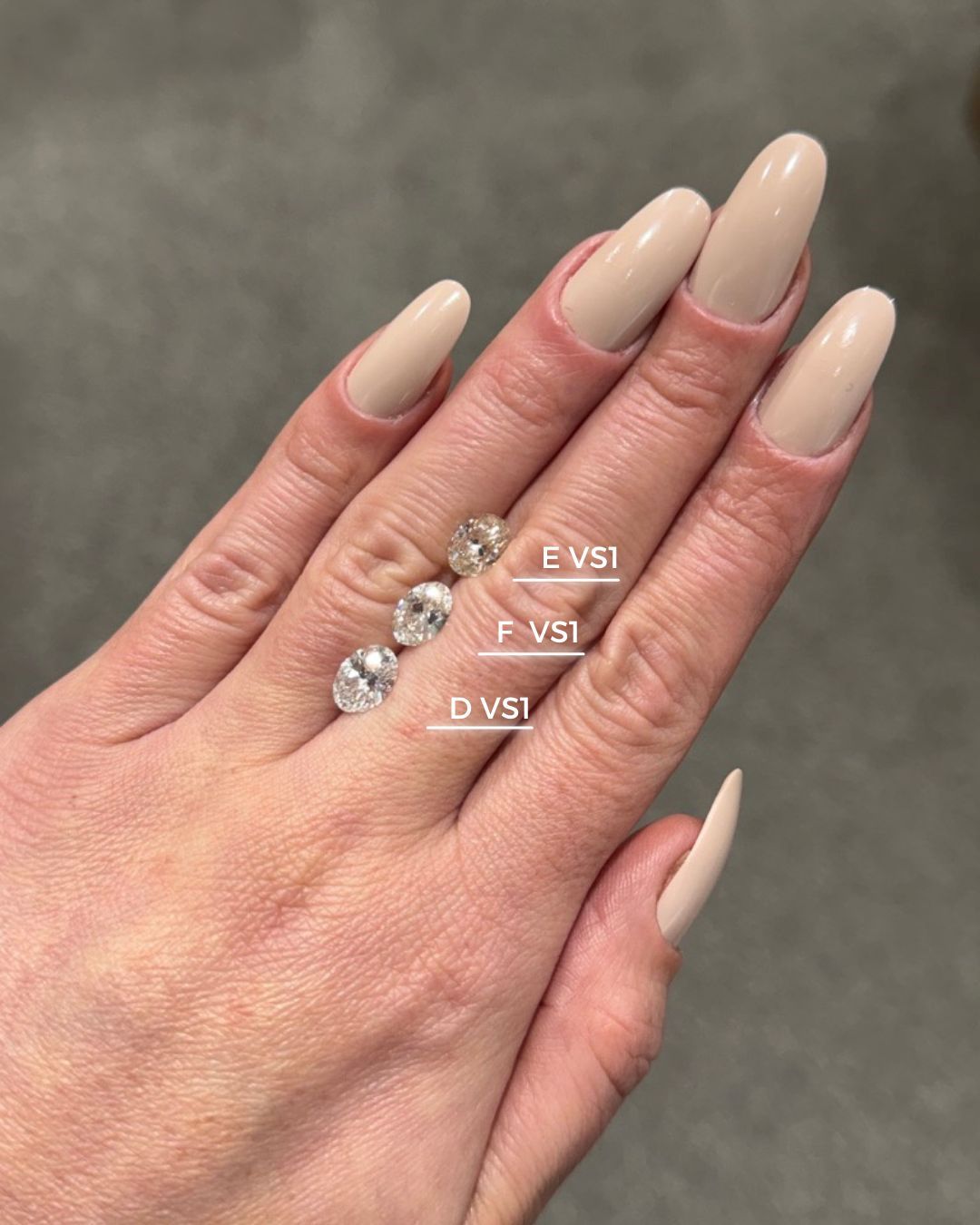
This is where colour becomes easy to see. Placed next to the white stones, the warmer oval at the top has a soft champagne glow that makes the others look icy by comparison.
That contrast is exactly what draws people to warm diamonds. Rather than looking like a lower grade, the tint can read as intentional, especially in yellow or rose gold.
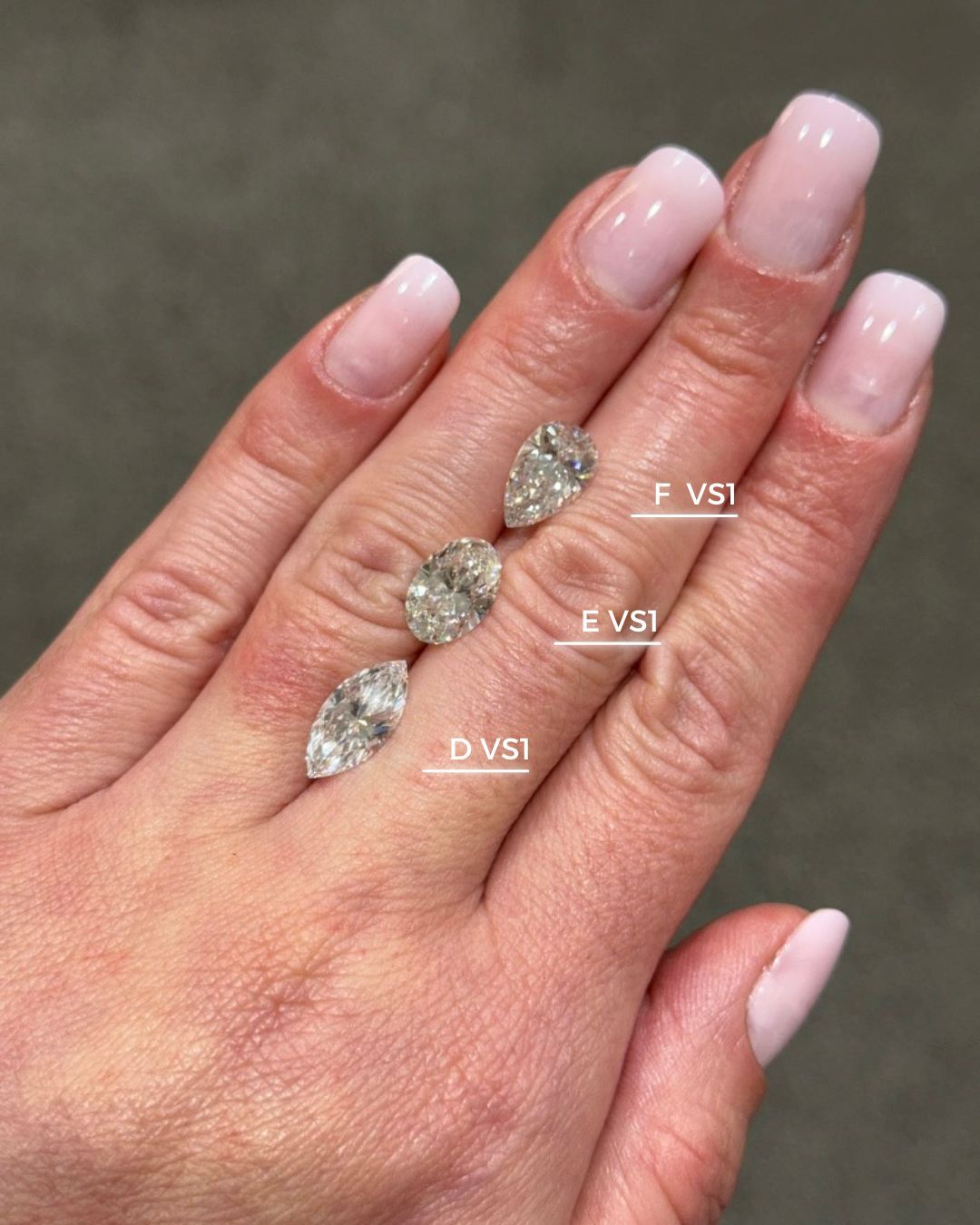
Slightly, yes. Round brilliants are very good at hiding colour, while elongated shapes such as oval, pear and marquise can show it more easily, particularly at the tips. This pear, oval and marquise were photographed together so you can compare them directly.
It is a useful reminder that two stones with the same colour grade can look a little different depending on the cut and shape, so always judge a stone in person and in daylight.
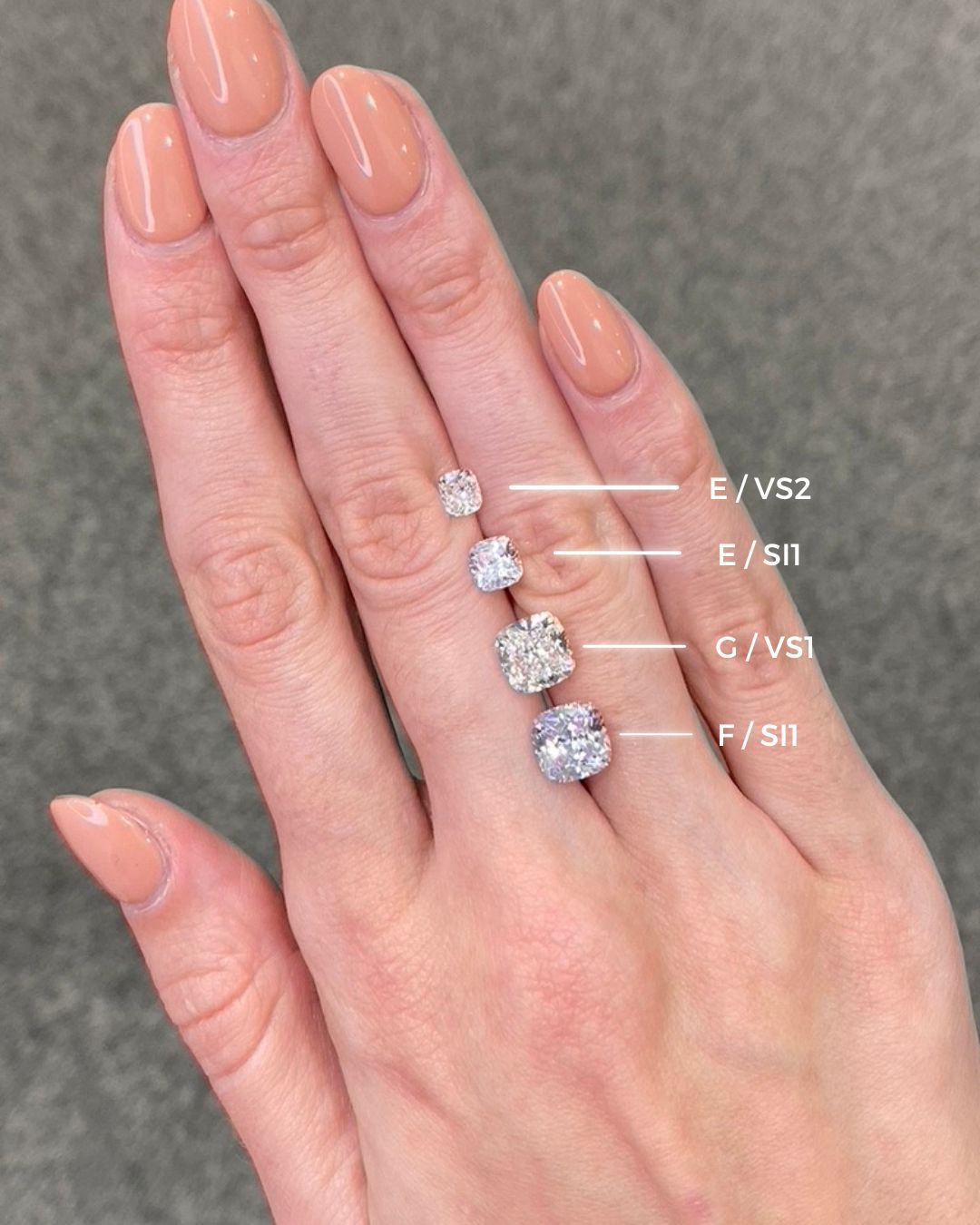
Colour is only one of the choices. These four cushion cuts are graded E VS2, E SI1, G VS1 and F SI1, and they show how buyers balance colour, clarity and size.
E to G are all in the colourless to near colourless range, so they look white to most people. Choosing a G instead of an E, or an SI1 instead of a VS2, is one of the ways to stretch a budget towards a larger stone. Just make sure the diamond looks clean to the eye in person.
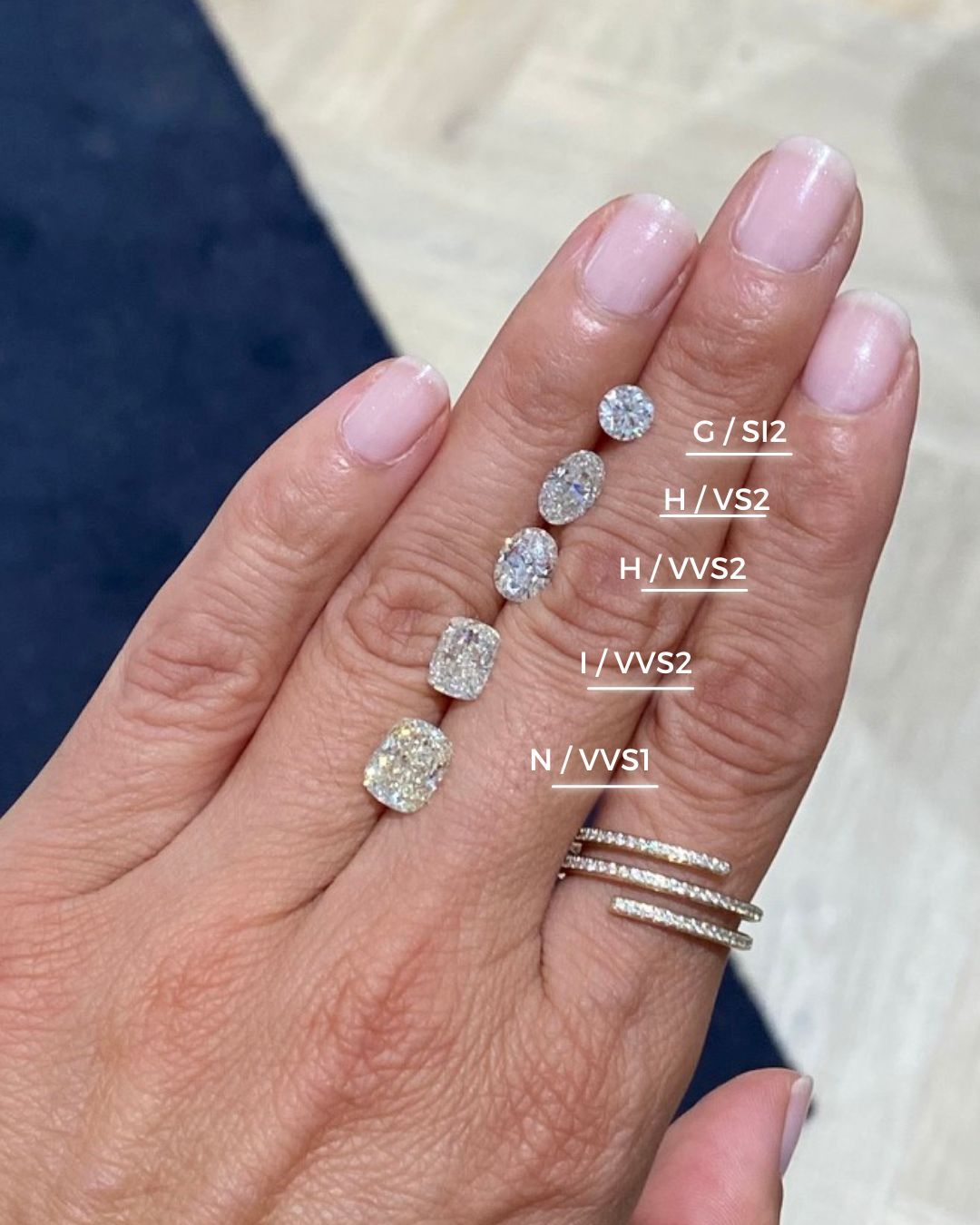
Here the grades start to step down. The lineup runs from a G round and H ovals to an I cushion and, at the bottom, an N cushion cut.
The N colour stone is the one to look at. Against the whiter diamonds above it, it has a visible soft warmth. In the GIA scale, N sits in the very light range, which is exactly the kind of tint many people now choose on purpose.
It is also graded VVS1 for clarity, which proves a useful point: low colour does not mean low quality. Colour is graded separately from cut and clarity, so a warmer diamond can still be beautifully cut and extremely clean.
Warmth is easier to notice in larger stones and against white gold or platinum. Yellow gold and rose gold blend with it, so a faint tint often looks soft and deliberate.
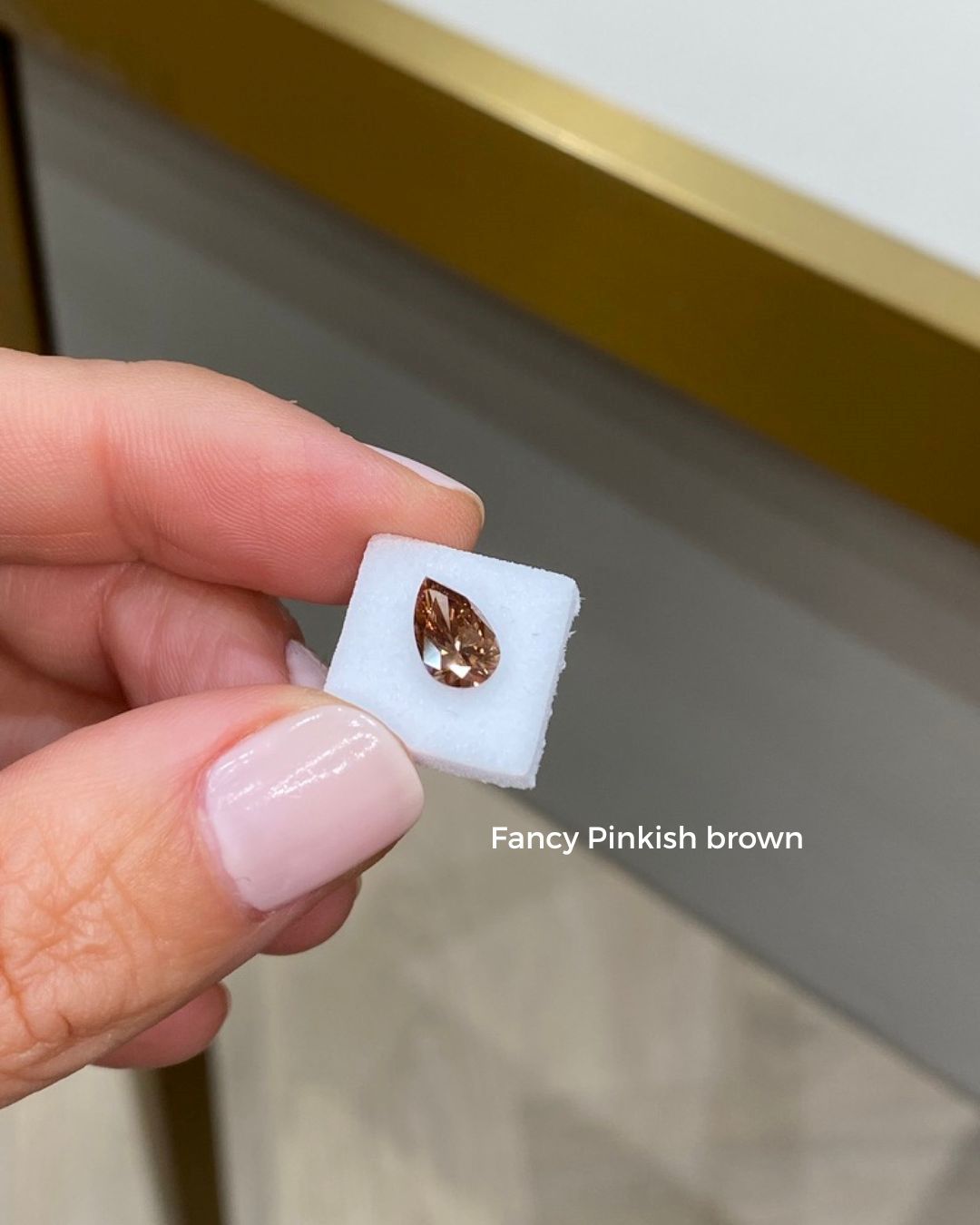
Beyond the white scale, the warmest option is a brown diamond. This pear shaped stone is described as fancy pinkish brown, a soft rosy brown that sits firmly in champagne territory.
Champagne is a trade name rather than an official grade. The word became popular in the 1980s, when the Argyle mine in Australia and its owner Rio Tinto rebranded brown diamonds as champagne and cognac. The GIA does not use the word on a report. It describes stones with phrases such as Fancy Light Brown, Fancy Brown or, as here, Fancy Pinkish Brown.
Brown is the most common fancy colour in natural diamonds, which makes it one of the most accessible ways to wear colour. A pinkish brown like this one looks especially lovely in rose gold.
If you love the idea of a bolder, sunnier stone, our guide to fancy colour diamonds explains how yellow, pink, blue and other natural colours are graded.
Yes. Warm diamonds are real diamonds with the same hardness, rated 10 on the Mohs scale, so they are just as suitable for everyday wear as a white stone. The colour softens the icy flash into a warmer glow, and a well cut stone still shows plenty of life.
Ovals, pears, emerald cuts and cushions all show colour beautifully. You can browse styles on our engagement ring settings page to see what appeals.
Usually, yes. Because the market prizes whiteness, low colour and lighter champagne stones tend to cost less than colourless diamonds of a similar size and clarity. That can free up budget for a larger stone or a more detailed bespoke design. Exact prices depend on size, cut, strength of colour and certification, so there is no single figure.
Every Harmony Jewels ring is designed around the person who will wear it, and our Hatton Garden team works with both natural and lab grown diamonds, so you can talk through every option in one place. Seeing stones side by side is the best way to find your shade, and your ring also comes with free lifetime cleaning.
Ready to compare stones in person? Book an Appointment or Start Designing.
The first letter is the colour grade and the second part is the clarity grade. D is the highest colour grade, completely colourless, and VS1 means very slightly included, so any marks are hard to see even under magnification.
Usually only with a trained eye and the stones side by side. All three are graded colourless, and most people see them as equally white once set in a ring.
An N colour diamond has a soft, visible warmth next to whiter stones. It sits in the very light range of the GIA scale and looks especially natural in yellow or rose gold.
Not at all. Colour is graded separately from cut and clarity, so a low colour diamond can be well cut and very clean. It suits people who love a warmer look.
A champagne diamond is a diamond with a light to medium golden brown colour. The name is a trade term and does not appear on official grading reports, where these stones are described as brown, for example Fancy Pinkish Brown.
Low colour and lighter champagne diamonds generally cost less than colourless diamonds of a similar size and clarity. Value depends on colour, cut, size and certification.
Yellow gold and rose gold create a warm, tonal look. White gold and platinum offer contrast. The best choice is the one you love wearing every day.
Yes. Diamonds rate 10 on the Mohs scale, so a low colour or champagne diamond is as suitable for daily wear as a white one.