
- Need Help?
 Virtual Appointment
- Book Appointment
- 0
 Your shopping cart is empty
Login to view previously saved items or track a recent order.
Login to view previously saved items or track a recent order.
 Back
Back07/03/2026
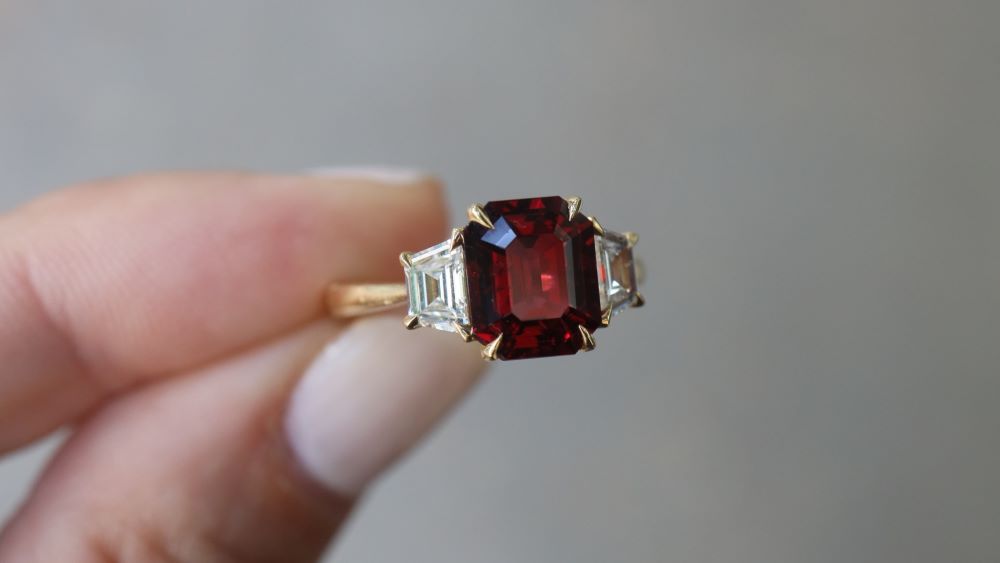
Most July birthstone guides tell you the same three things: rubies are red, rubies mean love, rubies are precious. All true, and all a little thin. The ruby has a stranger story than that. It glows under ultraviolet light, it has fooled the British monarchy for over six hundred years, and its closest relative is a completely different gemstone that most people never connect it to. Here are the facts about your July birthstone that tend to get left out.
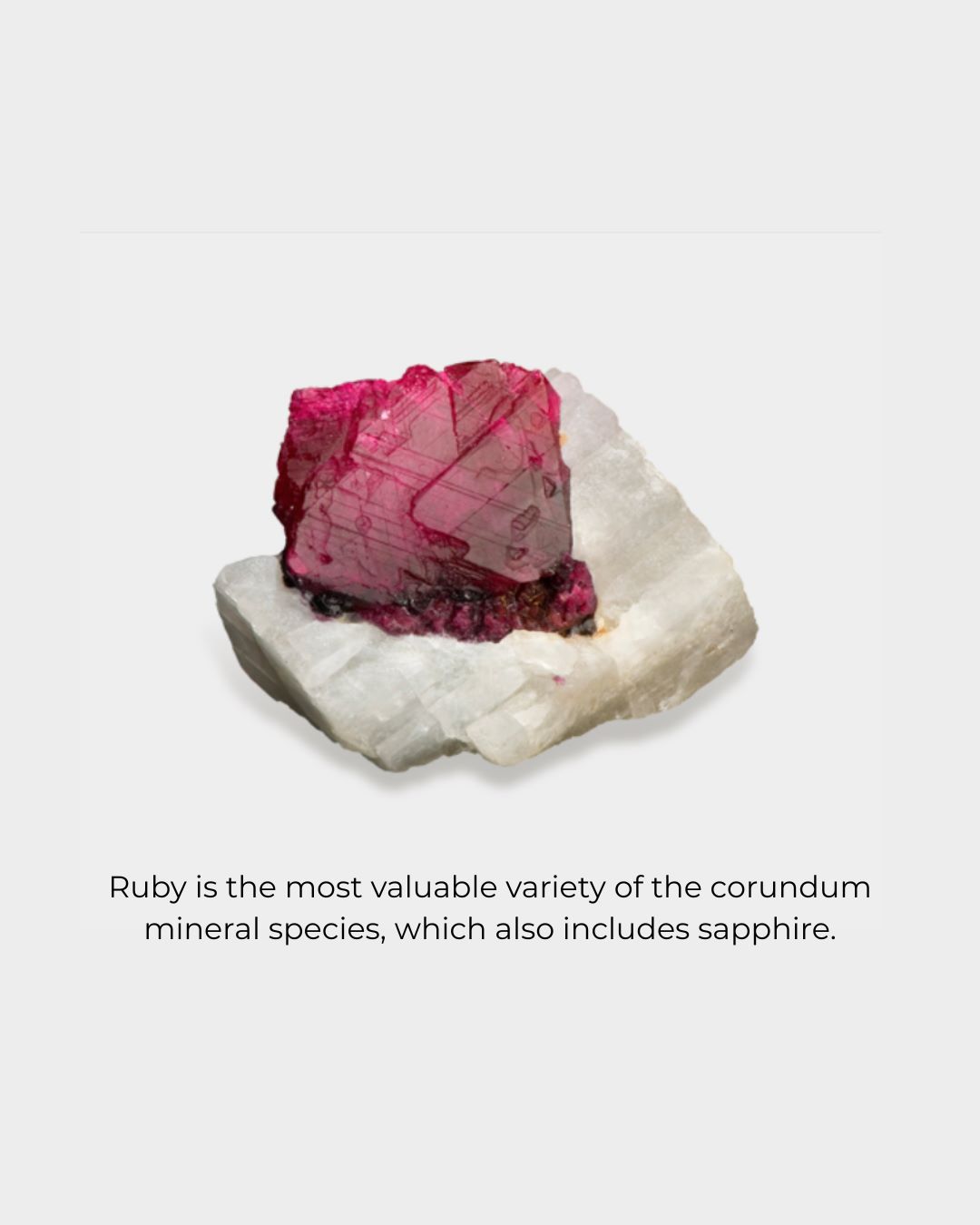
A ruby is a variety of corundum, the same mineral family as sapphire. The only difference between the two is chemistry. When trace amounts of chromium slip into the crystal structure, the stone turns red and becomes a ruby. Any other trace element, and the very same mineral becomes a sapphire instead. So technically, a ruby is a red sapphire, though gemologists have long treated the two as separate stones.
That chromium does more than colour the stone. It is also responsible for one of the ruby's strangest party tricks: fluorescence. Under ultraviolet light, many natural rubies glow with an almost eerie inner red, a property once used to help separate genuine stones from early synthetics. For more on how gemstone colour and rarity affect value, our guide to choosing an engagement ring setting covers how the right mount can make any coloured stone look its absolute best.
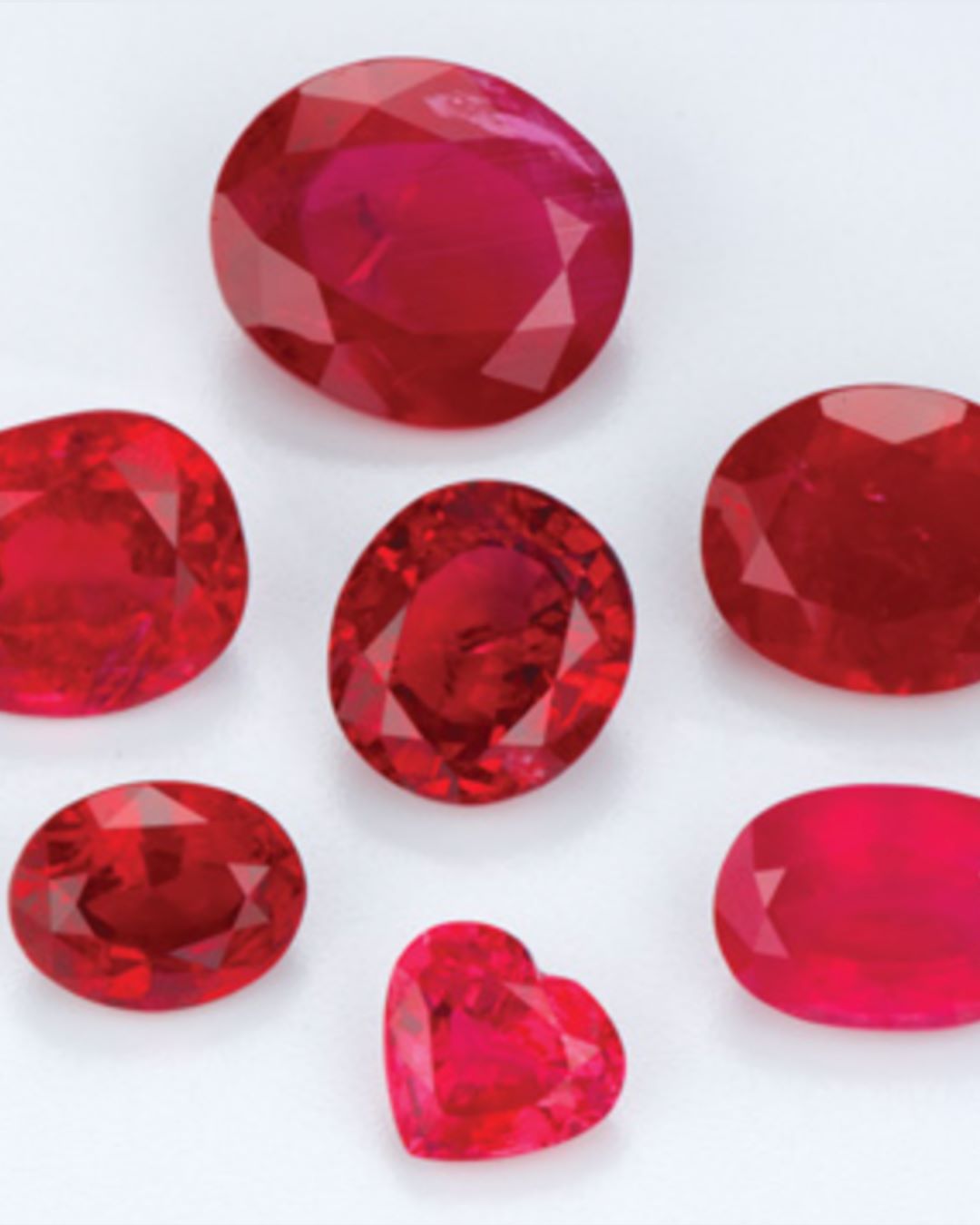
It surprises most people, but fine rubies are genuinely rarer than diamonds. Large stones with rich, even colour and few visible inclusions are exceptionally hard to find in nature, which is why top quality rubies can outsell diamonds of the same carat weight at auction. The most coveted rubies carry a nickname borrowed from nature itself, pigeon's blood, describing a pure, slightly blue tinted red that collectors chase above all else. The finest examples have historically come from the Mogok region of Myanmar, though Mozambique has become an important modern source since deposits were discovered there in 2009.
A star ruby is rarer still. Under the right light, some rubies display asterism, a six rayed star that seems to float and move across the surface of the stone. The effect comes from microscopic needle like mineral inclusions aligned in three directions inside the crystal, something medieval wearers believed trapped actual starlight.
Colour and clarity vary enormously between stones, which is exactly why photographs online only tell you so much. If a particular shade of red has caught your eye, the best next step is to book a bespoke appointment at our Hatton Garden studio, where you can compare rubies in person under proper light before committing to one.
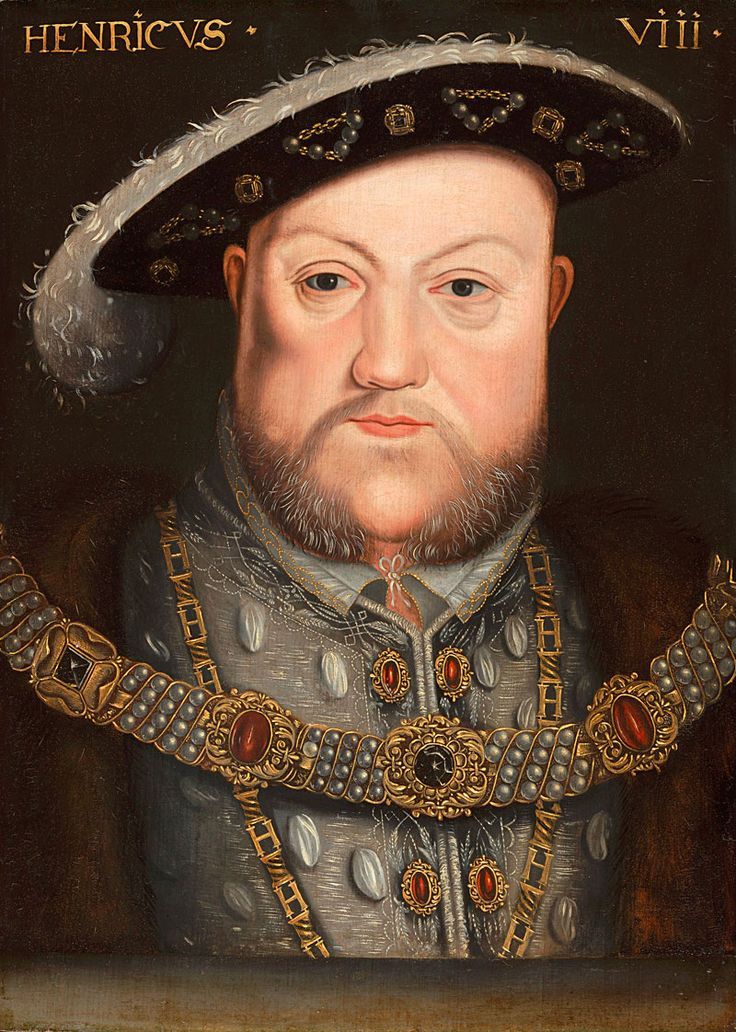
Burmese warriors once believed rubies made them invincible in battle, and some reportedly embedded stones directly under the skin as a form of magical armour. Centuries later, European royalty prized rubies just as fiercely, associating the deep red with power, protection and wealth. Henry VIII was famously fond of them, and rubies appear throughout Renaissance court portraiture.
One of the most enduring gemstone myths sits at the centre of the British Crown Jewels. The Black Prince's Ruby, set into the Imperial State Crown, has been called a ruby for over six hundred years. It is, in fact, a red spinel, a completely different mineral that can look strikingly similar to the naked eye. The mix up was only properly understood as gemology advanced, and it is a useful reminder of why professional certification matters when buying coloured gemstones today.
In modern birthstone traditions, ruby belongs to July. It carries a second meaning as well, marking both the 15th and the 40th wedding anniversary, a tradition rooted in the stone's associations with enduring passion and strength. Couples marking either milestone often choose ruby pieces for exactly that reason, and it makes for one of the most meaningful bespoke commissions we take on. You can read more in our full guide to anniversary gifts by year if a ruby anniversary is coming up.
Ruby also has a practical case for daily wear that people rarely consider. It sits at 9 on the Mohs hardness scale, second only to diamond, which makes it one of the toughest gemstones available for rings worn every single day.
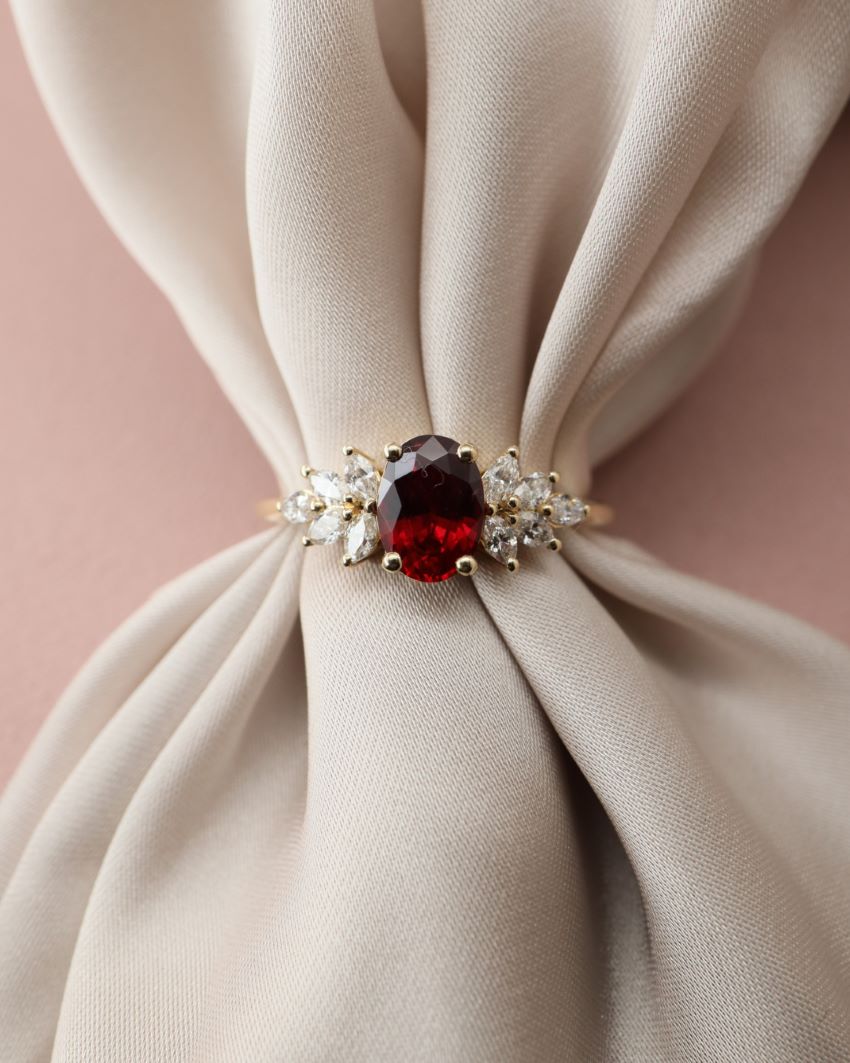
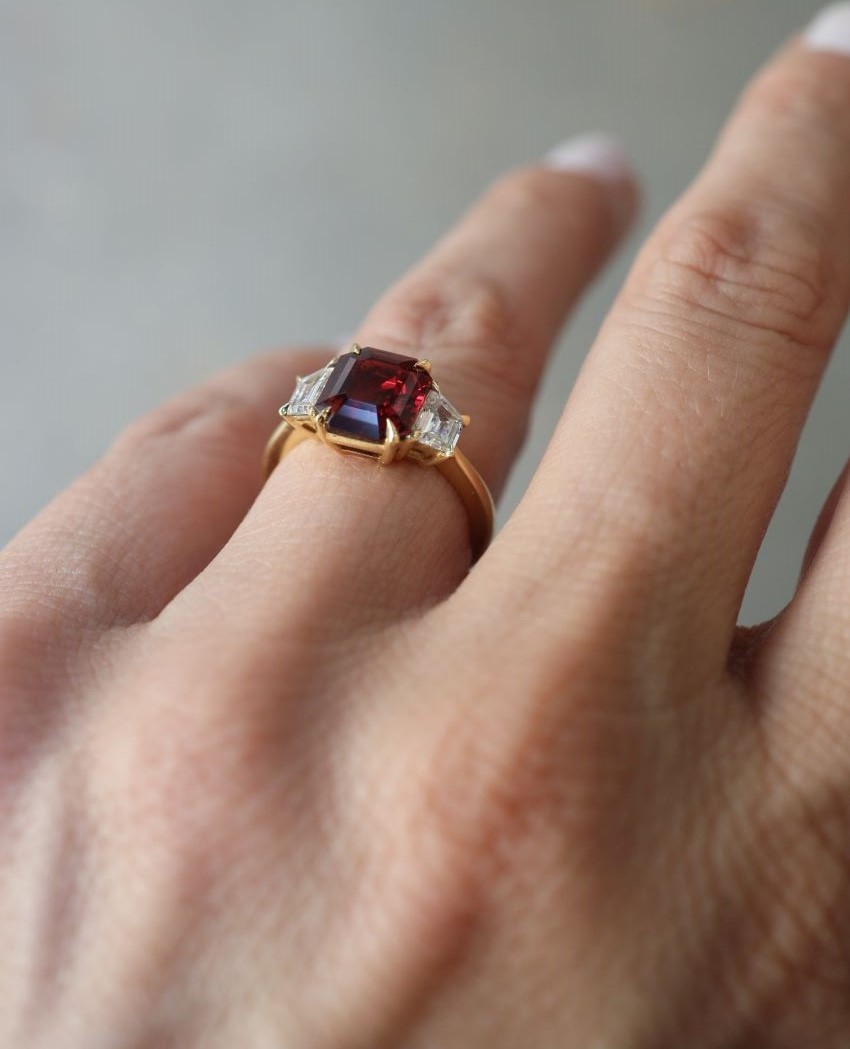
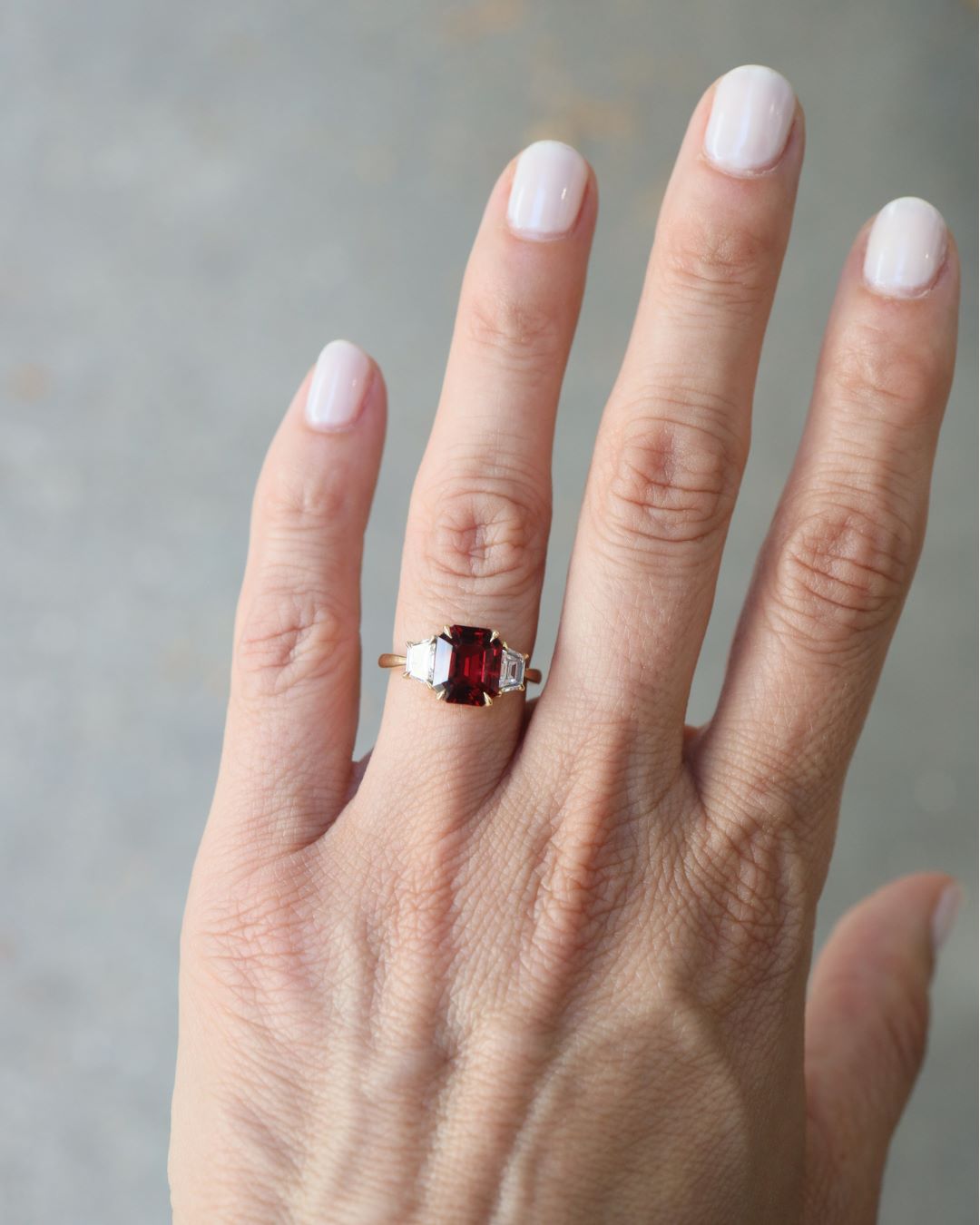
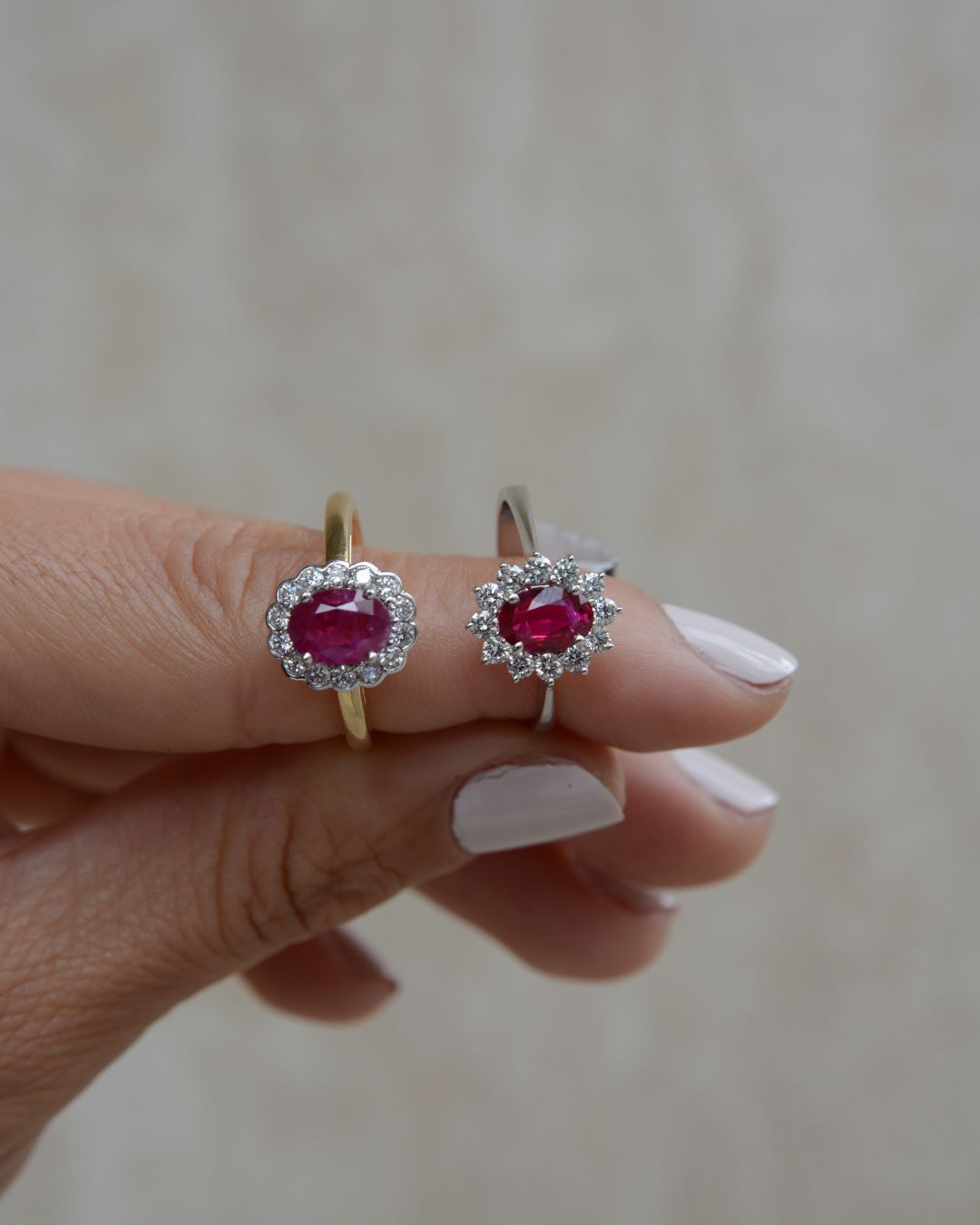
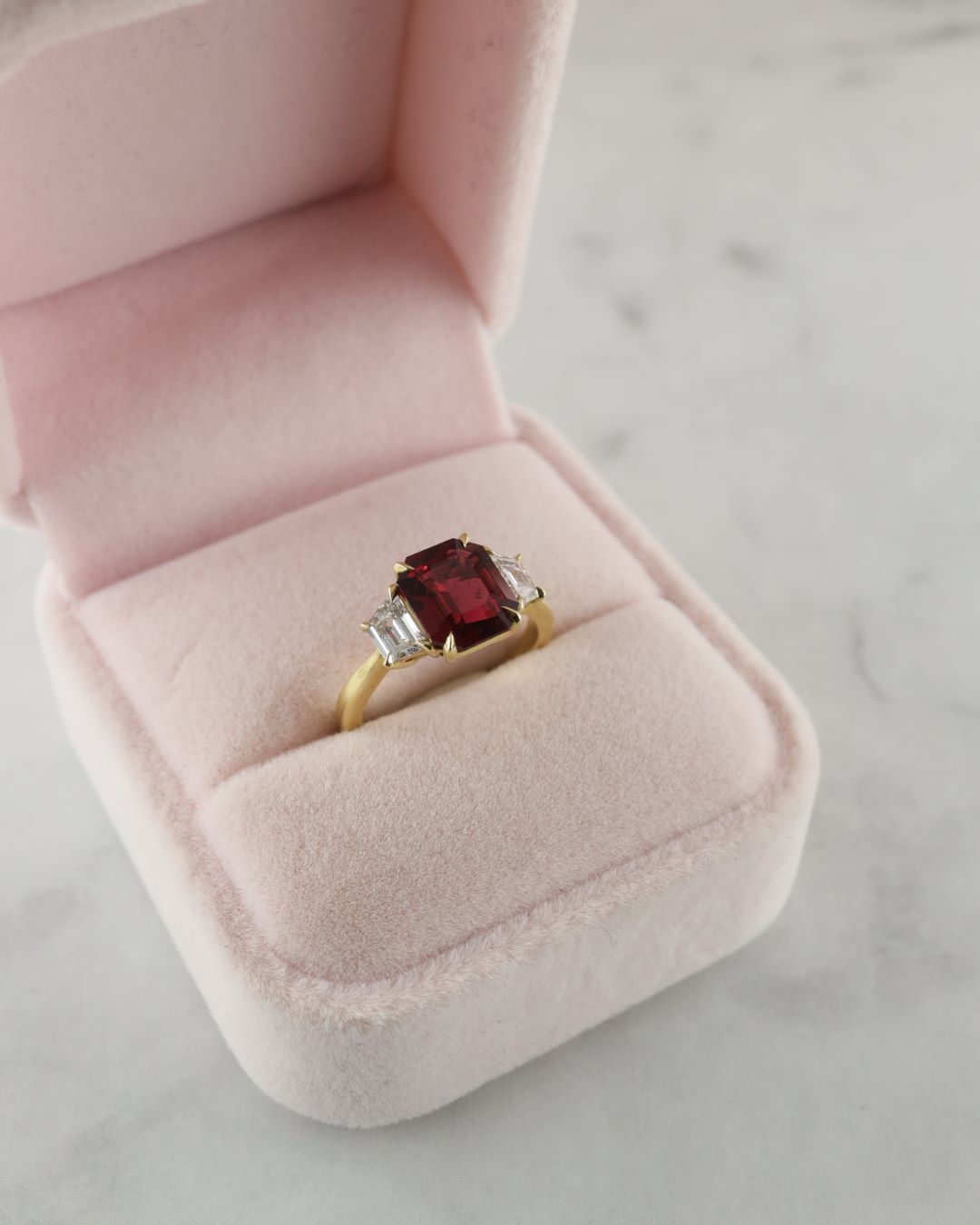
Ruby works beautifully as a centre stone, but it is just as striking as a supporting player. Yellow and rose gold tend to bring out its warmth, while platinum and white gold let the red take full centre stage. It is also a favourite choice as a side stone, adding colour and contrast alongside a diamond, an approach we cover in more depth in our guide to trilogy engagement rings, where rubies frequently appear flanking a central diamond.
Whether you are marking a July birthday, a milestone anniversary, or simply drawn to the colour, a ruby piece can be entirely designed around you, from the exact shade of red through to the setting and metal.
Ready to design your own ruby piece? Book a bespoke consultation at our Hatton Garden studio and our team will help you source and design a ruby piece that is entirely your own.
Yes. Both are varieties of corundum. Chromium turns the stone red and classifies it as ruby, while other trace elements produce the various colours of sapphire instead.
The same chromium that gives rubies their red colour also causes many natural stones to fluoresce under ultraviolet light, producing a visible red glow. This was historically used as one way to help identify genuine stones.
No. Despite the name, it is a red spinel, a different mineral that closely resembles ruby to the naked eye. It has been on display in the Imperial State Crown under that name for centuries.
Yes. Rubies rank 9 on the Mohs hardness scale, making them one of the most durable gemstones available and a practical choice for rings worn daily.
Pigeon's blood is the trade term for the most prized ruby colour, a pure, vivid red with a faint blue undertone. It is most closely associated with rubies from Myanmar.
Ruby is the traditional gemstone for both the 15th and the 40th wedding anniversary.