
- Need Help?
 Virtual Appointment
- Book Appointment
- 0
 Your shopping cart is empty
Login to view previously saved items or track a recent order.
Login to view previously saved items or track a recent order.
 Back
Back08/14/2026
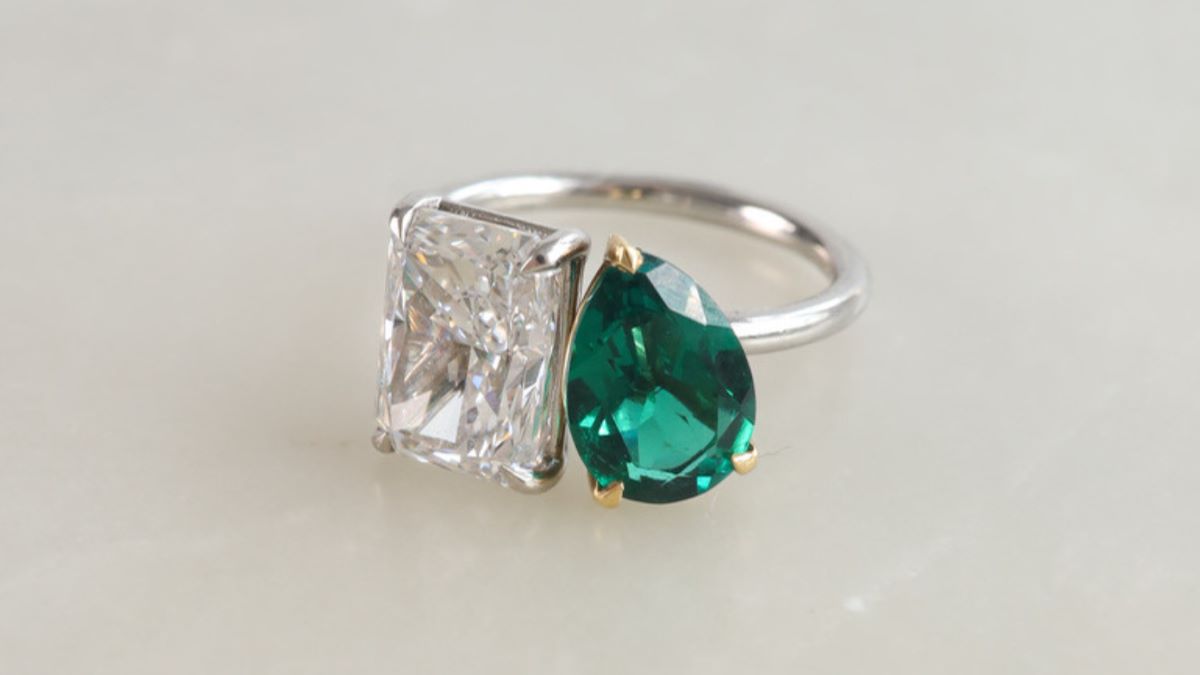
The short answer: start with shape, then balance colour and carat weight before you touch metal tone. A well paired toi et moi ring reads as one considered piece rather than two stones that happen to share a band, and getting there is more about proportion than personal taste.
Below is how we approach it with clients designing their own two stone ring.
The toi et moi setting, French for "you and me", has a long history as a symbol of two individuals joined together, and that meaning is part of why the style has returned to popularity in engagement rings. But the sentiment only lands if the design itself feels intentional. For more on where the style comes from, see our full Toi et Moi history article.
The rule of thumb we give clients: pick one stone as the anchor and let the second stone complement it rather than compete with it. That usually means one clear, colourless diamond and one coloured gemstone, though double diamond and double coloured stone pairings both work when the shapes are considered carefully.
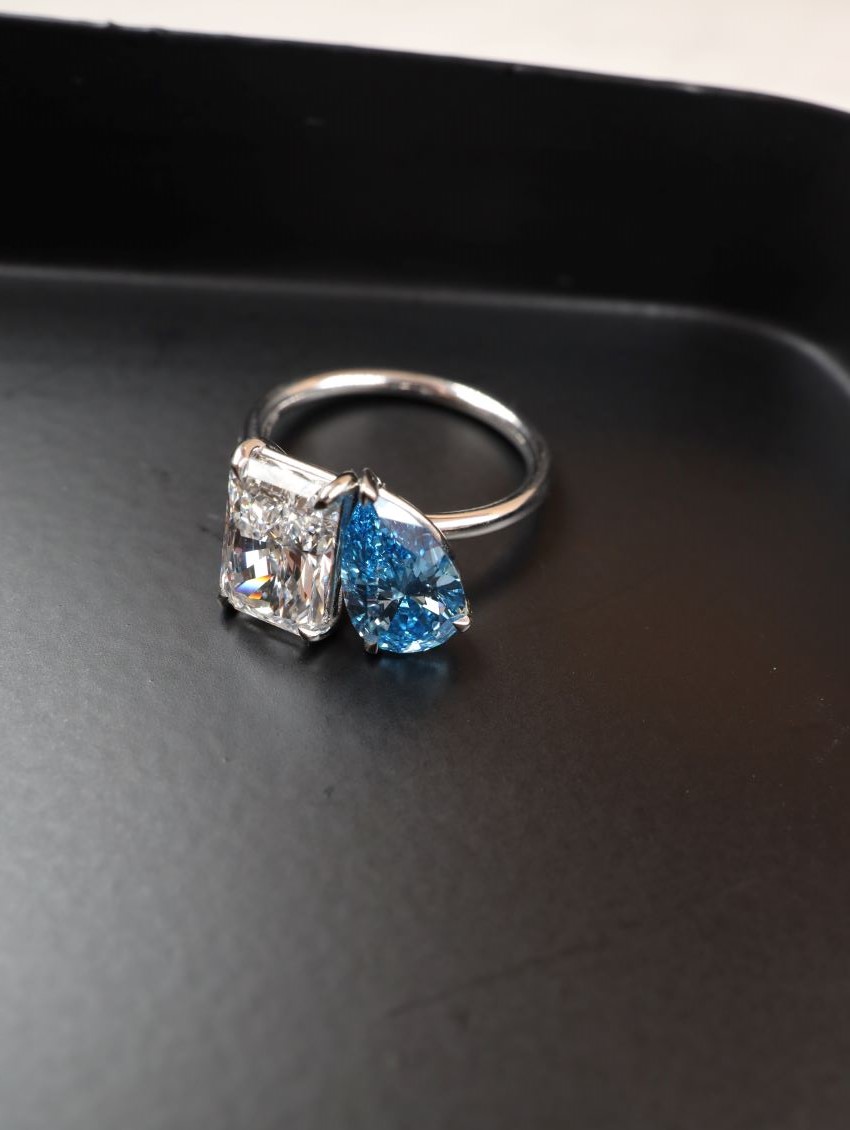
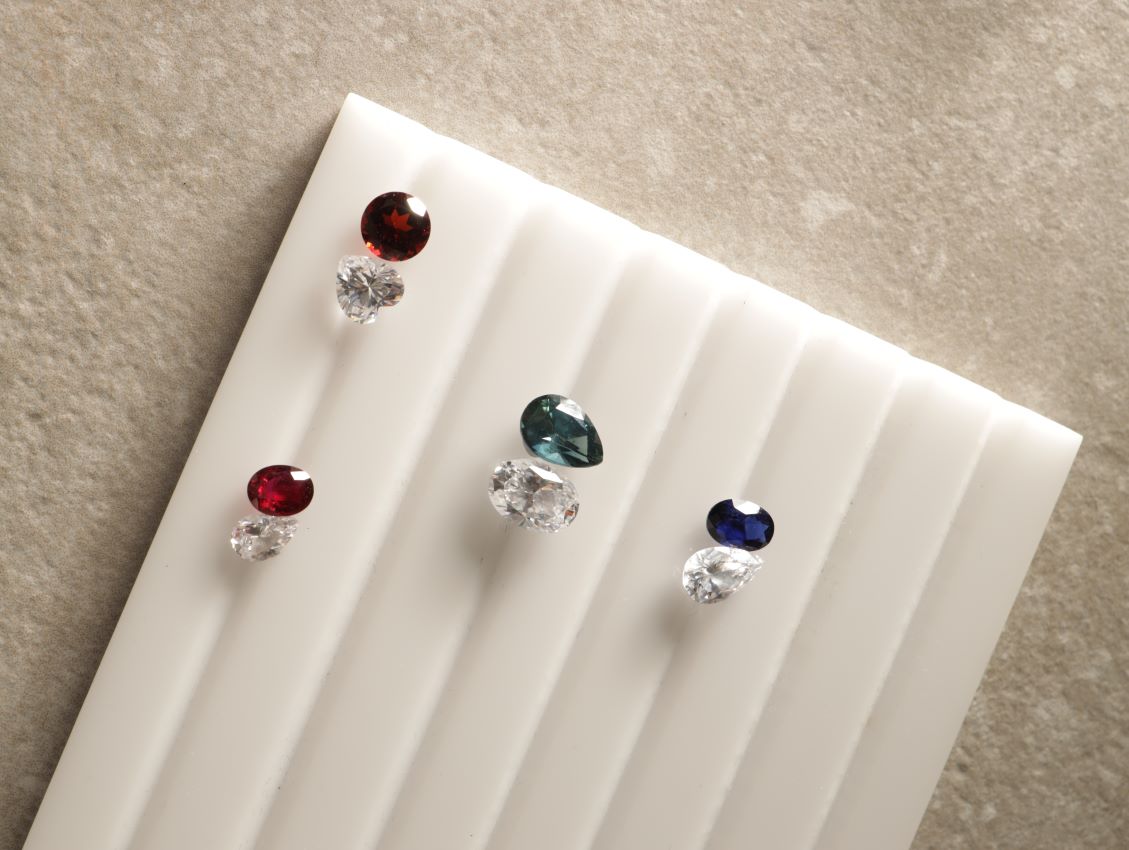
Shape is the first decision, and it works in one of two directions.
Echoing shapes (an oval next to an oval, a pear next to a pear) creates a soft, continuous line across the finger. It reads as elegant and quiet, and it is the easiest pairing to get right because the eye does not have to reconcile two different outlines.
Contrasting shapes (a radiant next to a pear, a cushion next to a round) creates more visual interest and tension. This is where most modern toi et moi designs live, since the geometry of a rectangular cut sitting beside a curved cut naturally draws the eye. If you go this route, keep both stones close in overall size so the contrast feels deliberate rather than mismatched.
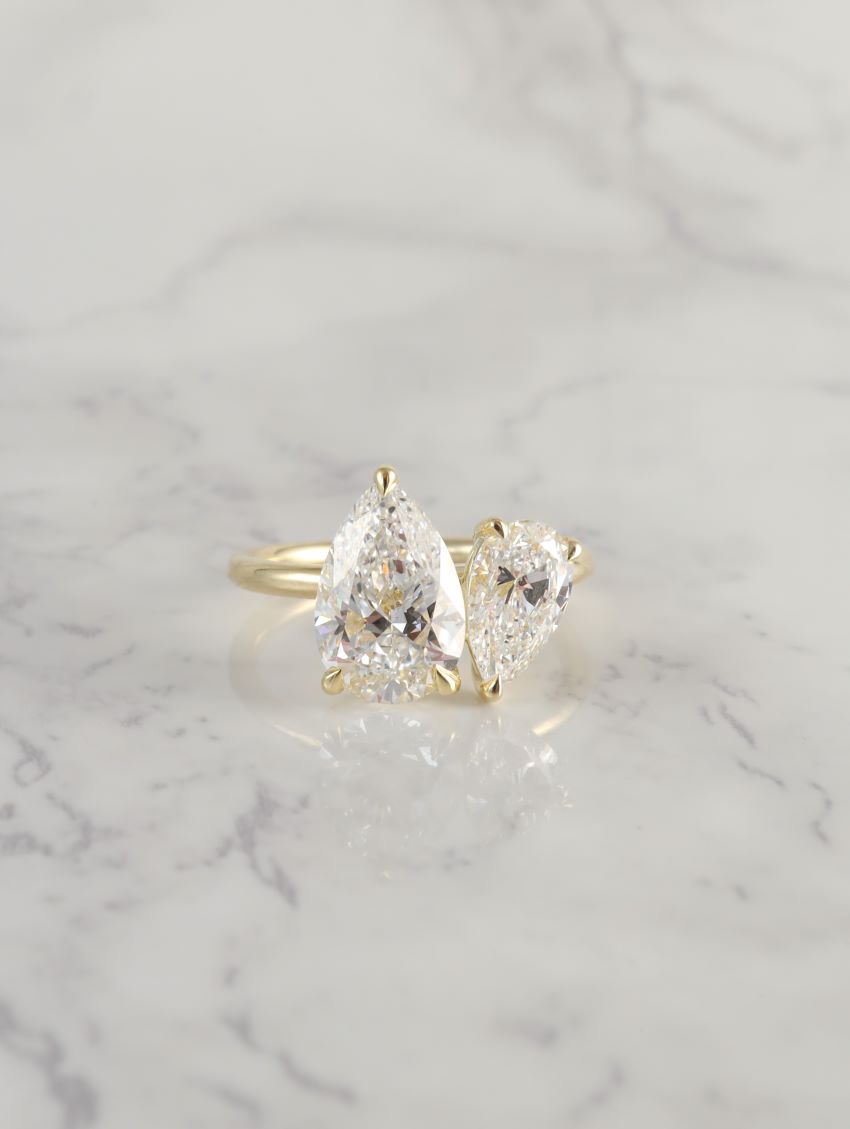
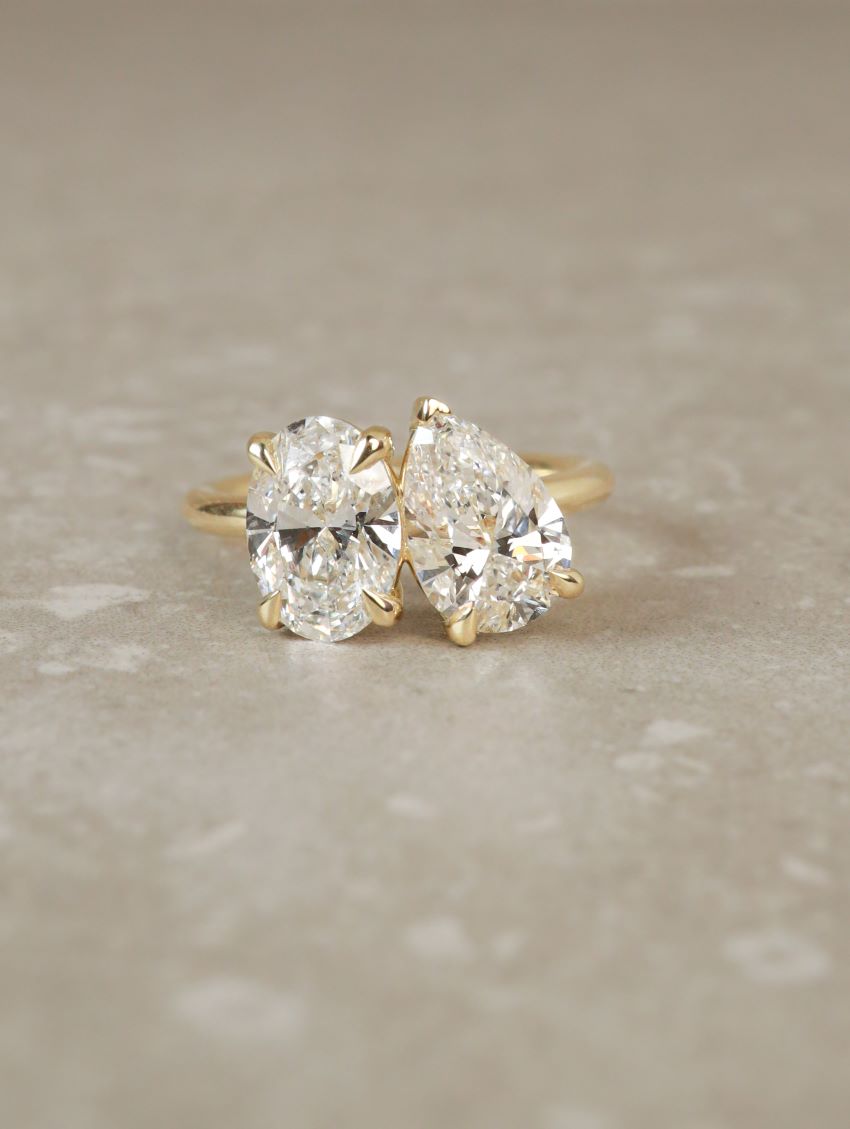
Colour changes how a stone reads at the same carat weight. A deep sapphire or emerald will visually dominate a lighter diamond of the same size, while a paler stone, such as a soft morganite or light aquamarine, can disappear next to a strong diamond.
As a general guide:
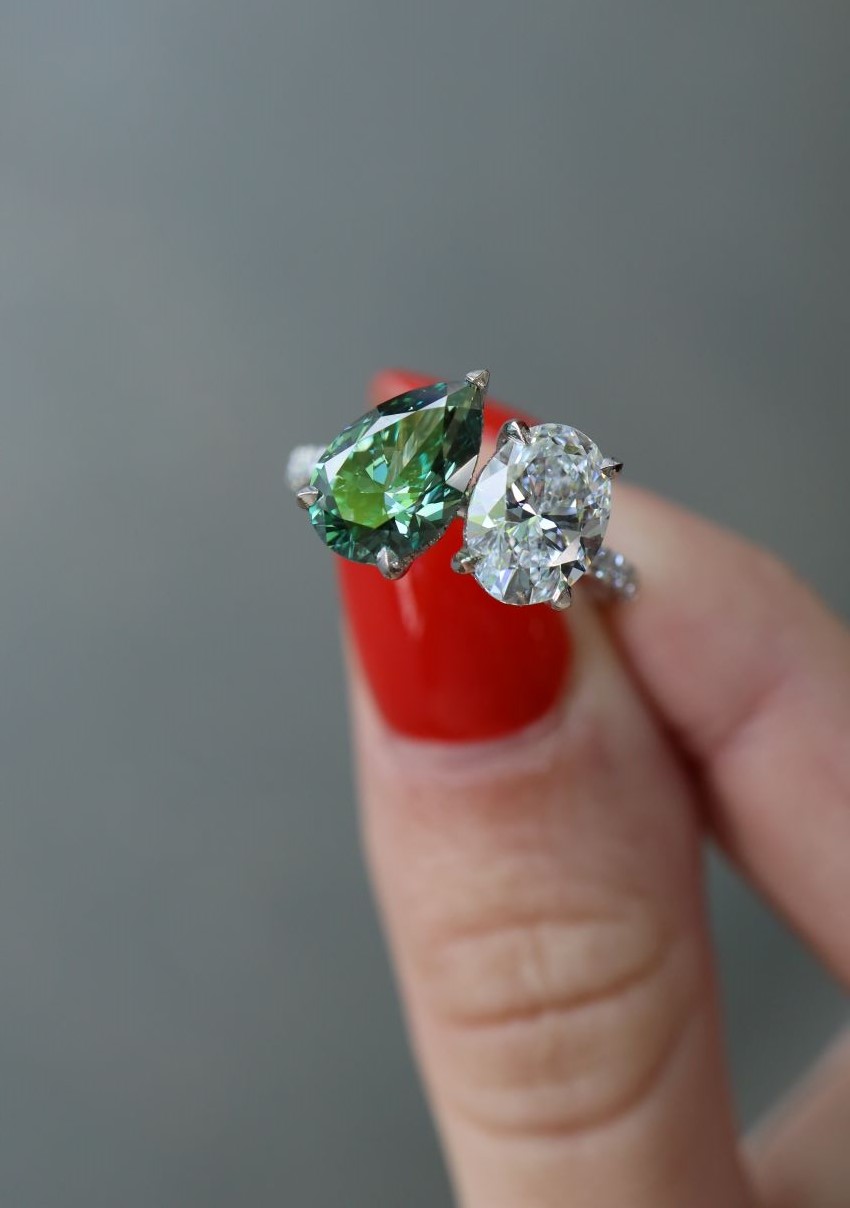
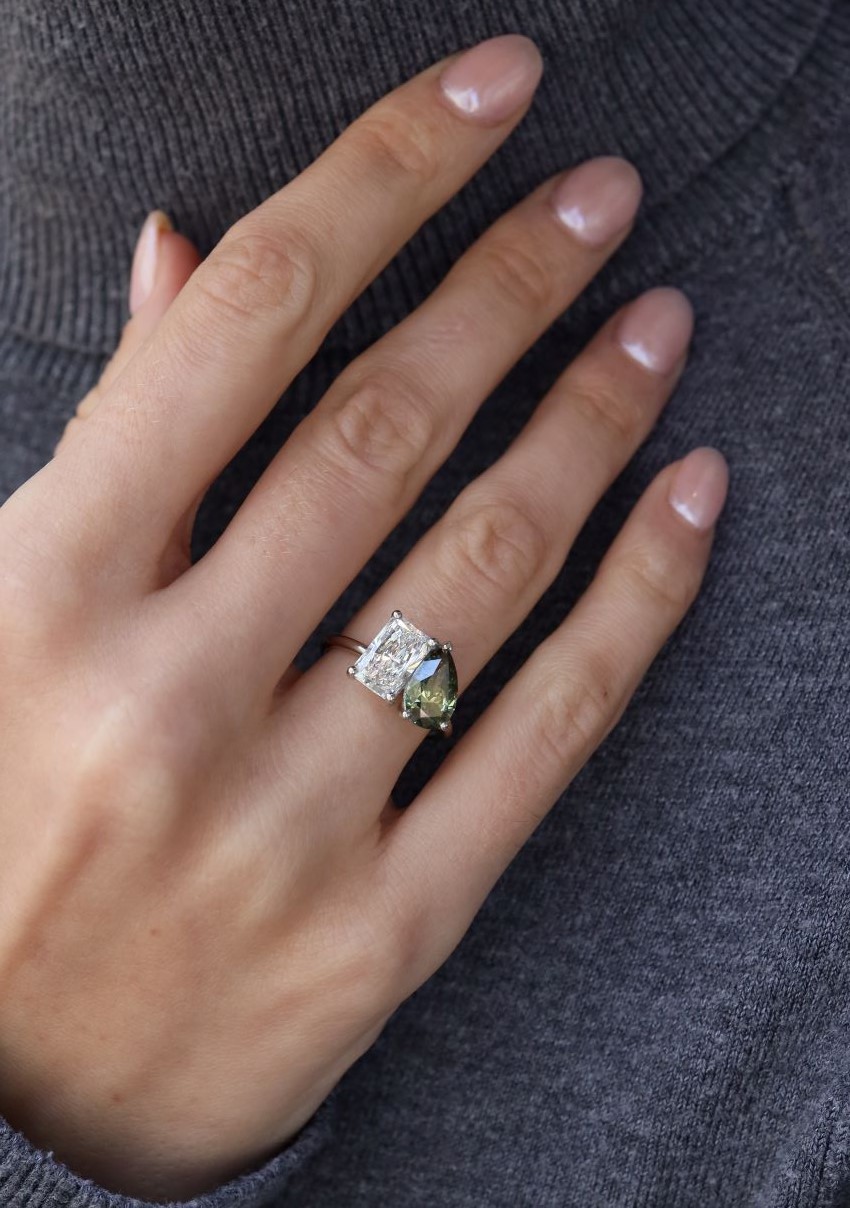
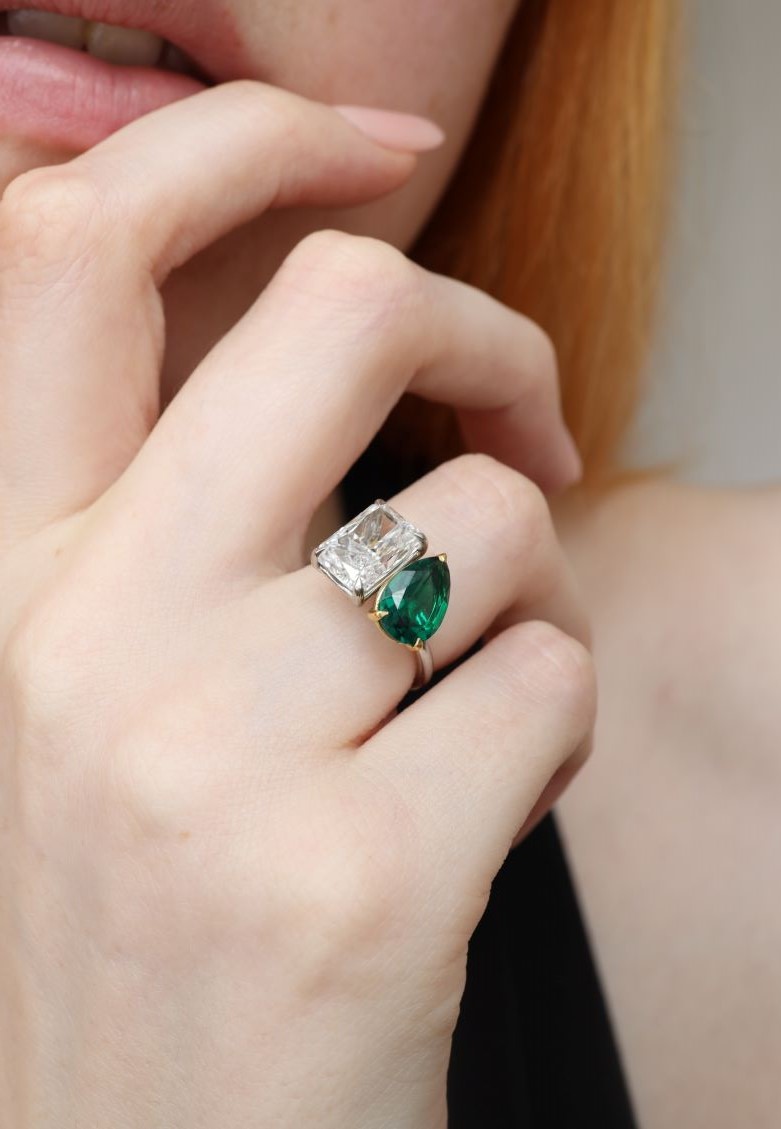
A few combinations we see requested most often, each suited to a different look:
Diamond and sapphire: the classic pairing, from deep royal blue to softer teal tones, and one of the most versatile for both white and yellow gold settings
Diamond and emerald: a striking, high contrast combination that works especially well when the two stones share a similar cut for visual balance
Diamond and ruby: a warmer, romantic pairing, often chosen in heart or pear shapes for the coloured stone
Diamond and fancy coloured diamond: for a client who wants the two stone look without introducing a second gemstone type, pairing a white diamond with a champagne or light yellow diamond keeps the palette closer together
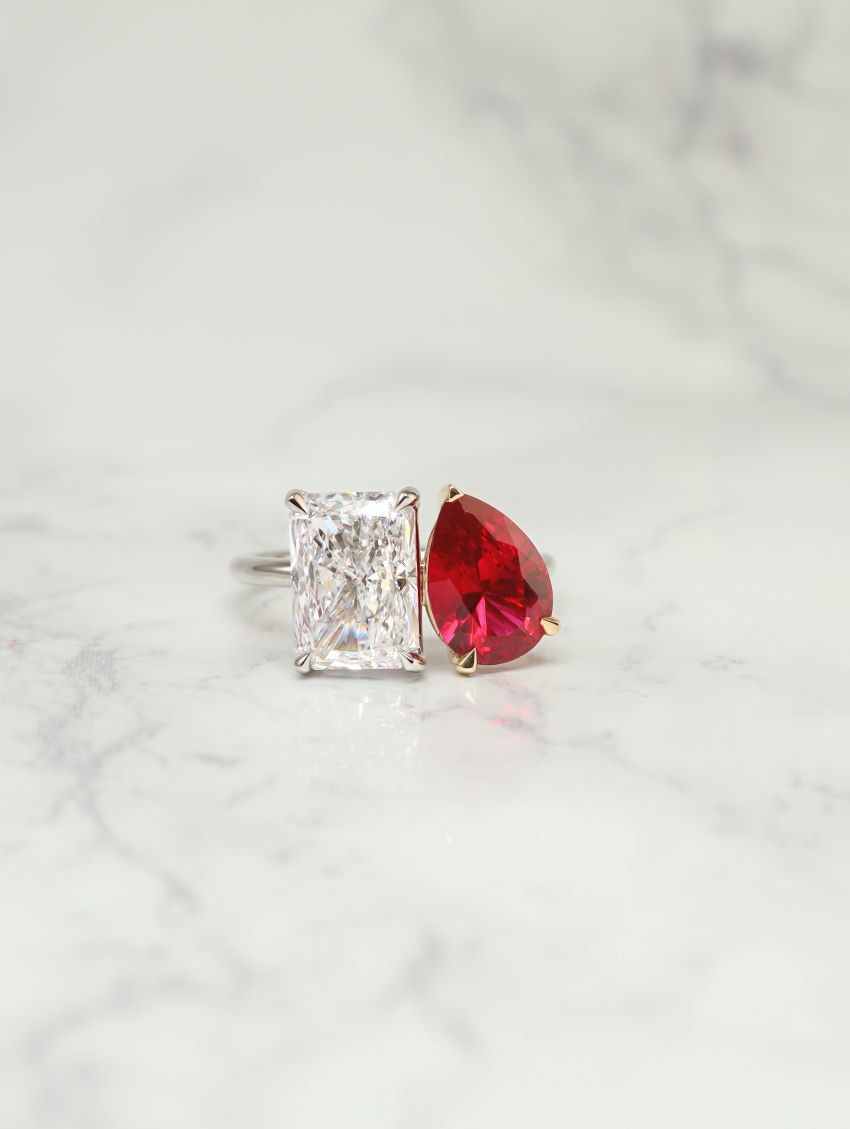
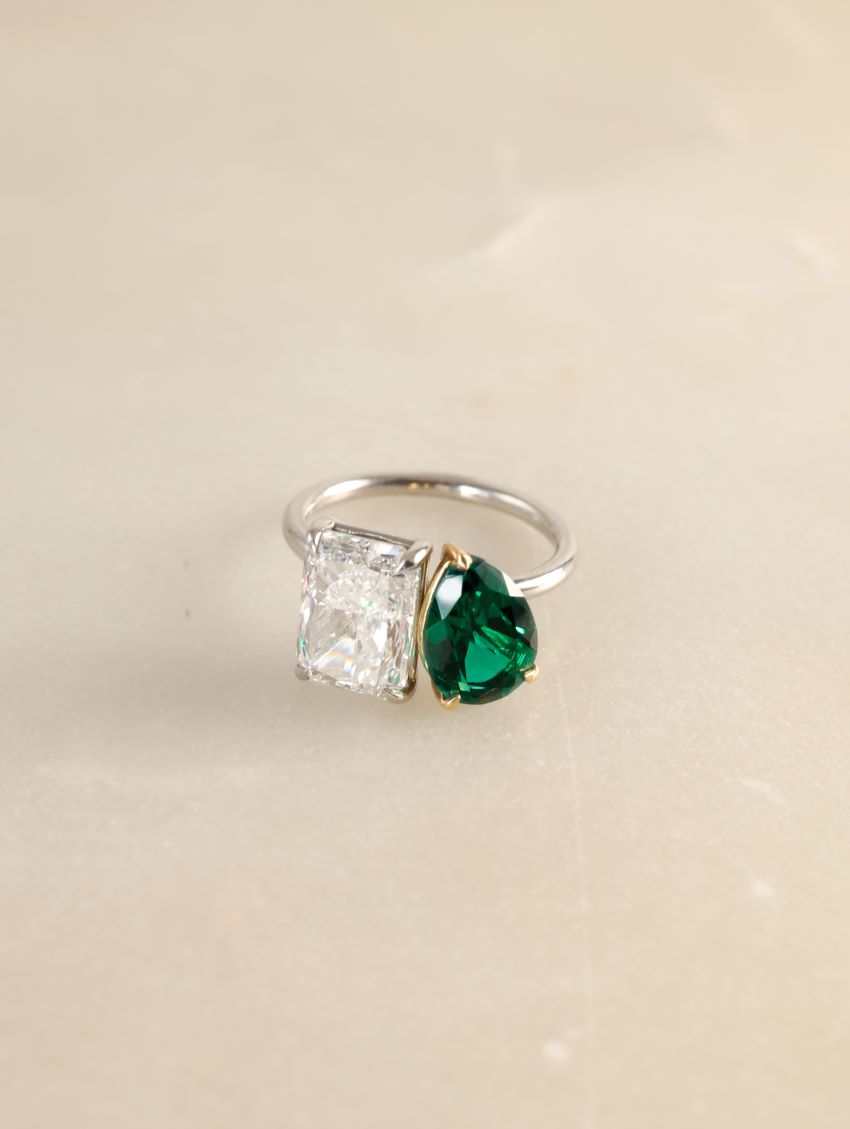
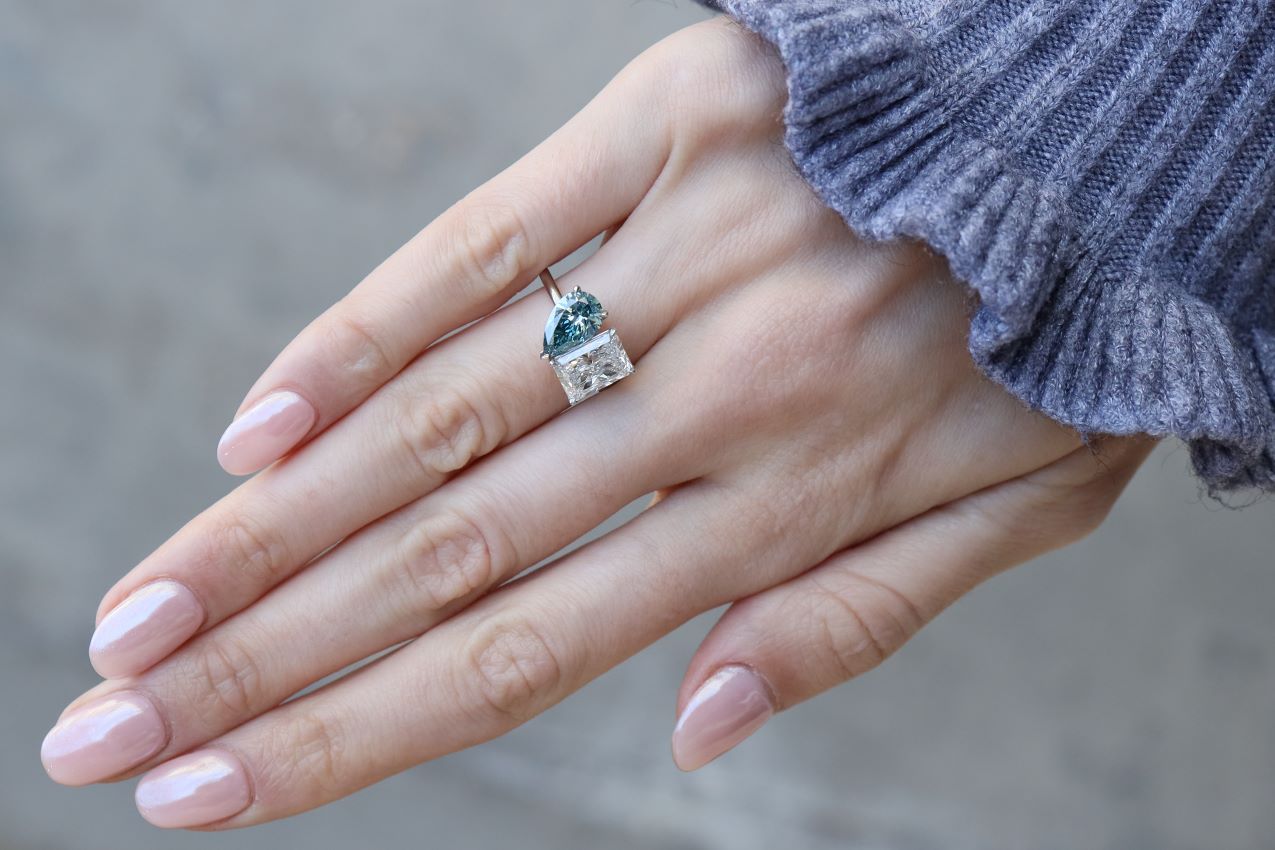
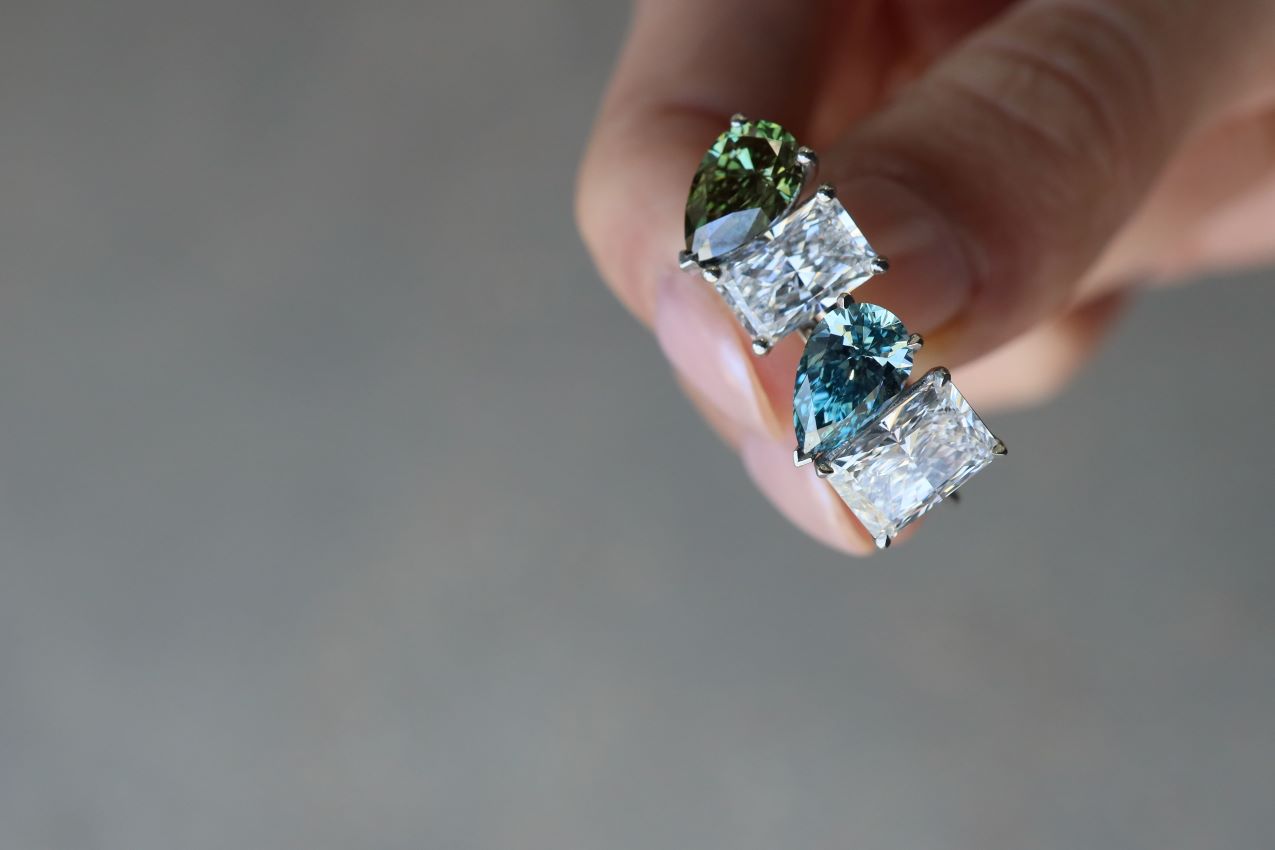
Many toi et moi settings use a different metal for each stone's claws, typically platinum or white gold for the diamond and yellow gold for the coloured stone. This is a styling choice rather than a rule: it can help each stone stand out in its own right, but a single consistent metal tone throughout also works well for a more streamlined look. Consider how the ring will sit alongside any existing jewellery or wedding band before deciding.
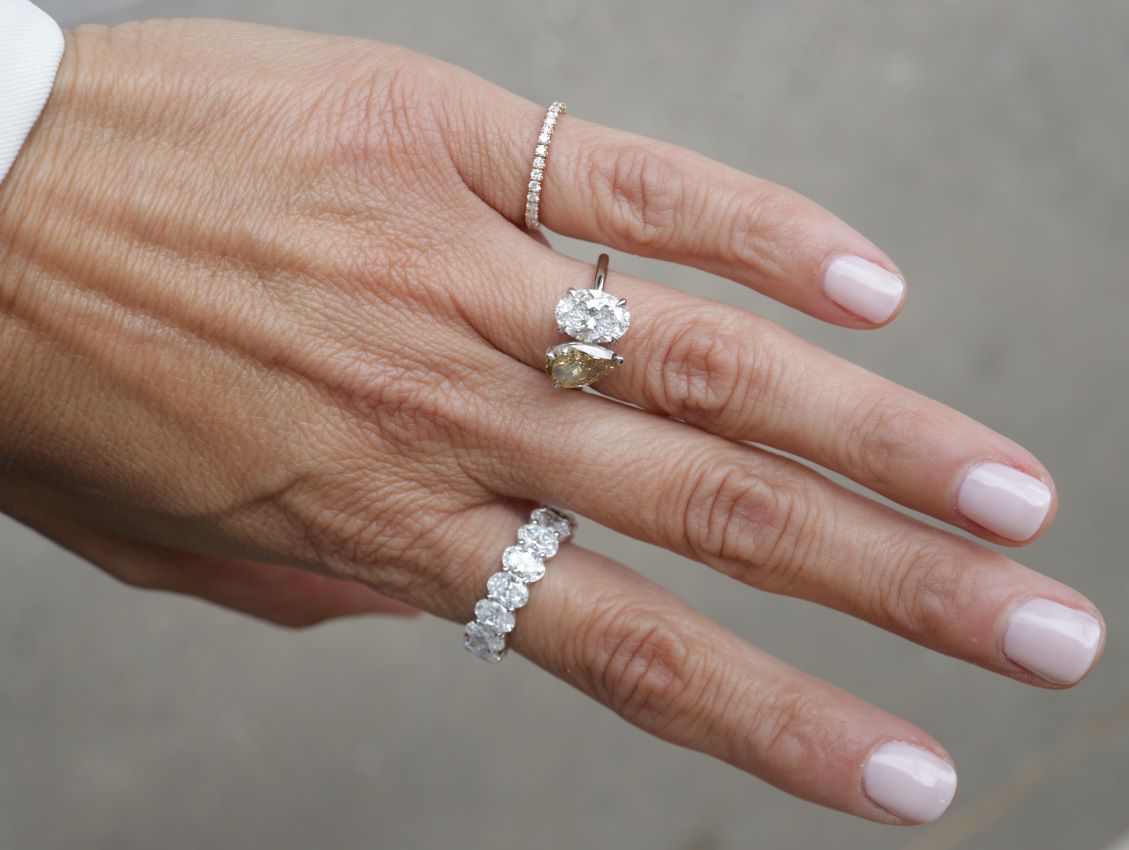
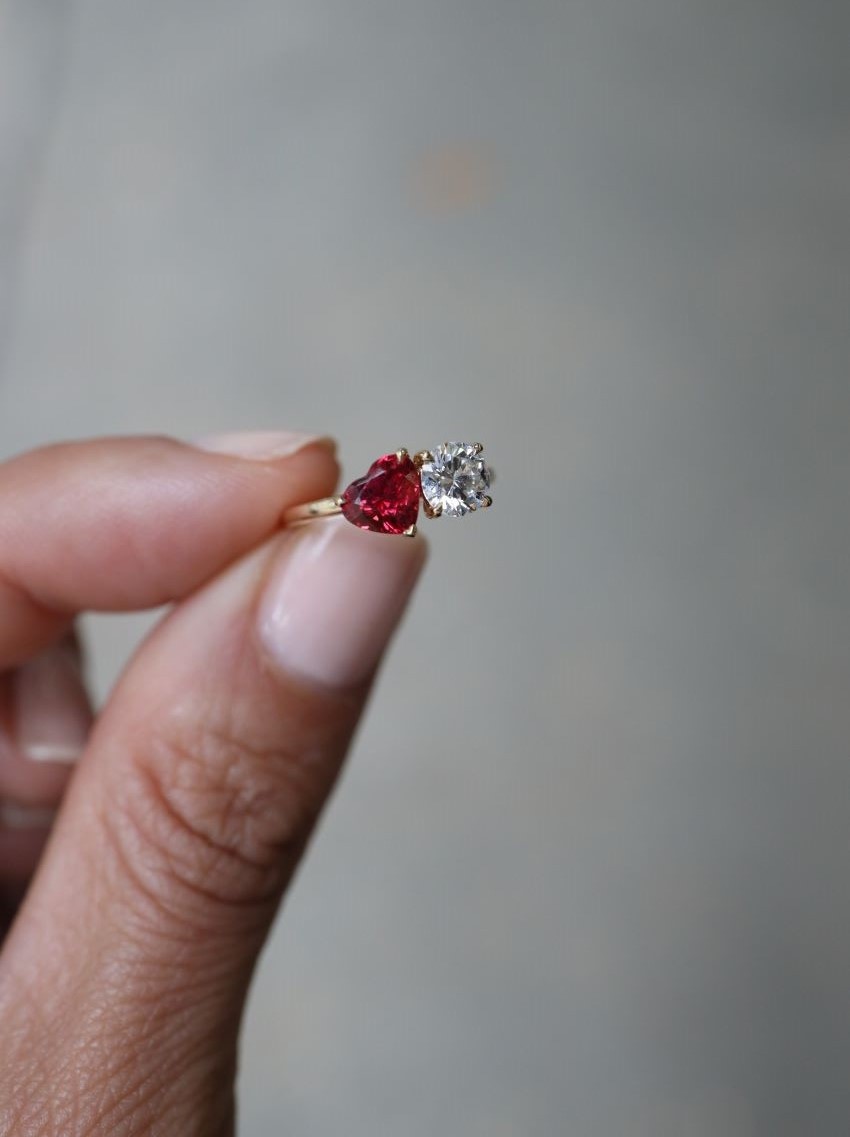
No. While diamond and coloured gemstone pairings are the most common, double diamond and double coloured gemstone toi et moi rings are both popular, particularly when the stones are similar shapes in slightly different sizes.
Sapphire is currently the most requested pairing, largely because its range of tones, from deep blue to teal and green, works with both traditional and contemporary settings.
Not necessarily. Many clients choose a plain band or a delicate pave band to keep the focus on the two centre stones, though a diamond set band works equally well if you want extra sparkle.
It can be, depending on the setting style, since the two stone claws sit close together. This is worth discussing with your jeweller at the design stage rather than after the ring is made.
Book a complimentary appointment with our team to see diamond and coloured gemstone combinations in person before you commit to a design.