
- Need Help?
 Virtual Appointment
- Book Appointment
- 0
 Your shopping cart is empty
Login to view previously saved items or track a recent order.
Login to view previously saved items or track a recent order.
 Back
Back06/19/2026
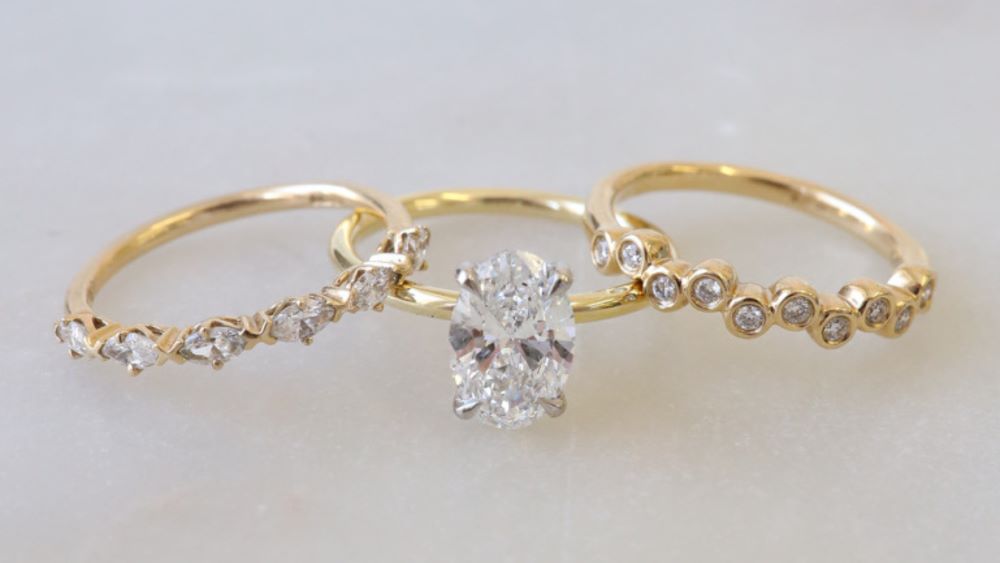
The oval cut has become one of the most requested silhouettes for solitaire engagement rings, and for good reason. Its elongated shape flatters almost every hand, its larger surface area makes it appear bigger than a round diamond of the same carat weight, and its clean lines pair beautifully with almost any setting style. But that same elongated curve is exactly what makes choosing a wedding band trickier than it is for a round stone. A straight band that sits flush against a round solitaire can leave a visible gap beneath the curve of an oval, and the wrong pairing can throw off the look of an entire stack. In this guide we walk through plain, curved, channel set, microset, bezel, two row and grain set wedding bands, the main ways to pair an oval solitaire, along with practical tips for getting a flush, comfortable fit that will last a lifetime of wear.
Round diamonds sit symmetrically inside their setting, so a plain straight band tends to follow the curve of the ring shank evenly on both sides. An oval solitaire is longer than it is wide, and depending on how high the stone sits and how the prongs are arranged, the gap beneath the diamond can be more noticeable. This is explored further in our oval vs elongated cushion comparison.
This is why the choice of band matters more for an oval than for almost any other shape. Some styles, like curved bands, are built specifically to close that gap, while others, like channel set or grain set bands, work because their flexibility makes a small gap far less noticeable once the two rings are worn together.
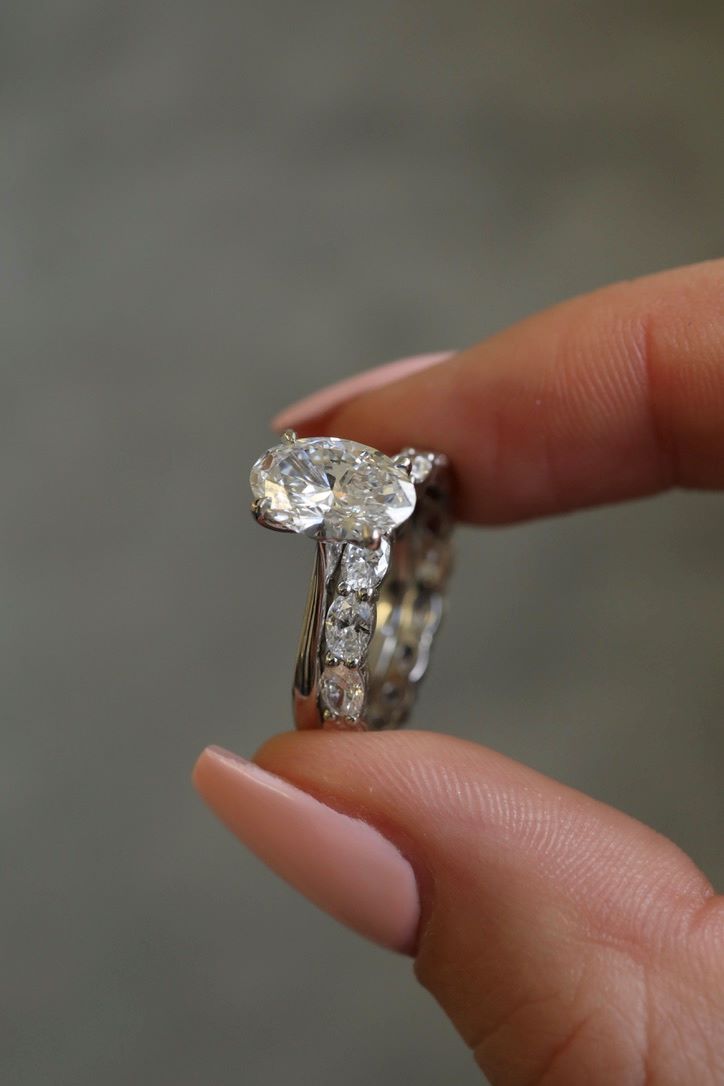
For those who would rather let the oval solitaire do the talking, a plain polished band remains one of the most timeless pairings. A simple, unembellished shank sits quietly beneath or beside the stone, adding structure without drawing attention away from the diamond. Plain bands are also the most versatile option if you plan to build your stack gradually, since they slot in easily alongside a diamond set band added later, and they tend to be the simplest style to resize. A slightly domed or knife edge profile is a popular way to add a touch of dimension while keeping the look understated. Our ultimate guide to choosing your wedding band covers the most popular plain profiles in more depth.
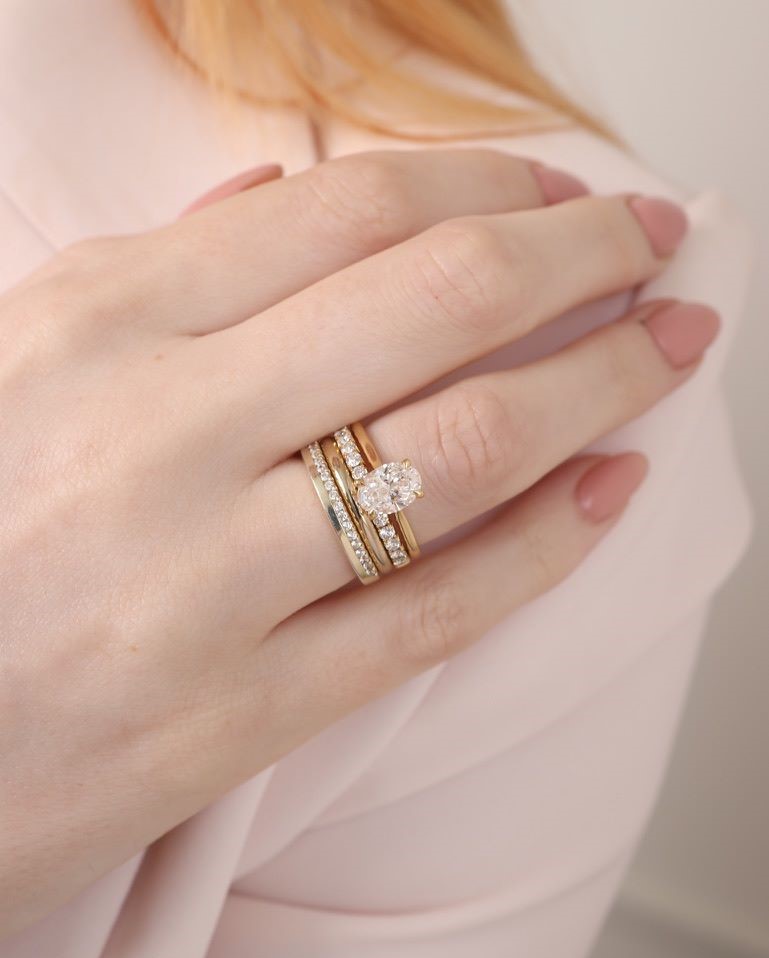
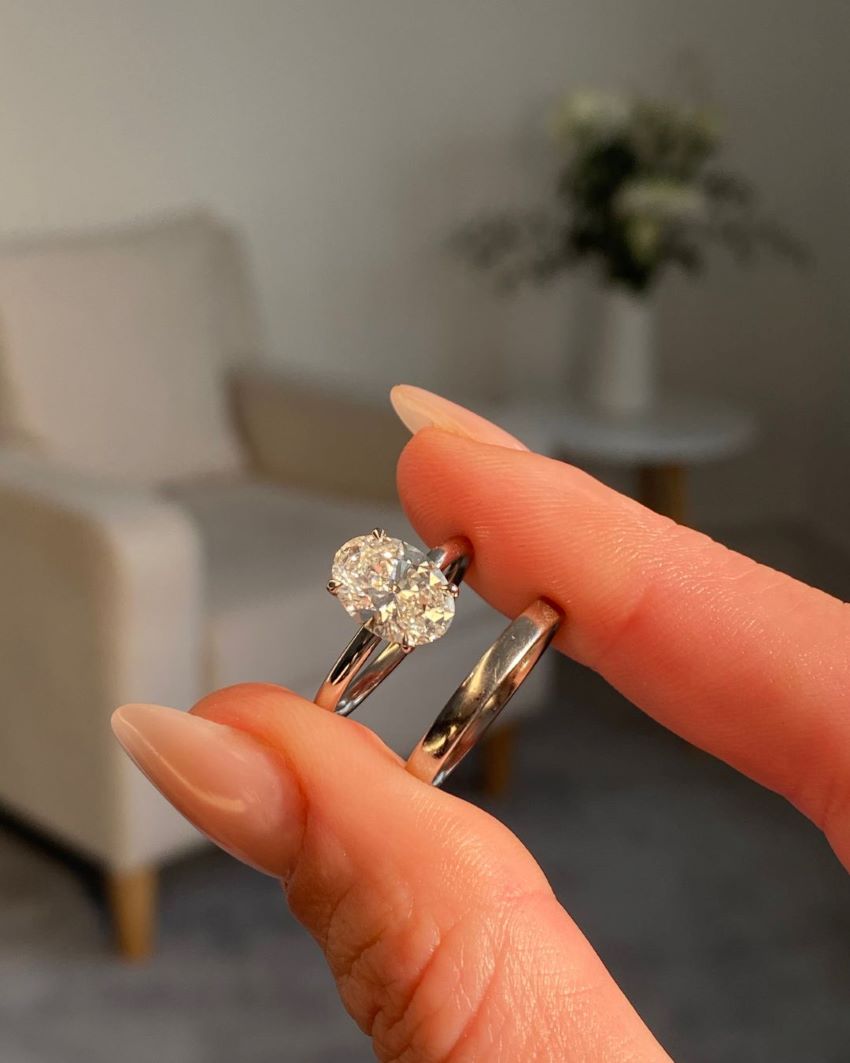
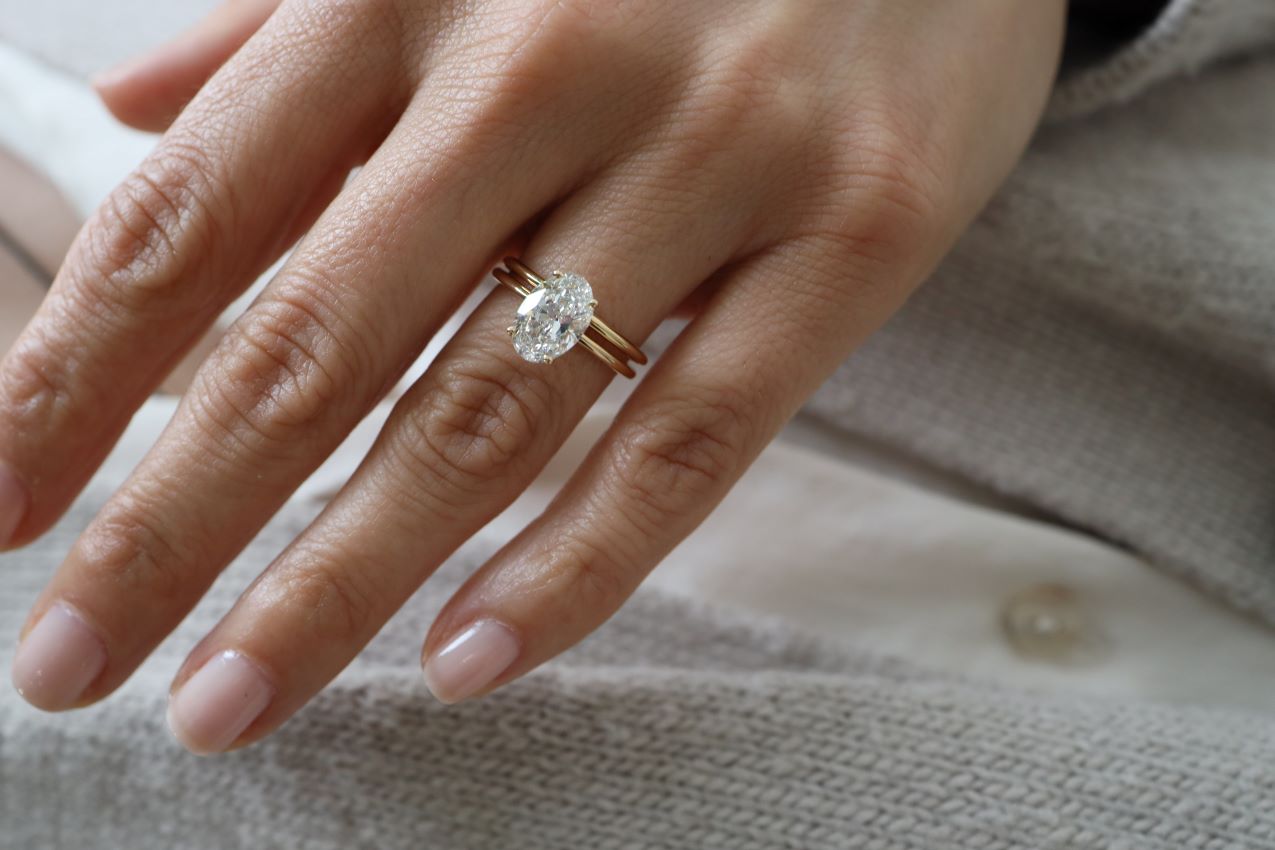
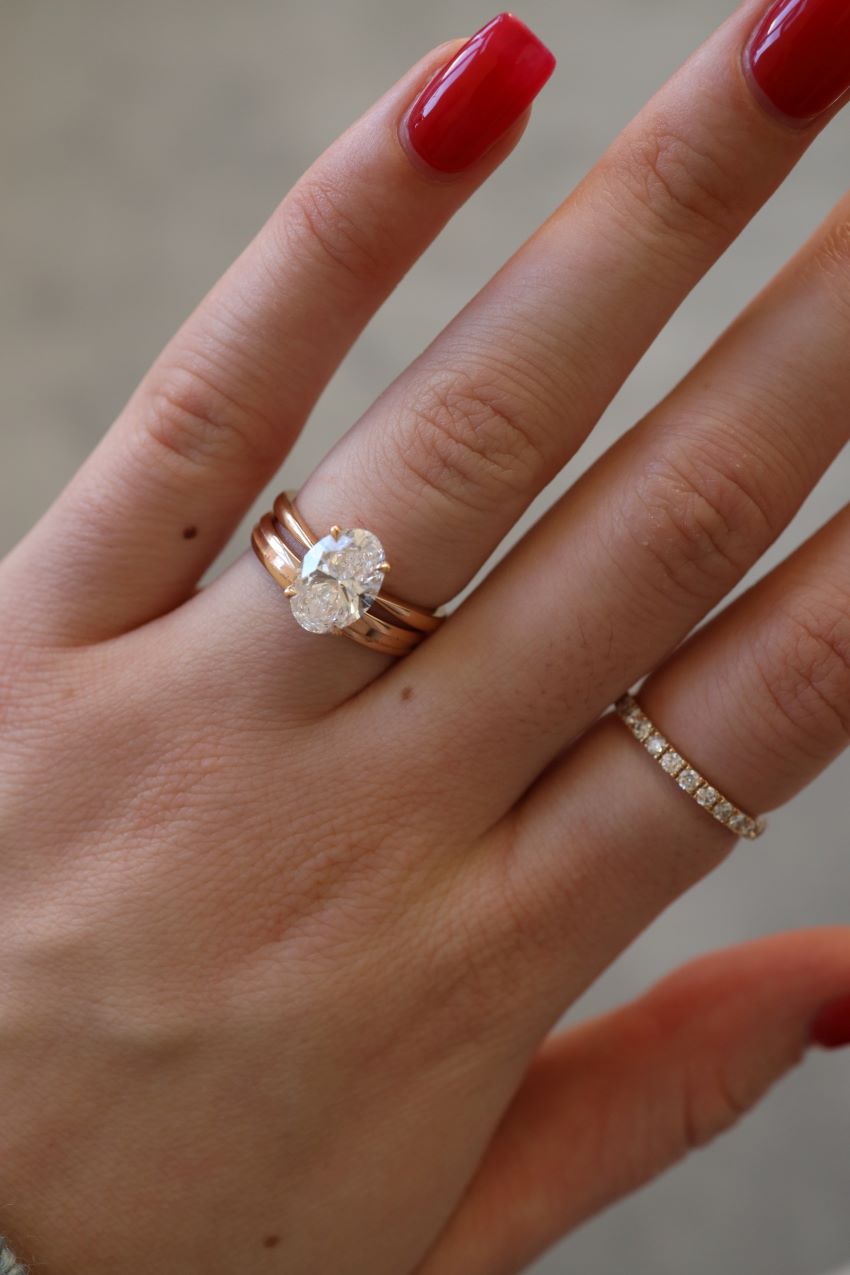
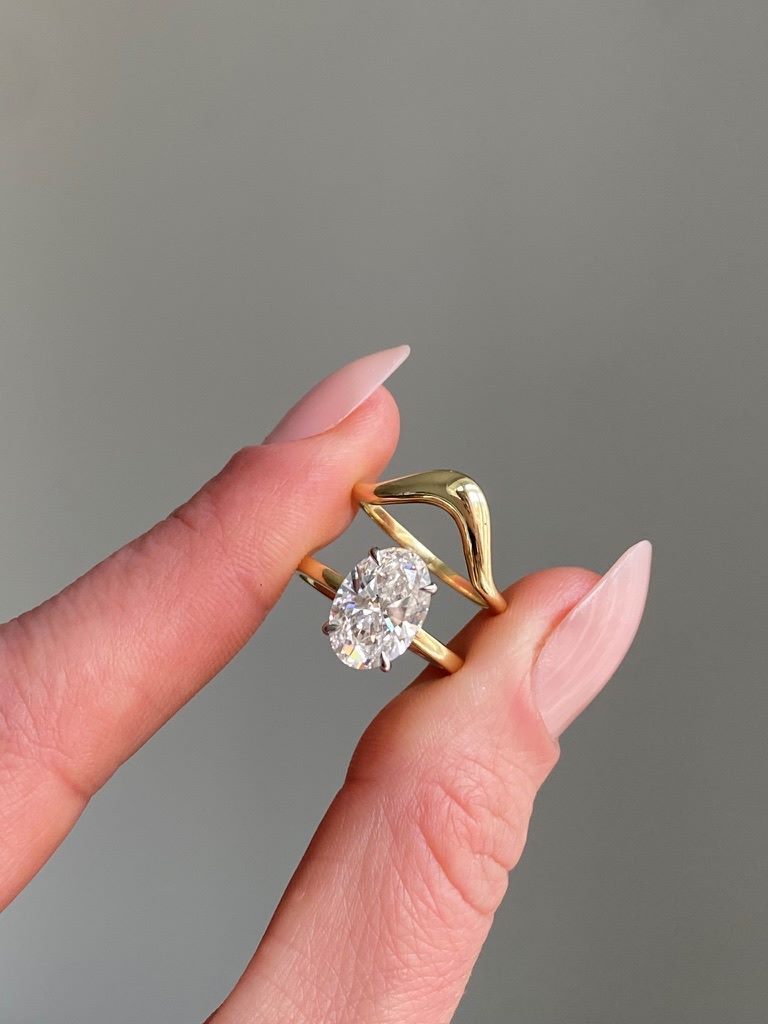
A curved band is shaped specifically to nestle against the base of an oval solitaire, dipping inward where it meets the centre stone before straightening out around the rest of the finger. This closes the natural gap created by the oval’s elongated shape and lets the two rings sit flush against each other. Curved bands work particularly well with four claw and six claw settings, where the prongs create a slightly raised profile, as covered in our four prongs versus six prongs guide. A subtle wave or notch in the shank is often all that is needed to achieve a seamless fit.
Channel set bands hold each diamond flush between two parallel walls of metal, so there are no raised prongs to catch on clothing or hair. The result is a smooth, low profile band with a continuous line of sparkle, which makes it a popular choice for anyone whose hands are often in water or who simply prefers a more streamlined fit. Because the setting protects the edge of each stone, channel set bands also tend to hold up particularly well to everyday wear. Read more in our ultimate guide to choosing your wedding band.
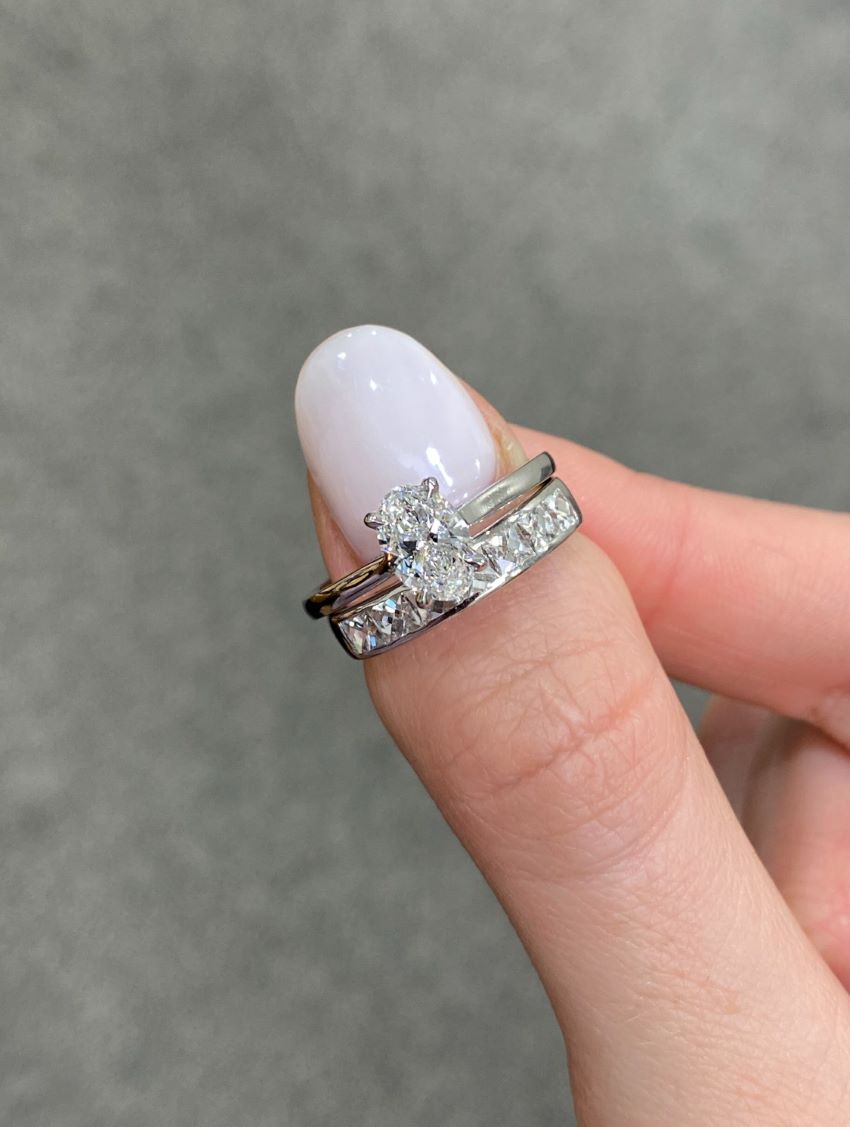
Microset, sometimes called micro pavé, bands use the smallest diamonds available, set with the least possible metal so the focus stays on the continuous line of sparkle rather than the band itself. The delicate scale makes microset a natural partner for an oval solitaire, adding texture without competing with the centre stone, and because the band itself stays so slim it sits comfortably beneath most engagement ring settings.
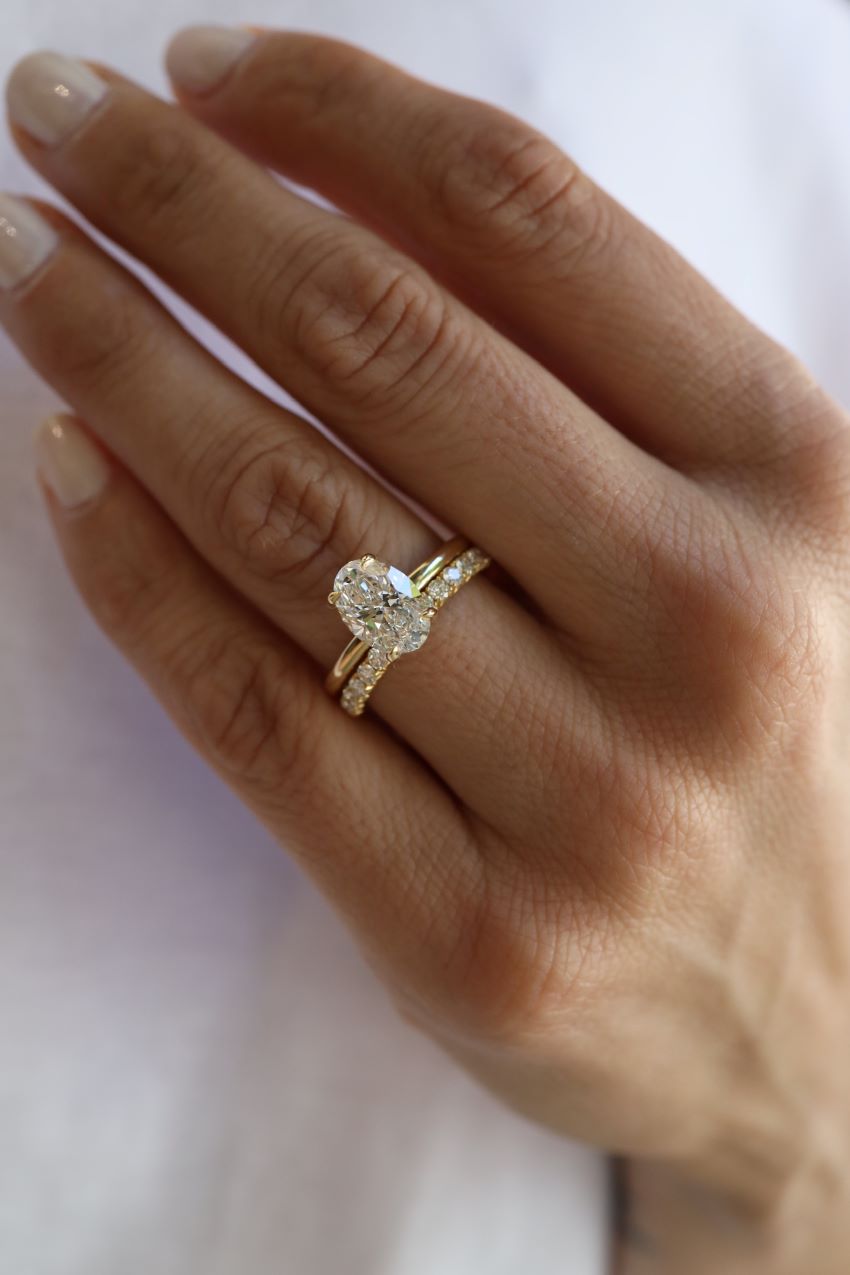
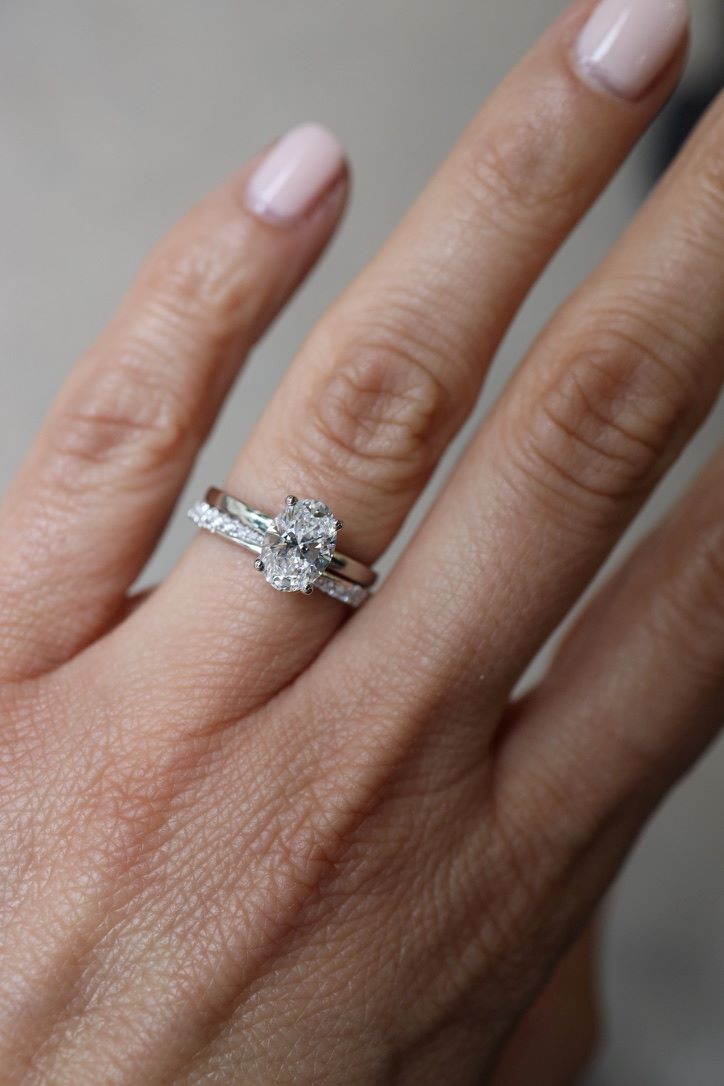
Bezel set bands rub each diamond into a smooth metal surround rather than leaving it raised in a claw, giving a softer, more tactile finish. Graduated bezel bands, where the stones increase in size as they travel toward the centre, are an elegant way to draw the eye toward the oval without overwhelming it, and the low profile setting makes them comfortable for everyday wear.
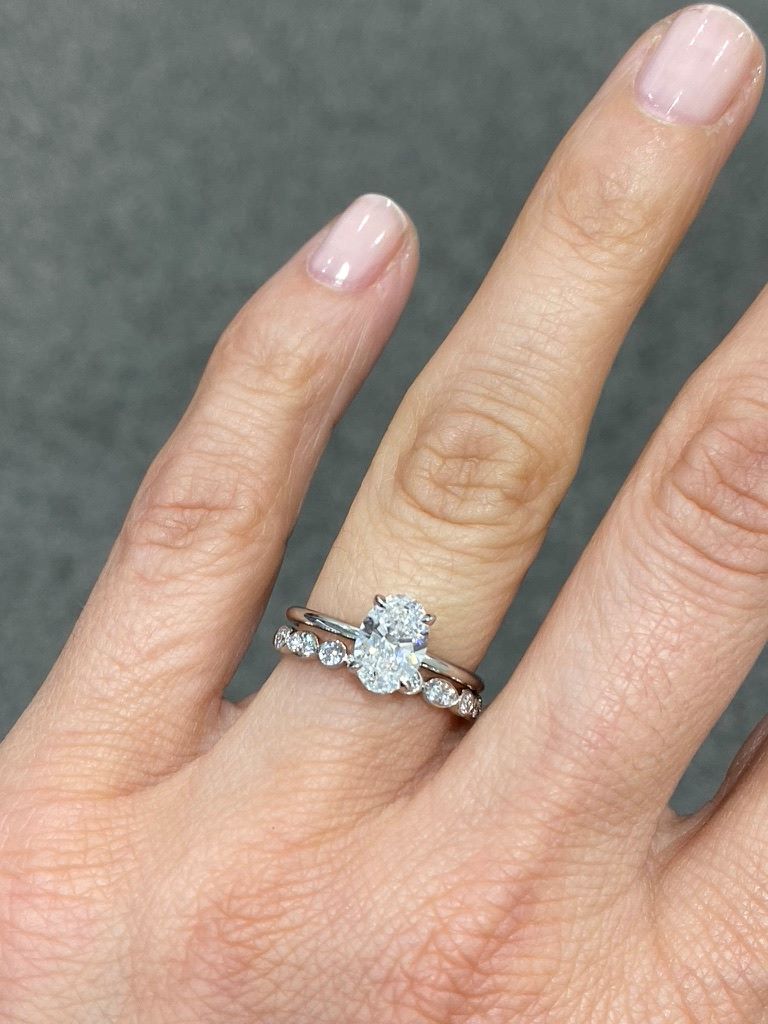
For more sparkle without reaching for a wider single row, a two row band sets two or three parallel lines of diamonds side by side. The added width brings presence and contrast against a plain oval solitaire, while still reading as a deliberate, tailored pairing rather than an oversized statement piece. Two row bands are also a popular way to bridge the gap between a delicate microset band and a fuller eternity style.
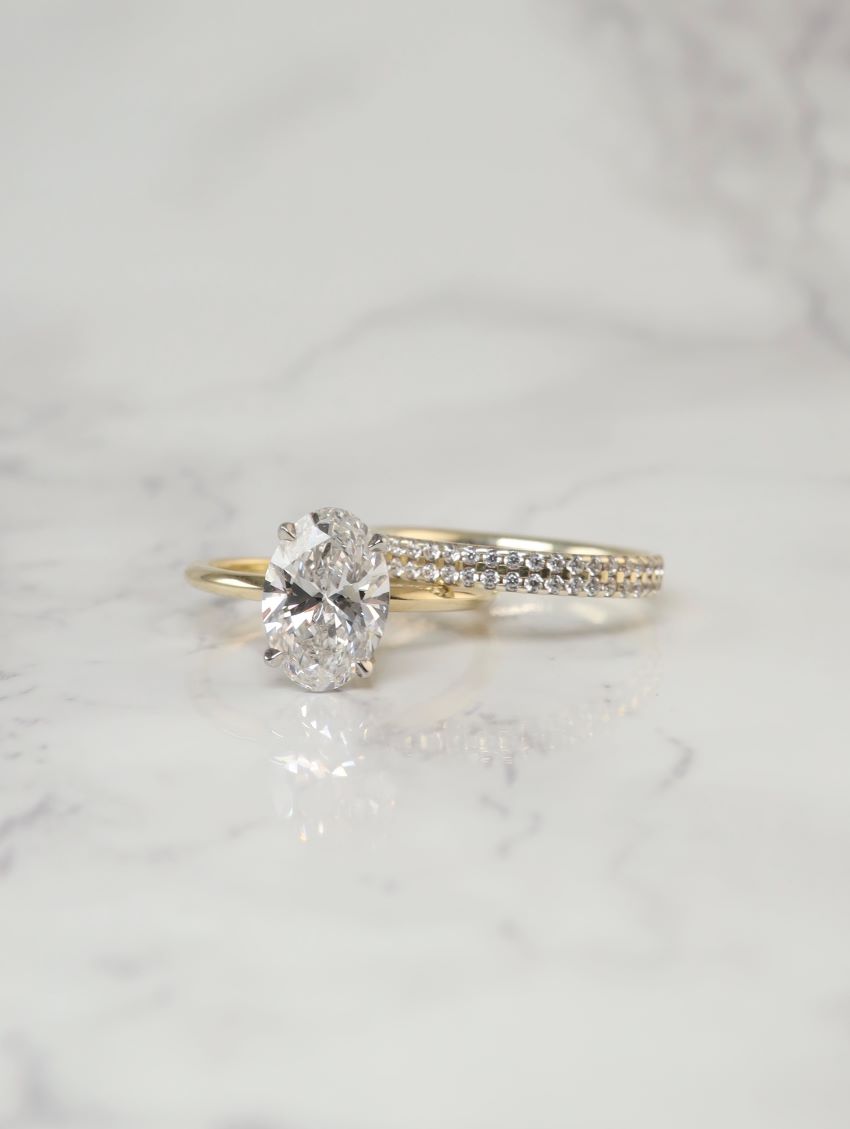
Grain set, often used interchangeably with classic pavé, bands hold each diamond with tiny shared claws, leaving small beads of metal visible between the stones. It is one of the most traditional pairings for an oval solitaire, offering a little more texture and depth than a microset band while keeping the centre stone as the clear focal point.
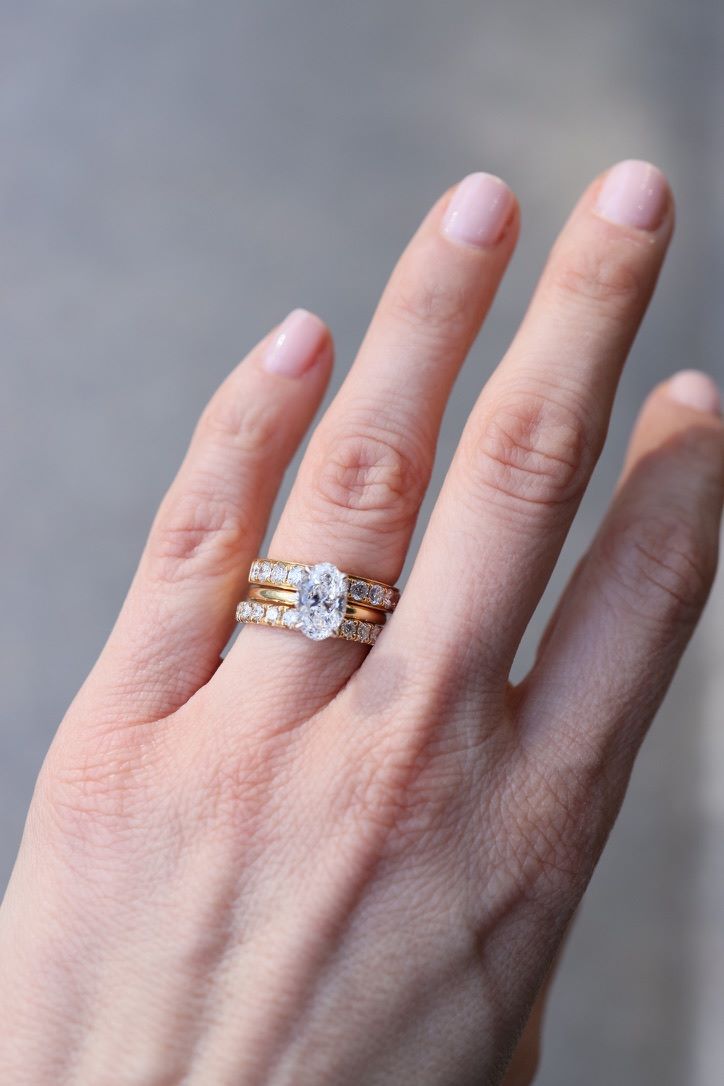
Not every pairing needs to happen at once. Many of our clients choose their oval solitaire first, then return for a wedding band closer to the day itself, and add an eternity or anniversary band further down the line. Trying a few options against the same ring side by side; plain, curved, channel set, microset, bezel, two row or grain set, is the easiest way to see how different band widths and diamond densities change the overall look before committing.
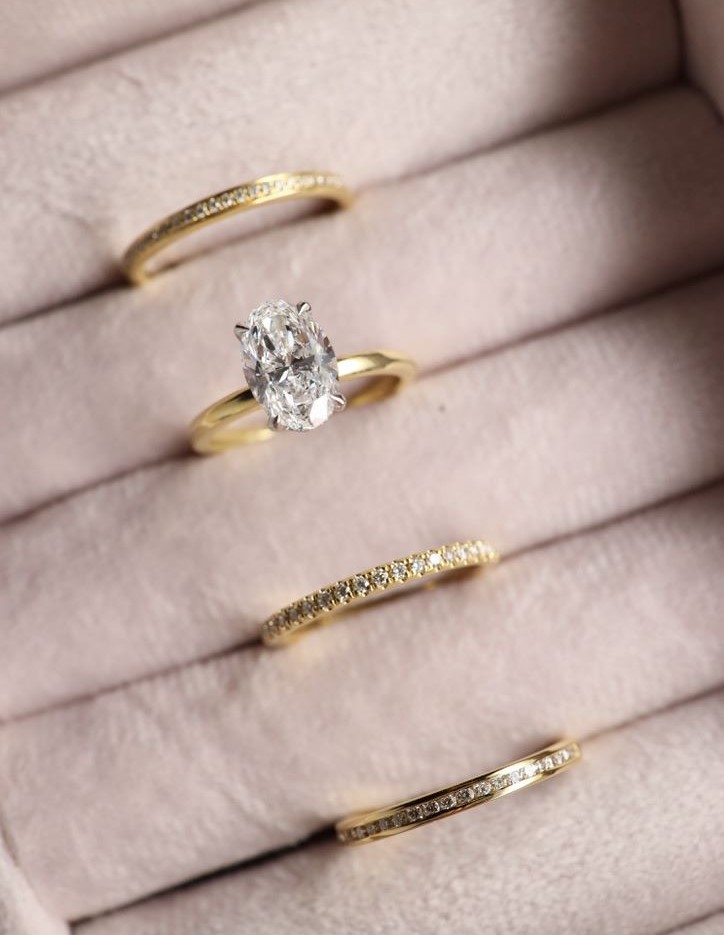
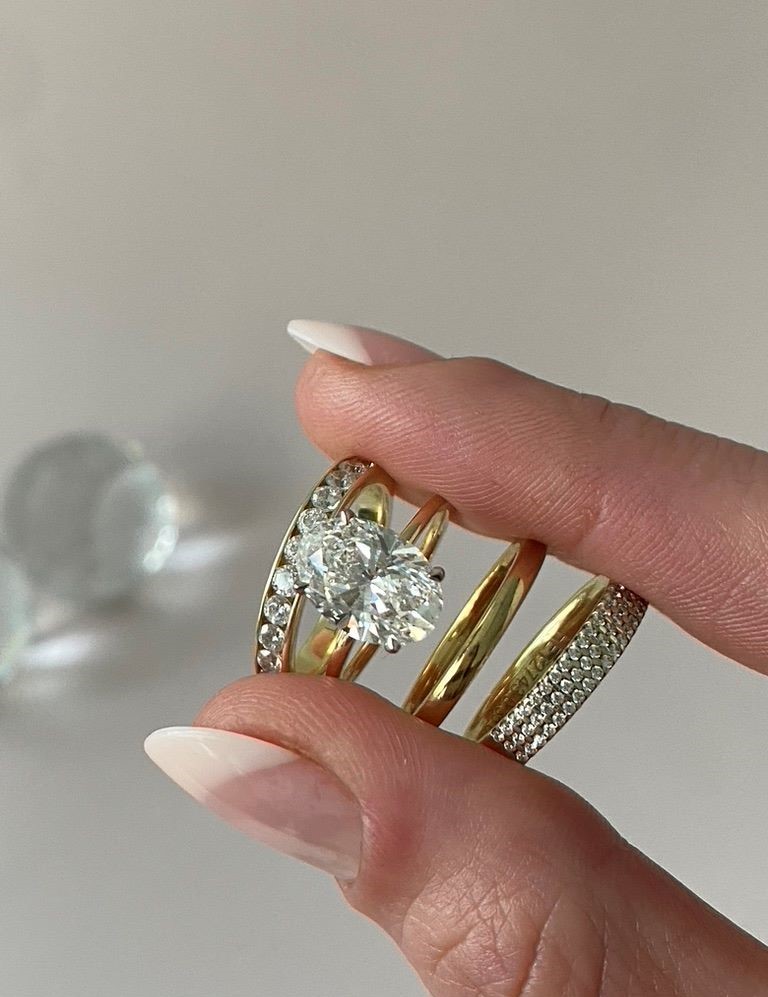
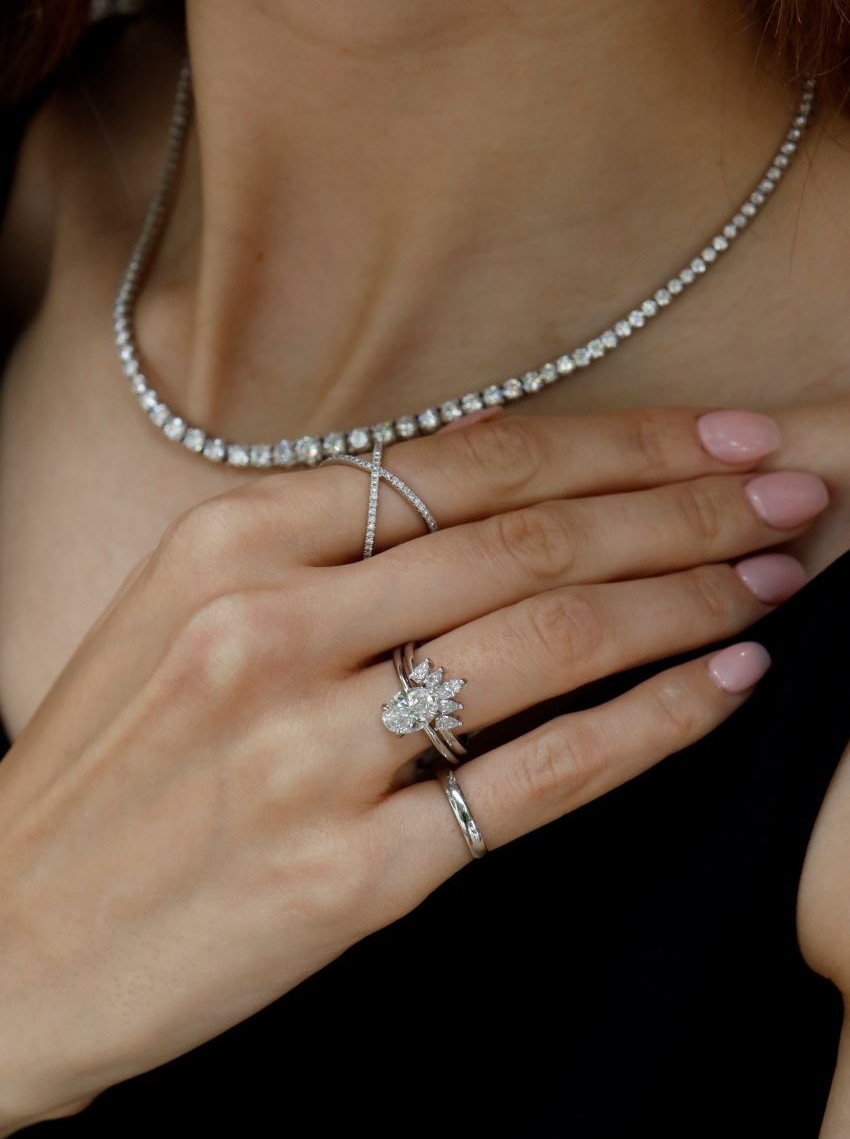
An oval solitaire pairing does not stop at the ring finger. Layering a delicate beaded band or stacking ring on an adjacent finger draws the eye along the whole hand, while a fine diamond tennis necklace worn at the same time as a cluster style stack creates a cohesive, elevated look for special occasions. See our trend alert: fancy shape eternity rings for more ways to layer your pieces.
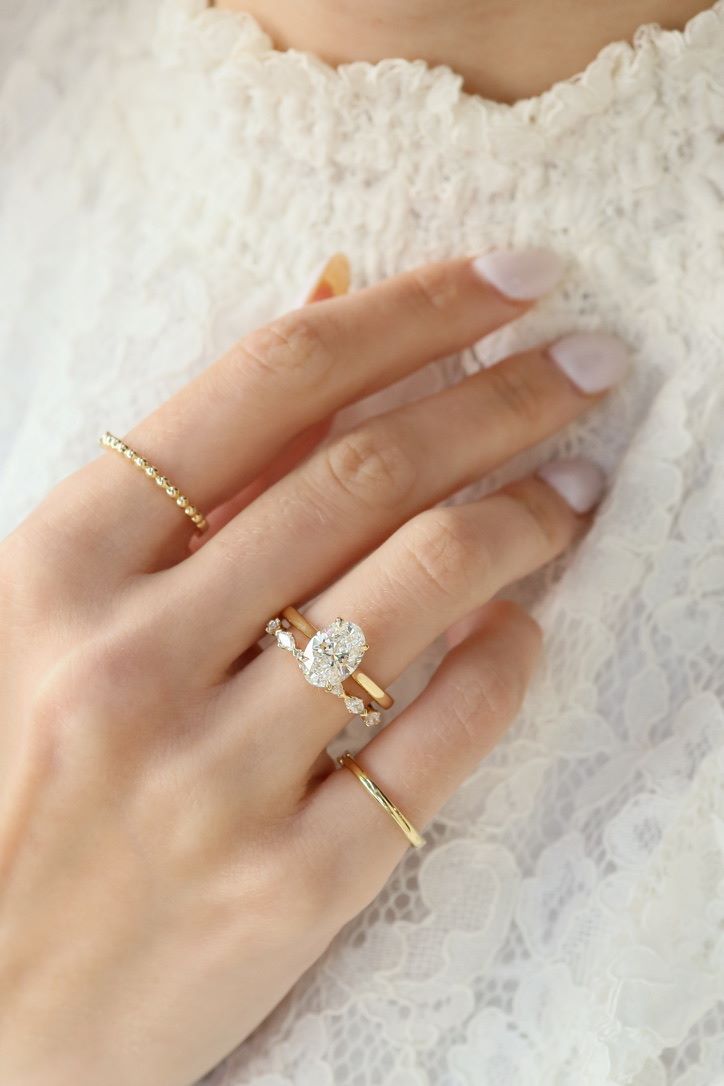
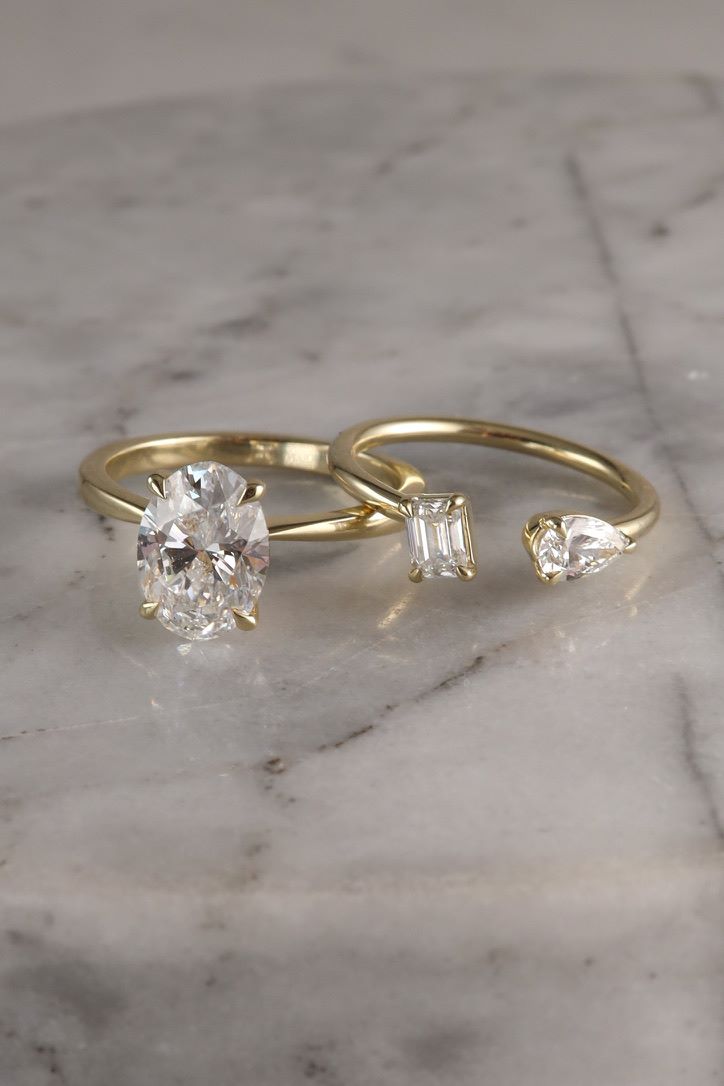
Every oval solitaire is cut and set slightly differently, which means the same wedding band can sit beautifully against one ring and leave a noticeable gap against another. The most reliable way to get a flush, comfortable fit is to bring your engagement ring to a Hatton Garden appointment, where we can show you plain, curved, channel set, microset, bezel, two row and grain set band options against your own stone before anything is made. Read more in our bespoke engagement rings guide.
Whether you already know the look you want or would simply like to see what is possible first, Book an Appointment with our team to view band options against your own ring, or Start Designing your perfect pairing online today.
The best wedding band for an oval engagement ring depends on both the look you want and how you wear your jewellery day to day. Curved bands close the gap beneath the stone for a flush fit, while plain, channel set, microset, bezel, two row and grain set bands each bring a different level of texture and sparkle without needing to follow the curve exactly.
A curved band is generally the better choice if you want the two rings to sit completely flush, since it follows the shape of the oval rather than running in a straight line beneath it. A straight band, such as a channel set or grain set style, is a good option if you prefer a more classic look or are pairing with a wider band where a slight gap will not be noticeable.
Microset, or micro pavé, uses the smallest diamonds available with the least amount of visible metal, giving a very fine, delicate finish. Grain set, often used interchangeably with classic pavé, uses slightly larger stones held by small shared claws, so a touch more metal and texture is visible between each diamond.
Yes, channel set bands are one of the most practical options for everyday wear since each diamond sits flush between two metal walls with no raised prongs to catch on clothing, hair or fabric. This setting also helps protect the edges of the stones over time.
Yes, two row and wider bands are a popular way to add extra sparkle and contrast against an oval solitaire without changing the centre stone. Because the diamonds run continuously across two or three rows, the band reads as a deliberate style choice rather than competing with the oval for attention.
To avoid a visible gap, choose a band that has been shaped or curved specifically to nest against your engagement ring’s profile. Bringing your ring to an appointment so the new band can be checked against it directly, rather than ordering a generic curved band online, is the most reliable way to achieve a flush fit.
Yes, mixing metals is a popular and growing trend, particularly pairing a yellow or rose gold solitaire with a white gold or platinum diamond set band for contrast. The key is to keep the karat and finish consistent across the pieces so the tones complement rather than clash.
It is not necessary to buy both at once. Many people choose their oval solitaire first and select a wedding band closer to the wedding date, which also allows time to try different plain, curved, channel set, microset, bezel, two row or grain set options against the ring before deciding.