
- Need Help?
 Virtual Appointment
- Book Appointment
- 0
 Your shopping cart is empty
Login to view previously saved items or track a recent order.
Login to view previously saved items or track a recent order.
 Back
Back12/26/2025
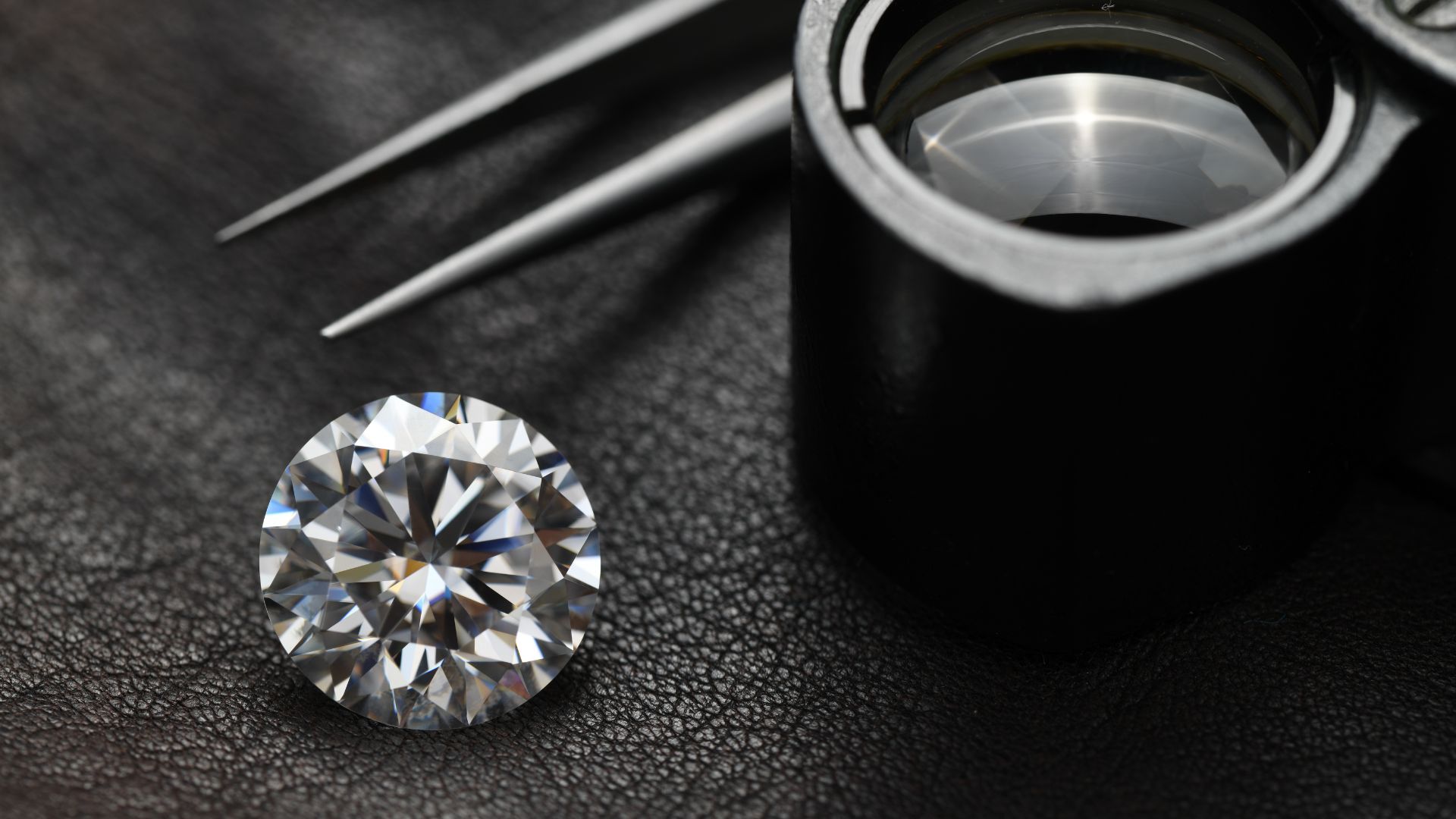
When choosing a diamond, colour is one of the most important factors and also one of the most confusing.
If you’ve ever seen diamonds described as D, E, F or G and wondered what those letters actually mean, you’re not alone. In this guide, we’ll explain diamond colours according to the diamond colour chart, how the grading works, and how to choose the right colour for your engagement ring or fine jewellery.
The GIA diamond colour scale is the world’s leading and most trusted standard for diamond colour grading.
Before the GIA introduced this system, other grading scales used letters like A, B and C. To avoid confusion, the GIA deliberately started its scale at D, creating the universally recognised D–Z diamond colour chart we use today.
This chart grades diamonds based on how colourless they appear, ranging from completely colourless to noticeably tinted.
The GIA diamond colour chart is divided into six main categories, from colourless to light colour.
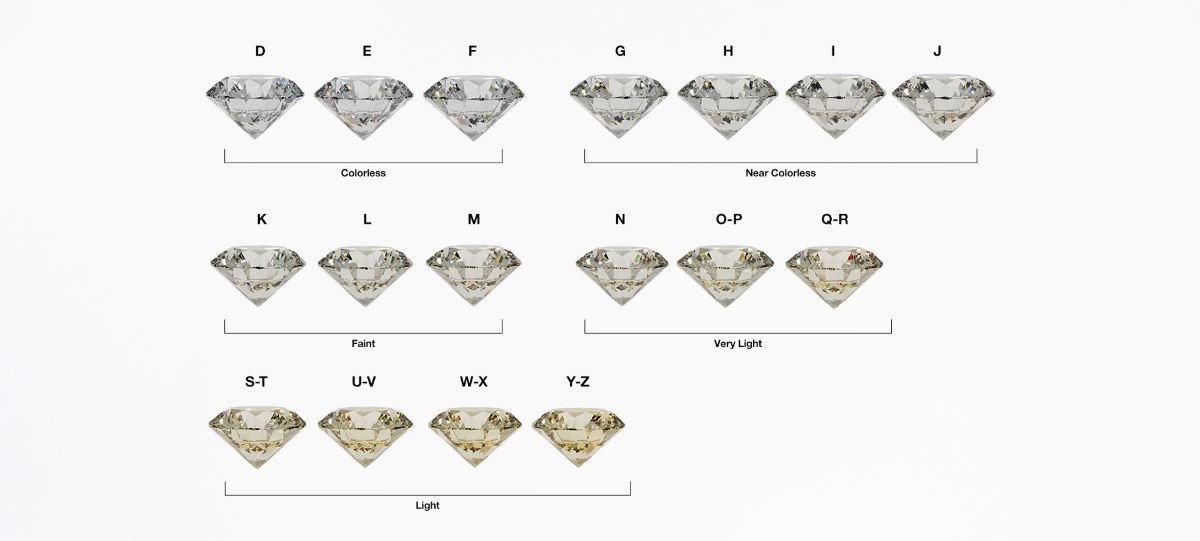
As you move down the chart, colour becomes more noticeable and value decreases.
Diamond colour has a direct impact on both appearance and price.
In general:
While brilliance and sparkle often catch the eye first, diamond colour is typically considered the second most important factor after cut quality.
For engagement rings and bespoke jewellery, we usually recommend D, E and F colour diamonds.
These diamonds are:
Many clients choose this range for peace of mind, knowing their diamond sits at the very top of the colour scale with no compromise on whiteness.
Diamond colour never exists on its own; it’s influenced by design choices.
A yellow gold setting may reflect warmth into a colourless diamond, subtly affecting how it looks.
Colour is easier to detect in larger diamonds.
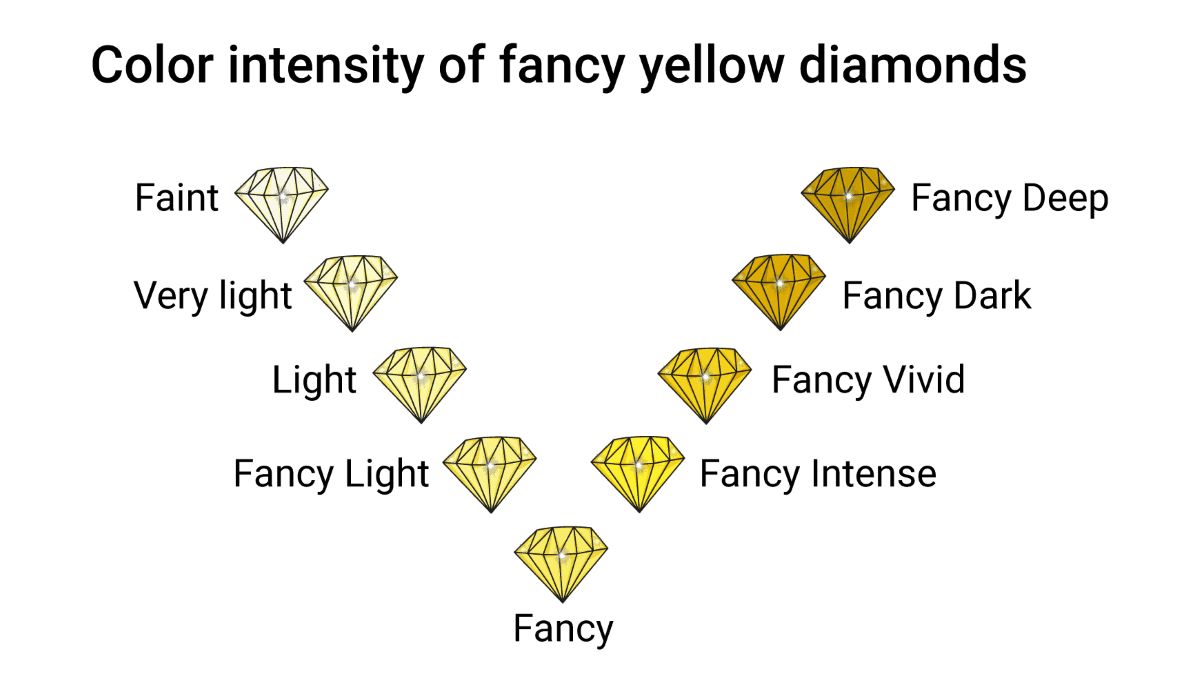
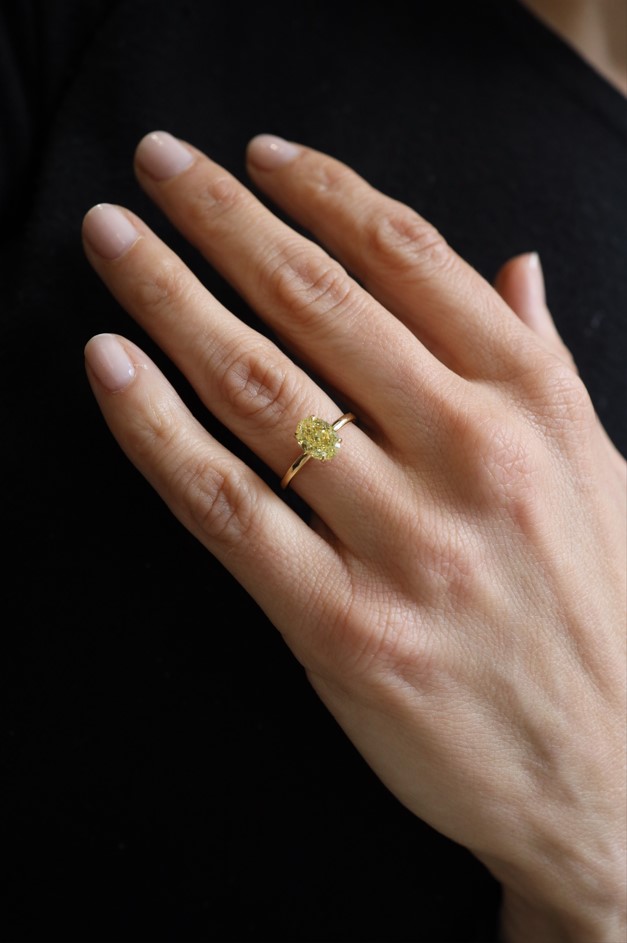
While the D–Z diamond colour chart measures how colourless a diamond is, fancy colour diamonds are something entirely different. A diamond is described as “fancy” when it shows a strong, intentional colour such as yellow, pink, blue, green or brown — and these diamonds are not graded on the D–Z scale. In fact, the more intense and evenly distributed the colour, the more valuable the diamond becomes. Fancy colour diamonds are graded by hue, tone and saturation, and can be extremely rare, especially in colours like pink and blue. Rather than aiming for whiteness, fancy colour diamonds are celebrated for their personality, individuality and bold beauty.
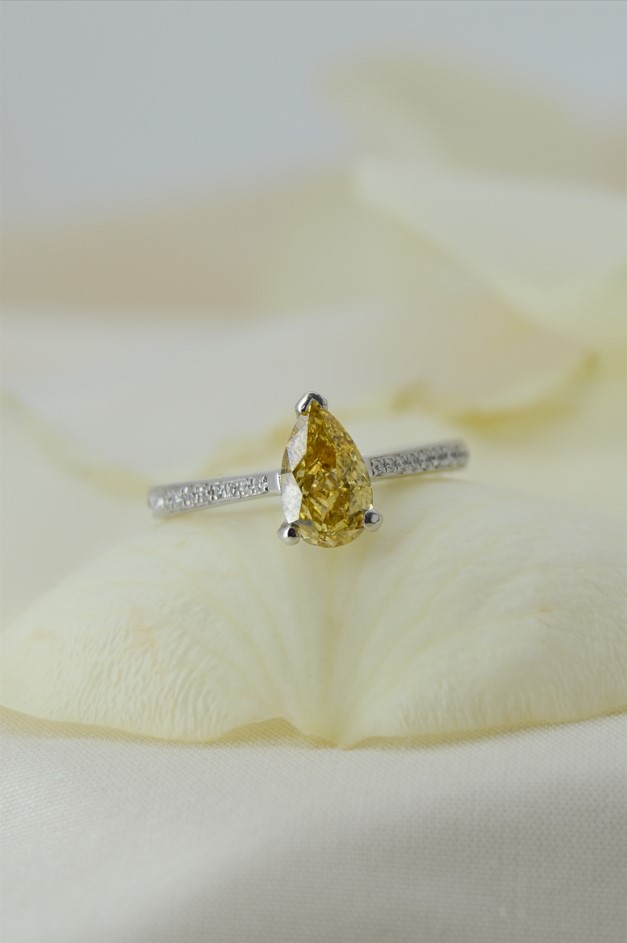
There’s no single “correct” diamond colour; only the one that suits your design, your priorities and your eye.
Some people love the reassurance of a D, E or F colour diamond, while others prefer to balance colour with size or budget. What matters most is understanding how colour works and seeing options in context.
That’s why we always guide clients through diamond colour in a clear, honest and pressure-free way — so the final choice feels confident, personal and right for you.