
- Need Help?
 Virtual Appointment
- Book Appointment
- 0
 Your shopping cart is empty
Login to view previously saved items or track a recent order.
Login to view previously saved items or track a recent order.
 Back
Back04/03/2026
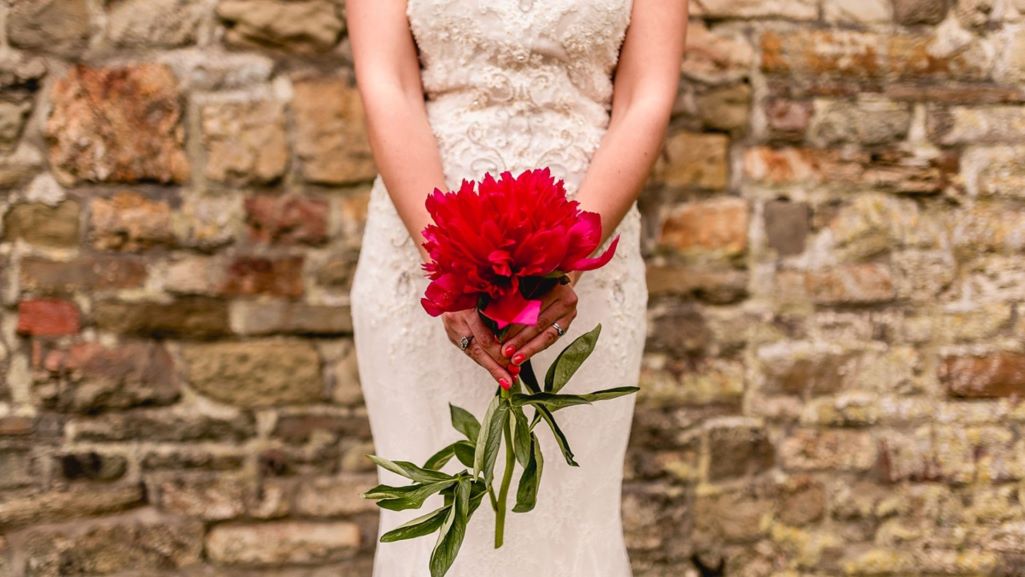
You've said yes. You've got the venue, the dress is being dreamed about, and the guest list is already causing mild family drama. But somewhere between the seating chart and the cake tasting, there's one decision that deserves more attention than it usually gets: your bouquet.
It sounds small. It isn't. Your bouquet is in your hands for the entire day: every first look, every walk down the aisle, every tearful hug with your mum. It's worth getting right.
The great news is that spring 2026 is genuinely one of the most exciting seasons for bridal florals in years. There's something for every bride; whether you want loose and wildly romantic, clean and architectural, or something that'll make your florist say "ooh, I haven't done that before." Let's take a look at what's trending.
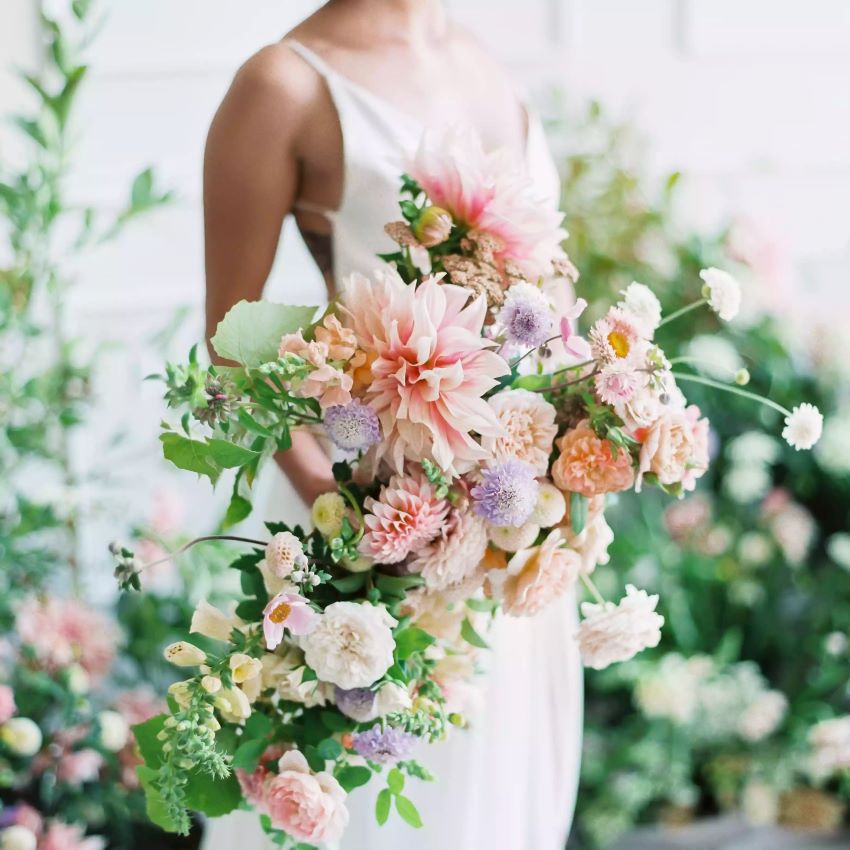
If a bouquet could look like it was picked five minutes ago from the most beautiful garden you've ever seen, this is it. The Soft Garden Gather is all about effortless, romantic abundance: think peonies, sweet peas, ranunculus, and loose greenery tumbling together in a way that feels natural rather than arranged.
This trend is a love letter to imperfection. Flowers face different directions, stems vary in length, and the overall shape is delightfully unstructured. It's been building for a few years, but in 2026 it's fully having its moment, especially for outdoor ceremonies, barn venues, and garden weddings.
✦ Colour palette to try: blush, ivory, soft peach, and sage green for a cohesive but organic feel.
✦ Works beautifully with: flowy boho dresses, lace gowns, and relaxed ceremony styles.
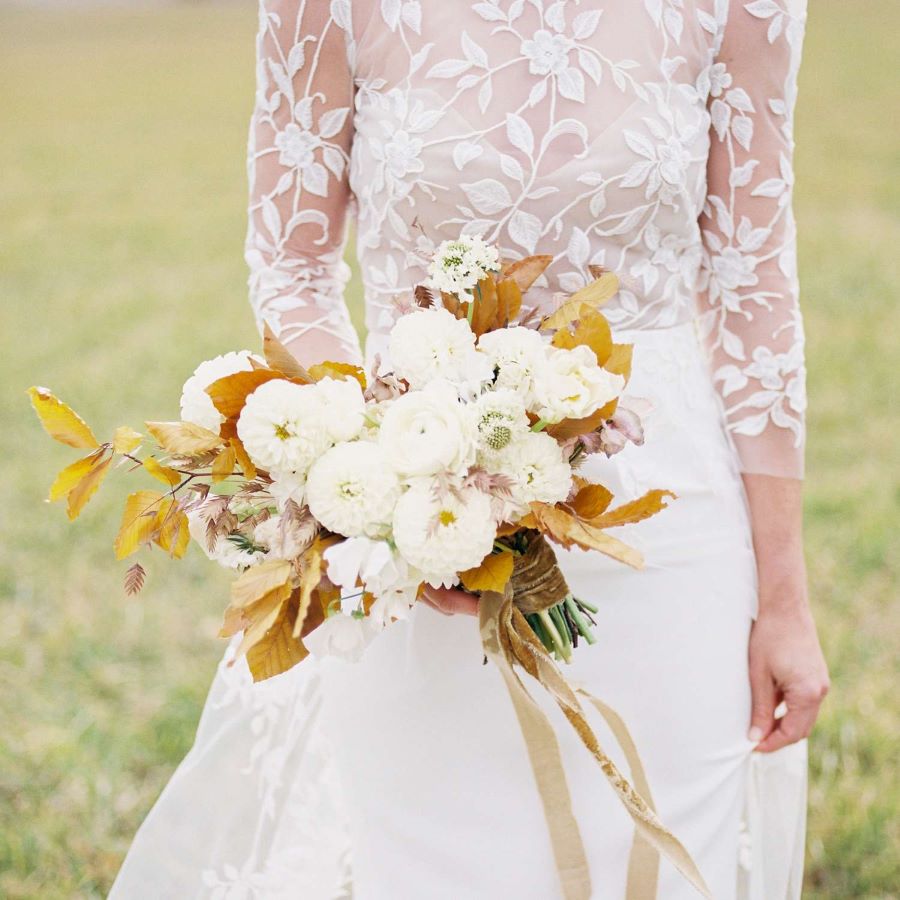
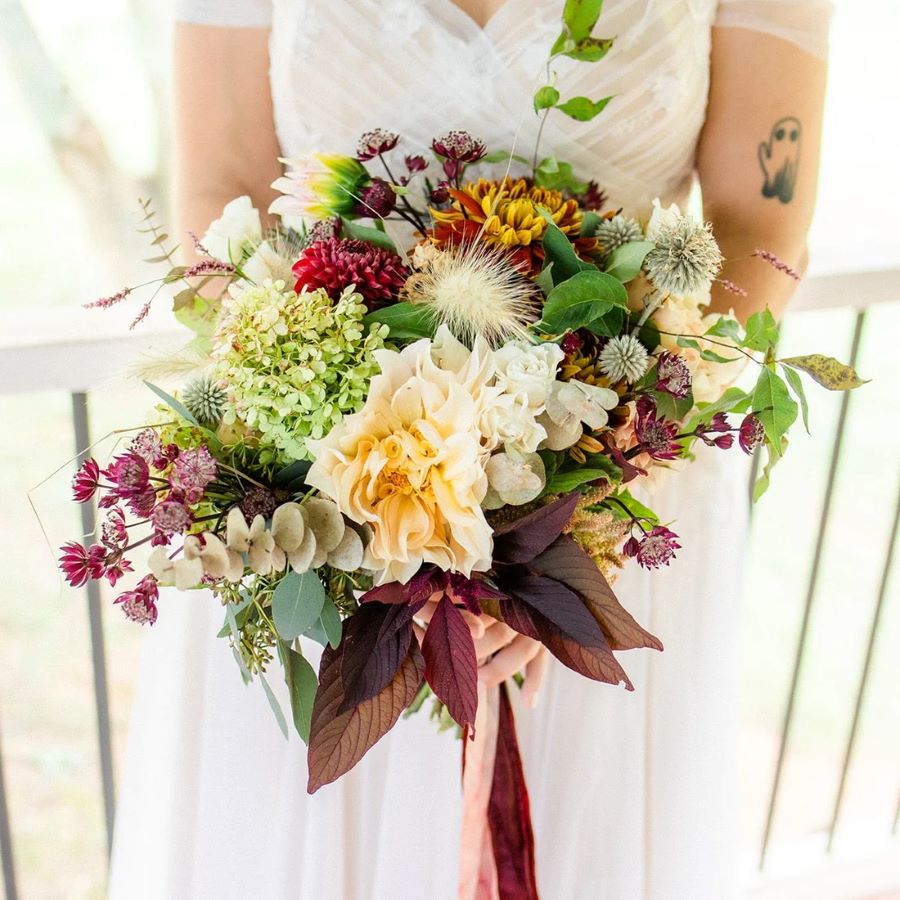
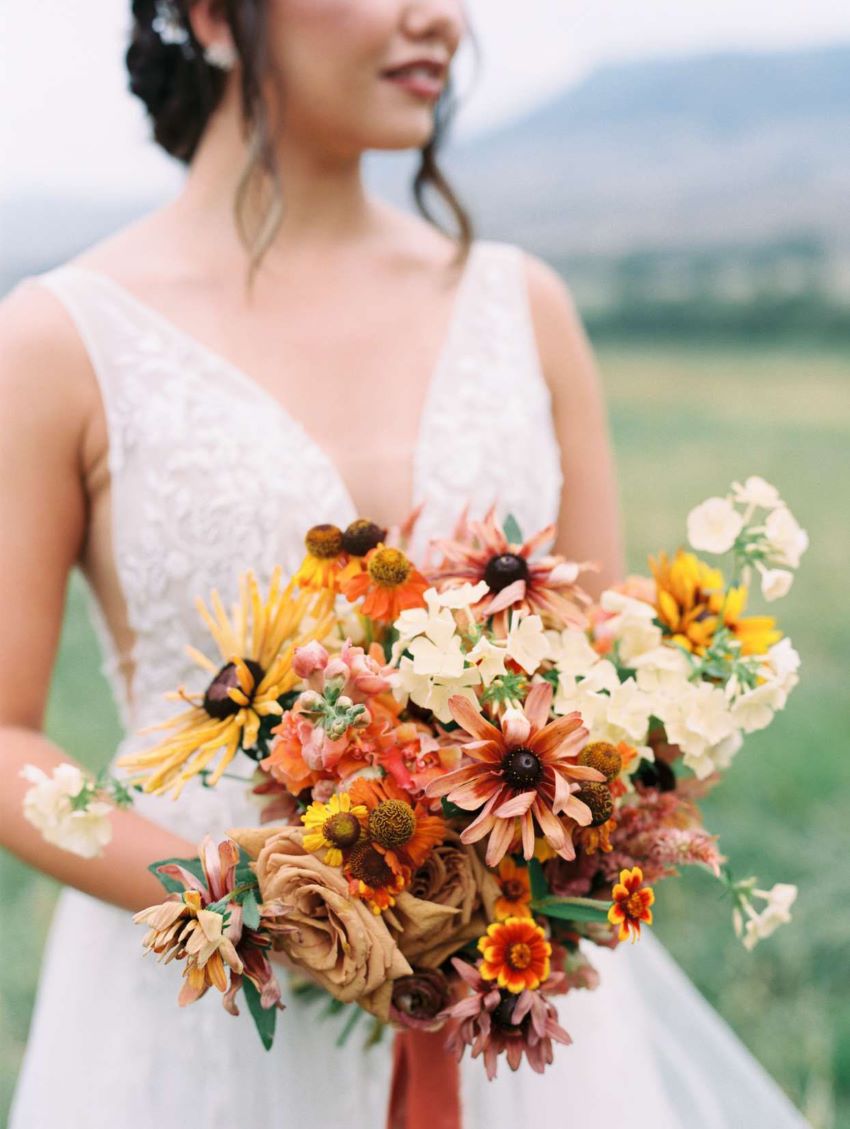
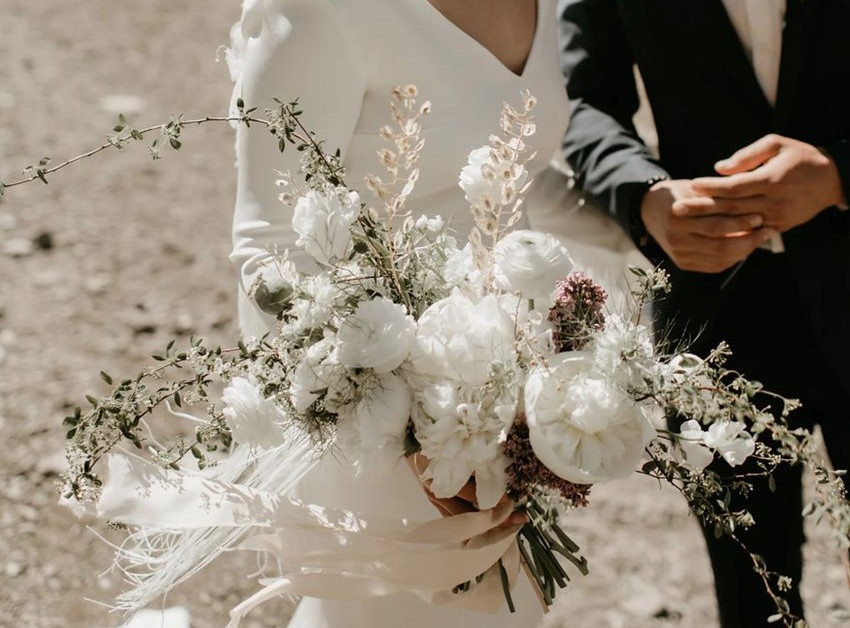
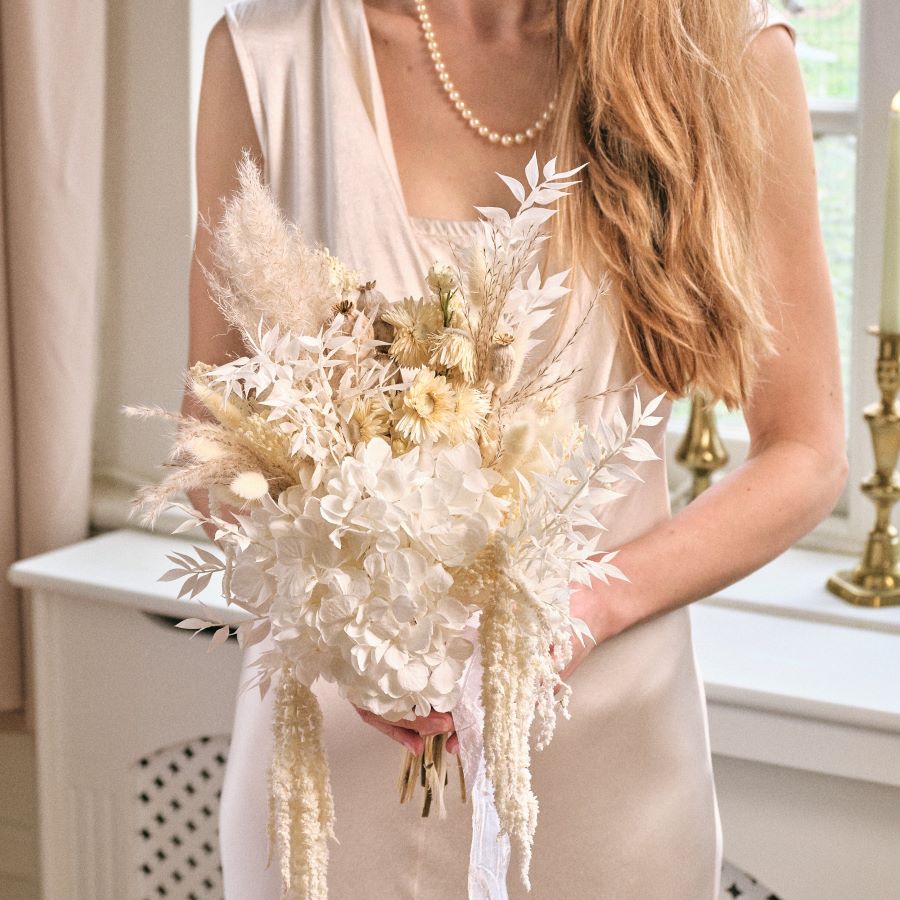
One colour. Many textures. Endless elegance. The monochromatic bouquet trend is taking over in 2026 and for very good reason: it photographs stunningly, it feels modern and intentional, and it's surprisingly versatile.
The idea is to pick a single colour family and layer up the textures: a creamy white bouquet might include garden roses, white anemones, bleached grasses, ivory lisianthus, and white ranunculus. The result is tonal, sophisticated, and quietly breathtaking.
All-white has always been a classic, but this season brides are experimenting boldly; we're seeing full blush arrangements, all-terracotta bouquets for autumn crossover weddings, and even all-green botanical bundles for the nature lovers.
✦ Pro tip: Ask your florist to mix matte, waxy, and feathery textures within your chosen colour to add dimension.
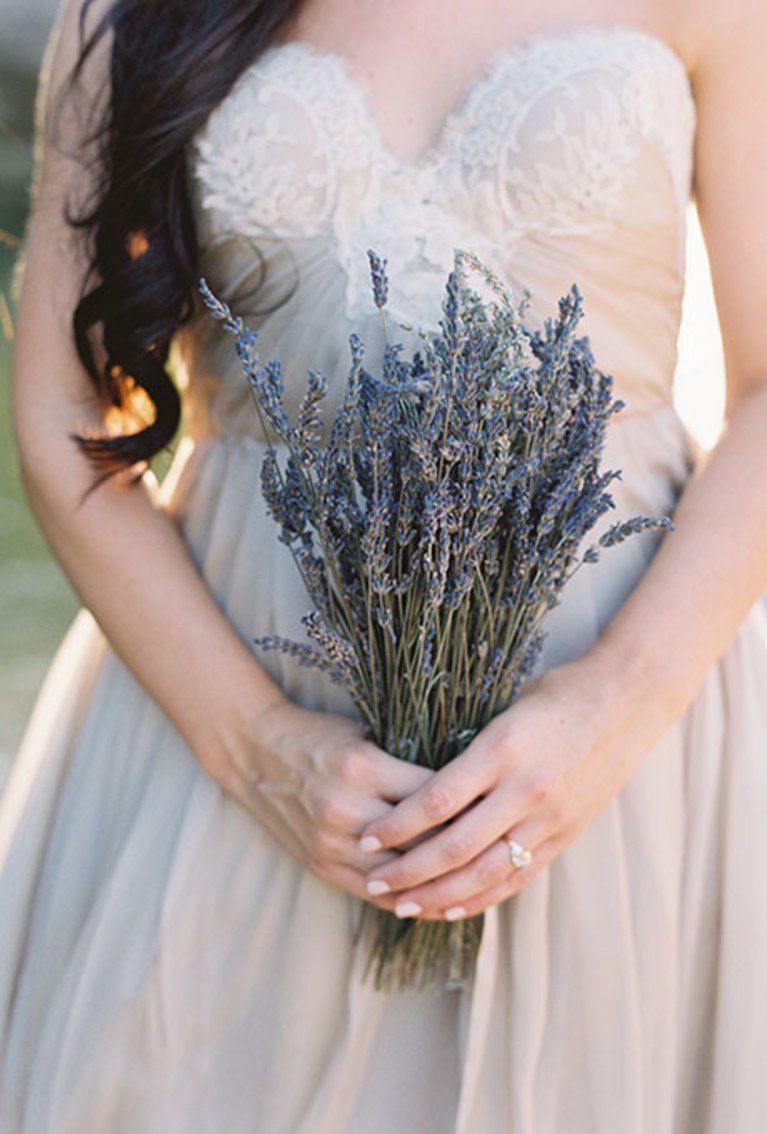
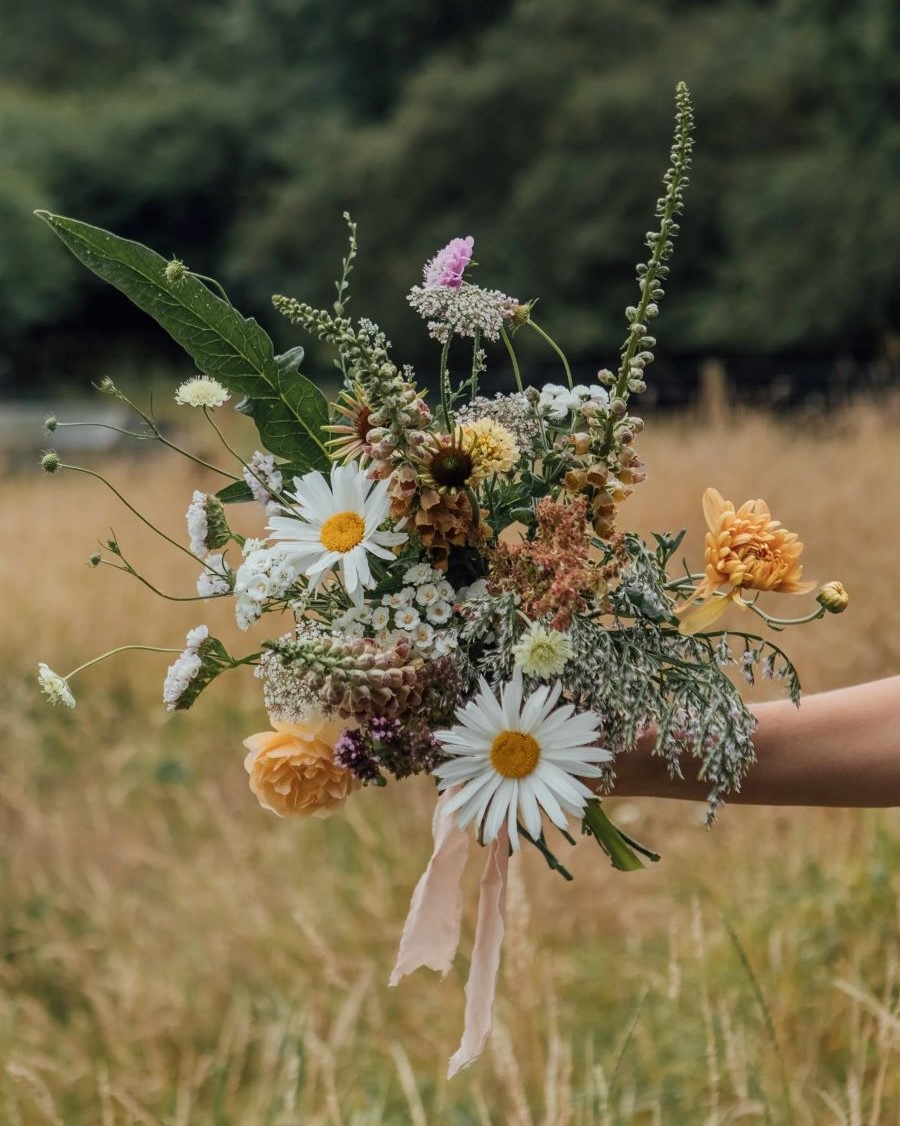
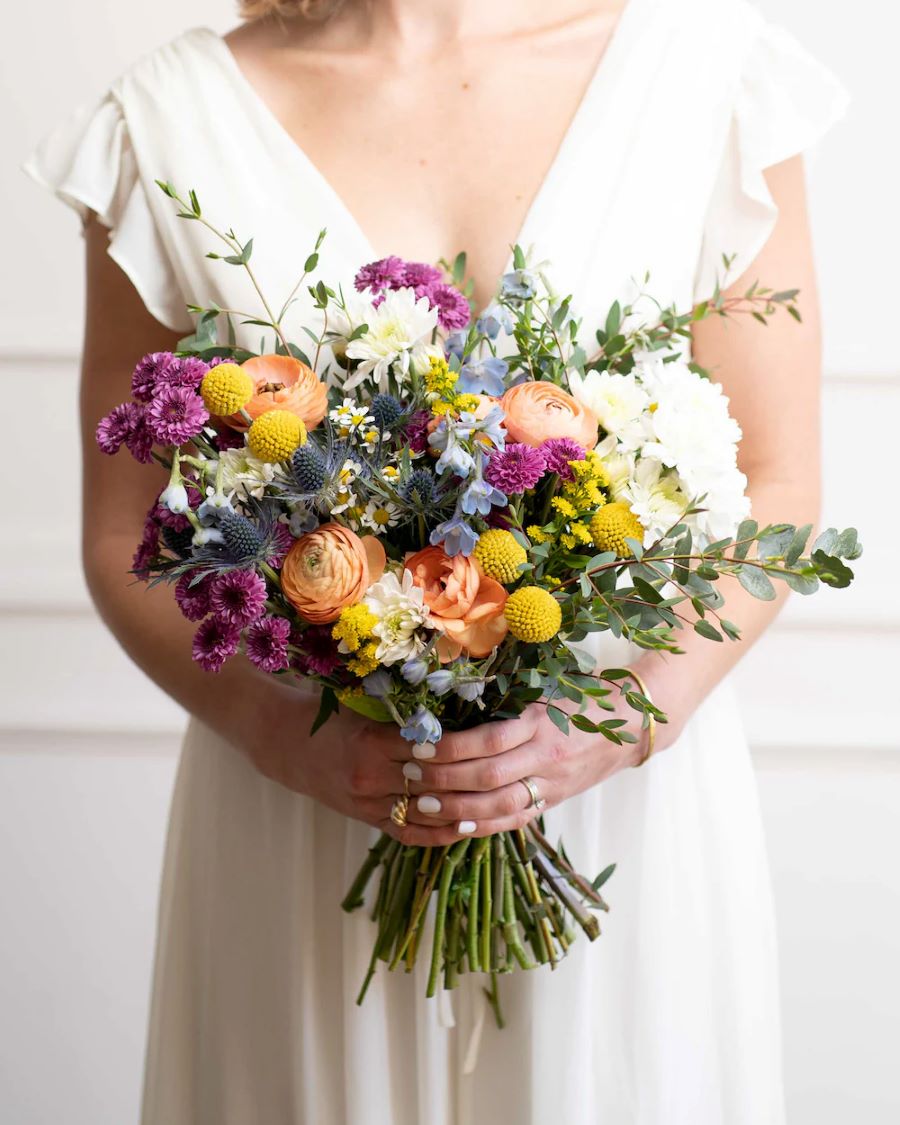
Forget perfection. The wildflower bouquet is for the bride who wants her flowers to look like a handful of happiness: daisies, cornflowers, lavender, scabiosa, Queen Anne's lace, and whatever else happens to be in season.
This style has a relaxed, countryside energy that's incredibly charming. It also tends to be one of the most affordable bouquet options, since it relies heavily on seasonal, locally grown flowers rather than imported statement blooms. That's a win for your budget and a win for the planet.
In 2026, we're seeing wildflower bouquets done with a slightly elevated twist: the same loose, meadow-picked feel but with a few more considered elements, like a single garden rose tucked in, or a trailing ribbon in a luxurious fabric.
✦ Perfect for: outdoor and countryside weddings, rustic venues, and brides with a relaxed, free-spirited vibe.
✦ Seasonal bonus: wildflowers are at their absolute peak in spring, so timing couldn't be better.
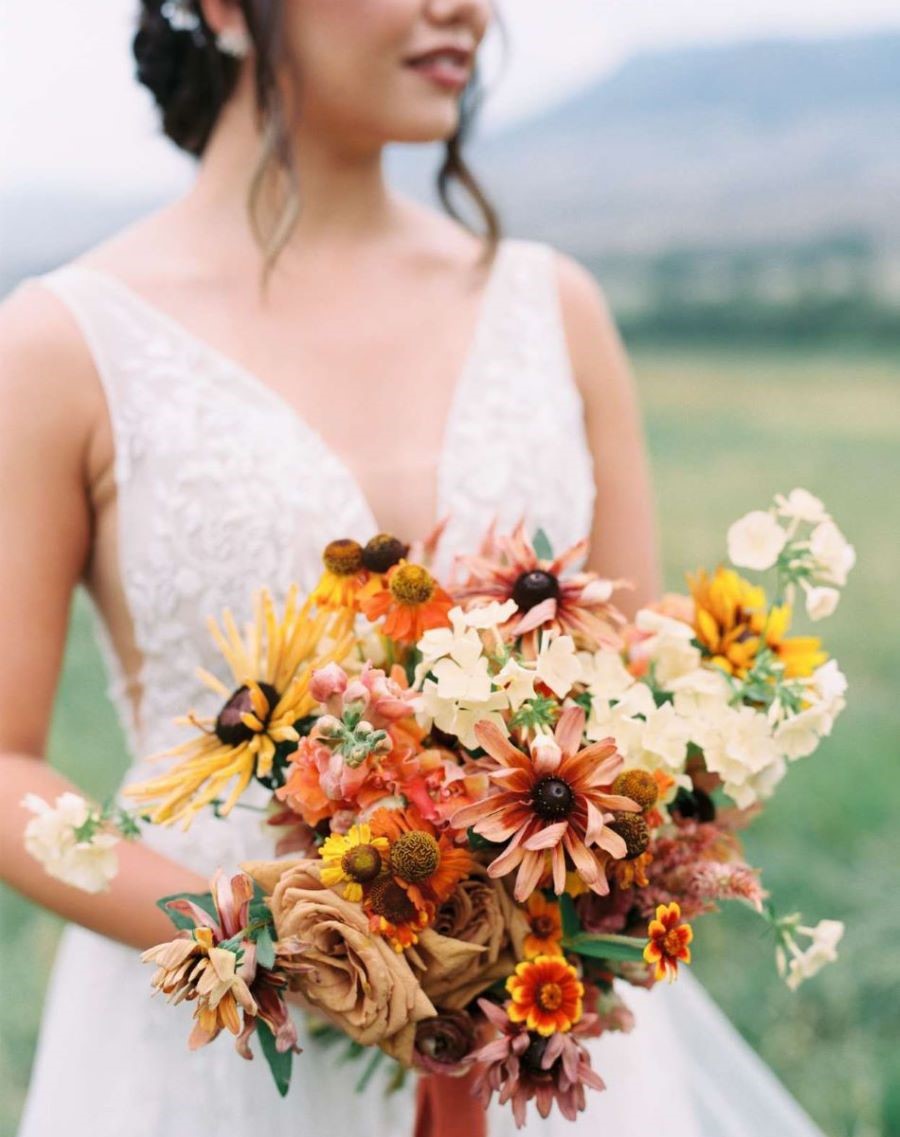
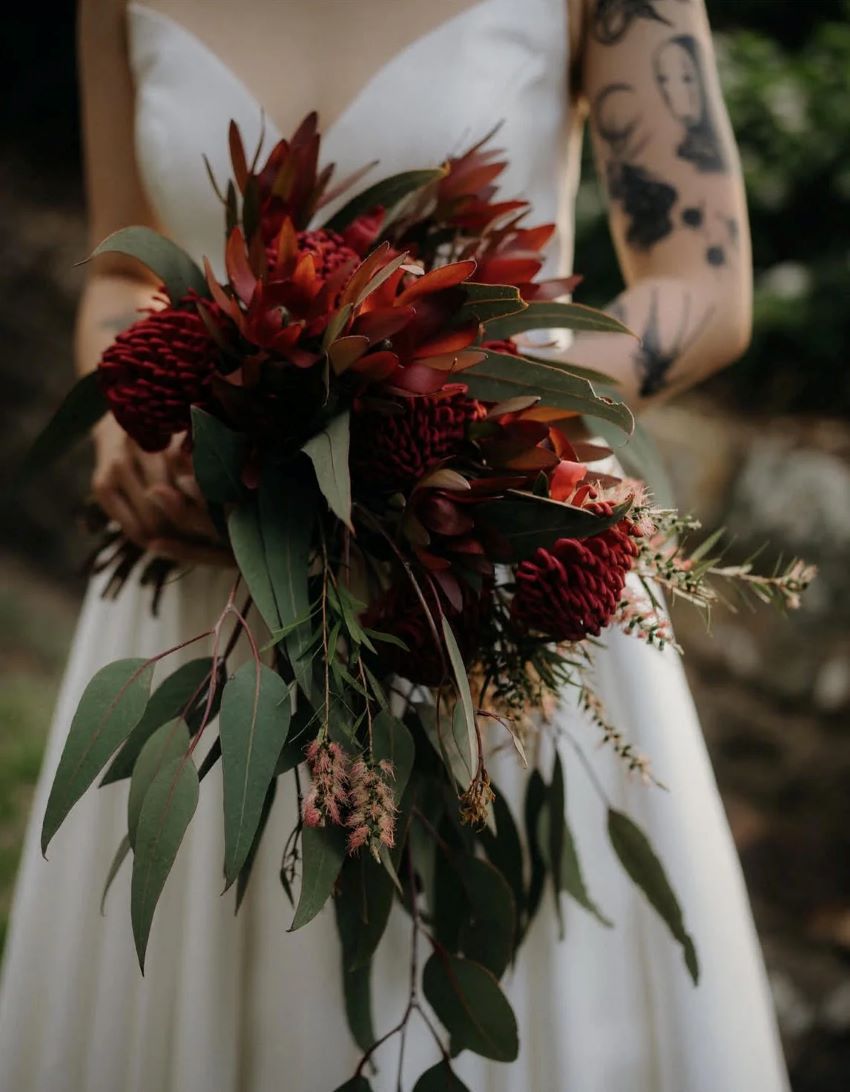
On the opposite end of the spectrum from the wildflower bouquet, we have the architectural style and it is having a major moment in 2026. Think bold, structured, almost gallery-worthy arrangements that use flowers as design elements rather than just decoration.
We're talking oversized proteas, dramatic anthuriums, birds of paradise, calla lilies, and sculptural branches. The colour palettes lean darker and more unexpected: deep burgundy, burnt orange, chocolate brown, and forest green are all showing up in the most editorial bridal looks of the year.
This bouquet is for the bride who wants to make a statement. It's fashion-forward, it's a little unexpected, and it photographs like a dream against a minimalist dress or a sleek, modern venue.
✦ Style note: this trend pairs especially well with structured, architectural gowns: think column silhouettes and sharp necklines.
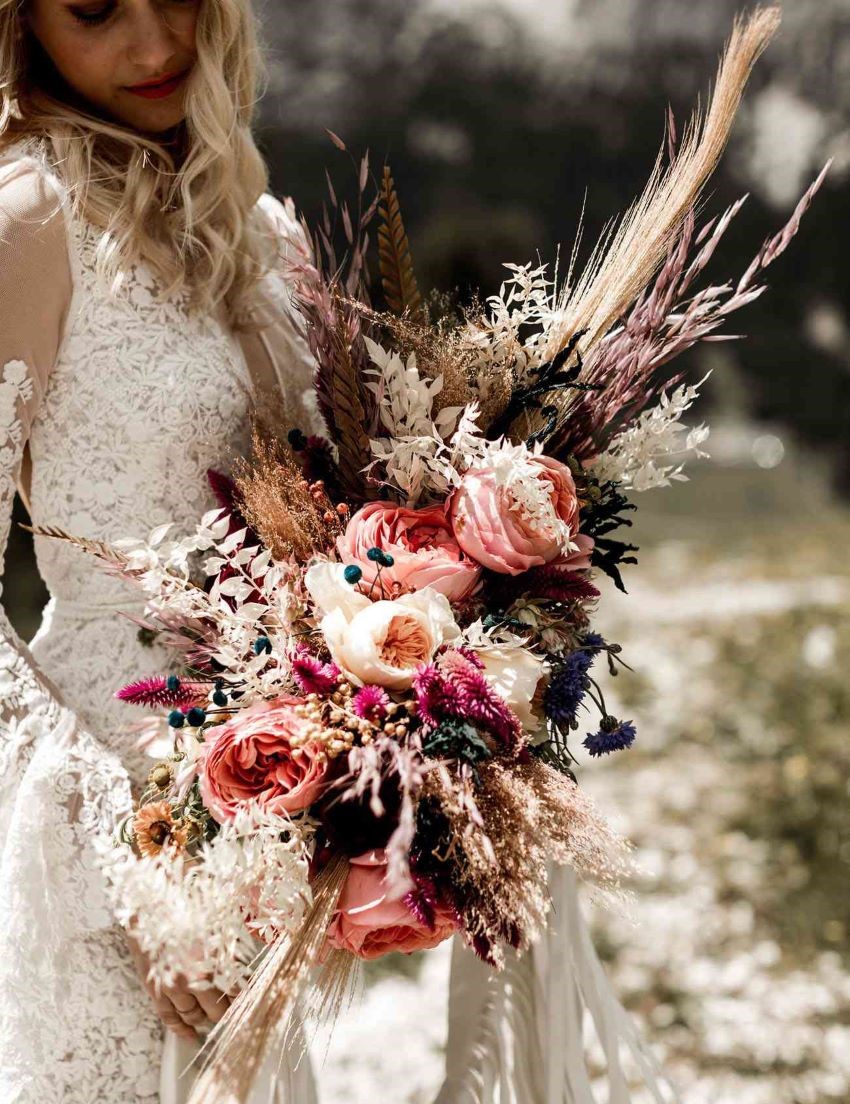
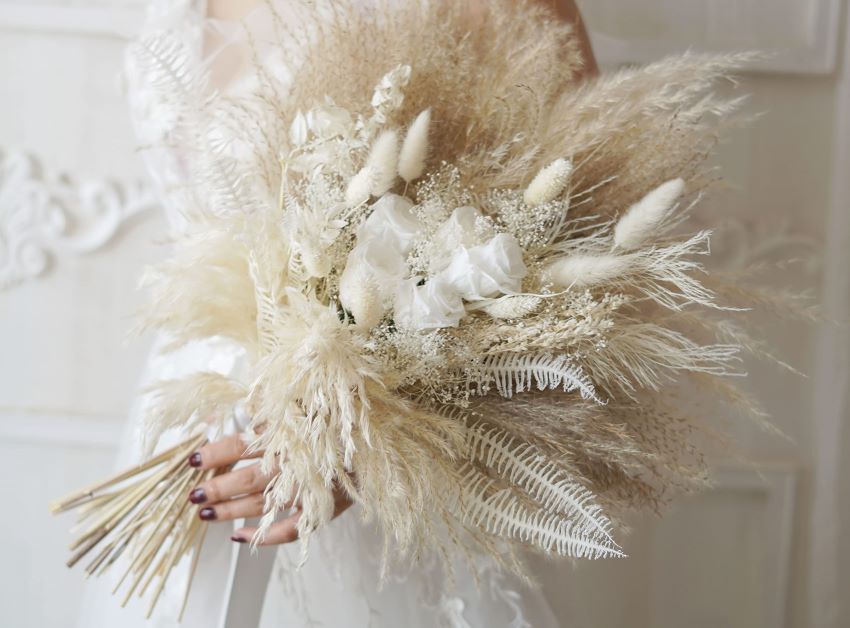
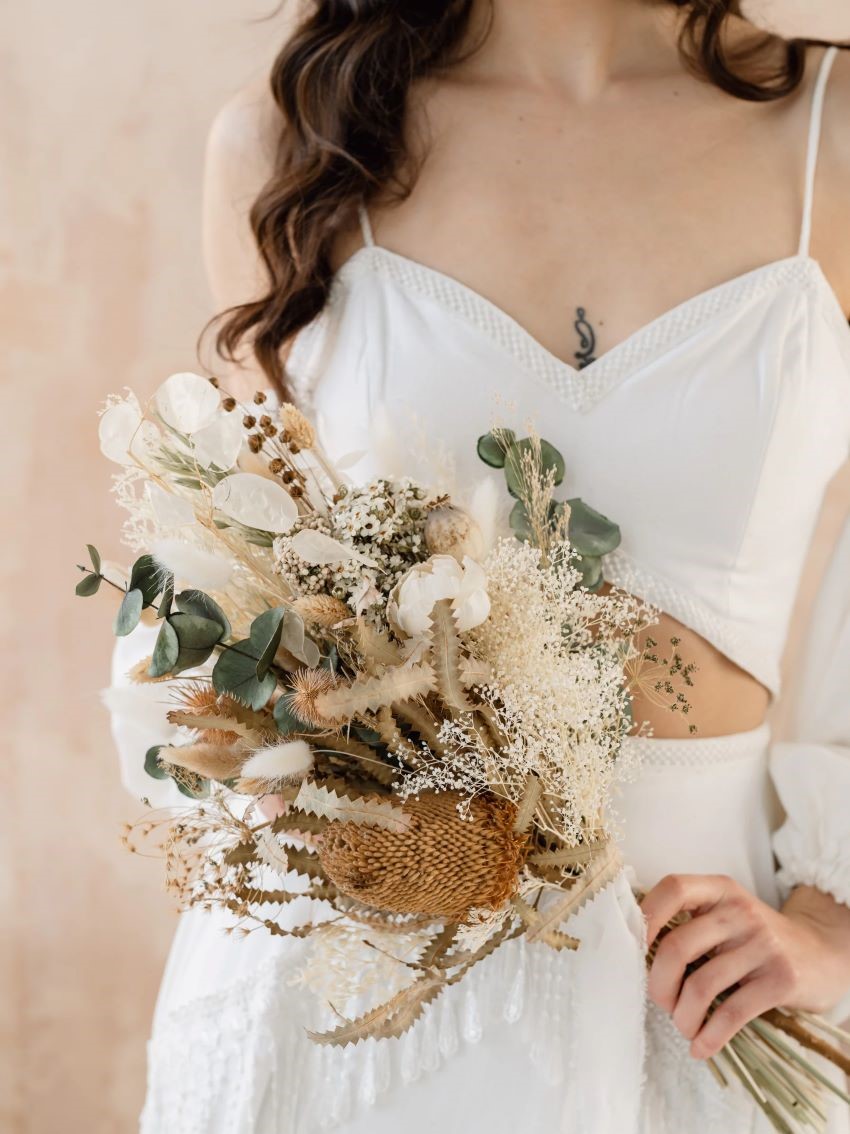
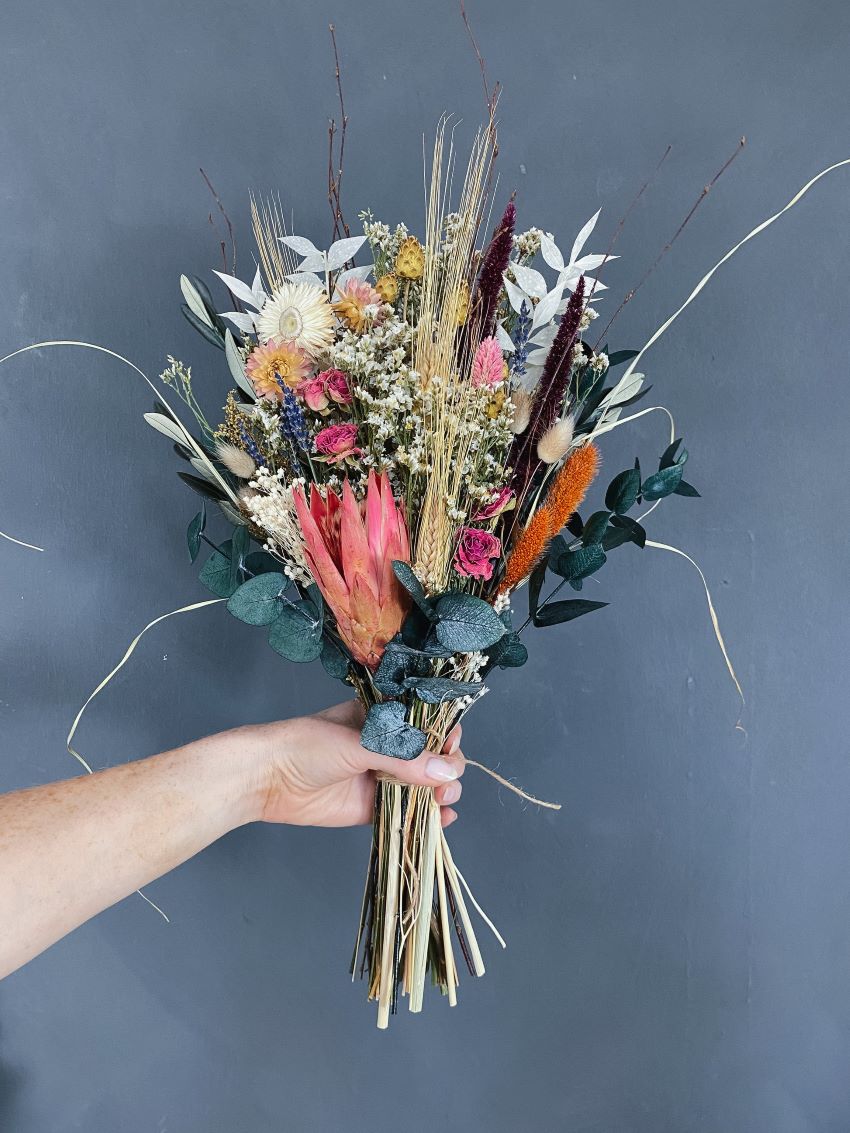
What started as a sustainability-conscious trend has evolved into a full-blown aesthetic in its own right. Dried and preserved bouquets are no longer the "budget alternative": in 2026, they're a deliberate, beautiful choice.
Pampas grass, dried lunaria (those gorgeous silver moon pods), preserved roses, wheat stalks, dried lavender bundles, and cotton stems all bring incredible texture and a warm, earthy tone to a bouquet. The colour palette is naturally muted and dreamy: taupes, warm whites, dusty pinks, and caramels.
The practical bonus? You get to keep it forever. No pressing, no drying out in a vase. Your bouquet arrives already preserved and looks just as stunning a decade later as it did on your wedding day.
✦ Great for: late spring and early summer weddings, boho and earthy aesthetics, and brides who want a keepsake.
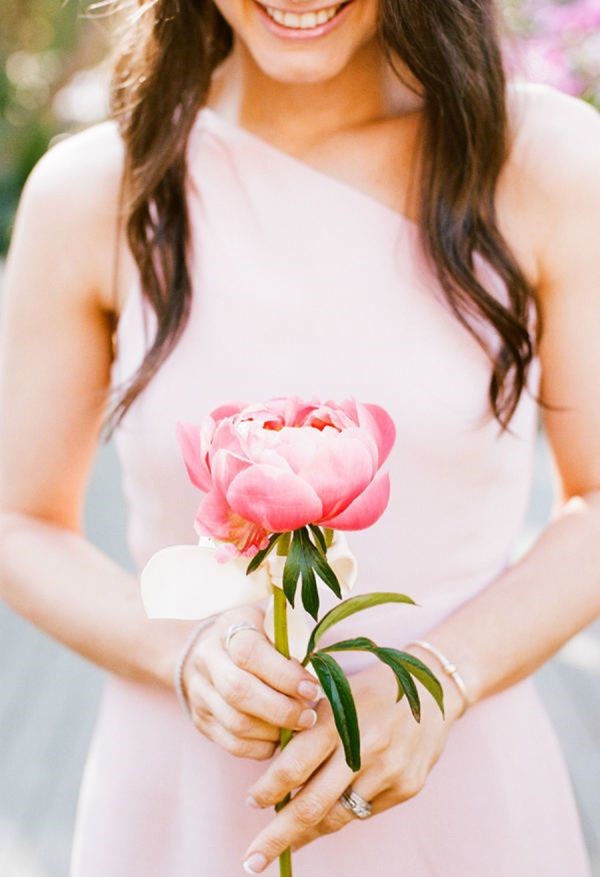
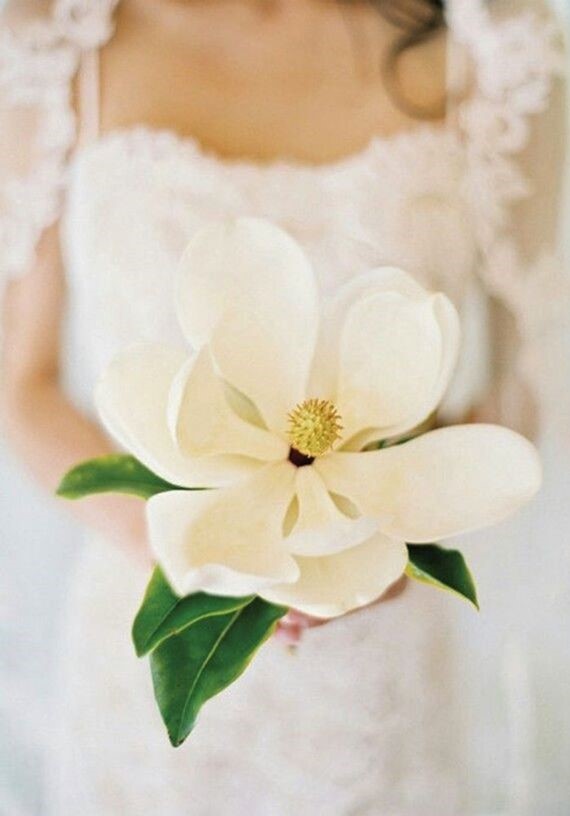
Sometimes less really is more. The single stem bouquet, or a very tightly edited cluster of just two or three blooms, is quietly becoming one of the coolest choices a bride can make in 2026.
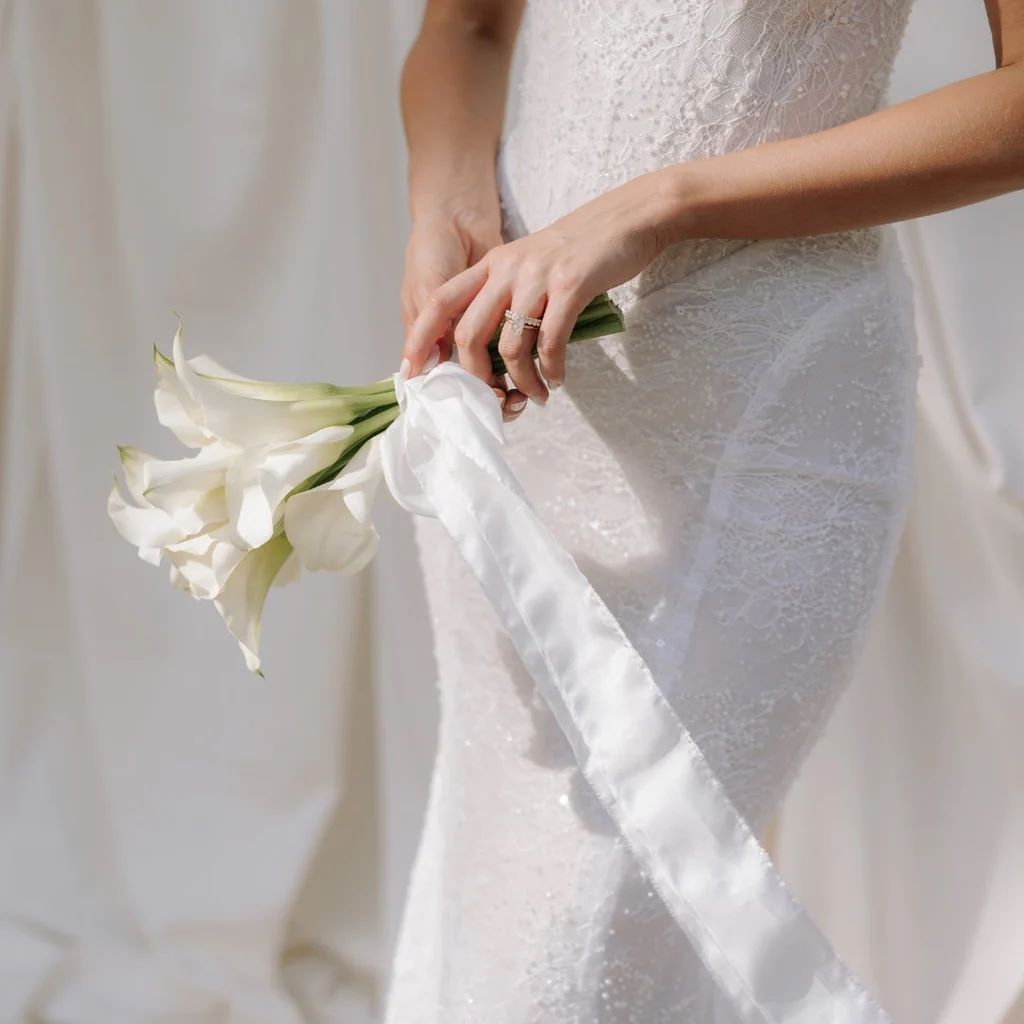
An oversized garden rose. A single calla lily. A perfect gardenia. Three stems of sweet peas loosely tied with a silk ribbon. There's an understated confidence to this choice that feels both modern and timeless.
It works particularly well for civil ceremonies, intimate weddings, second marriages, and brides who lean towards clean, minimal aesthetics. It's also a genuinely striking contrast against an ornate or heavily detailed dress.
✦ Ribbon tip: the finishing detail matters a lot here. Choose a beautiful raw-edged silk, velvet, or linen ribbon to elevate the simplicity.
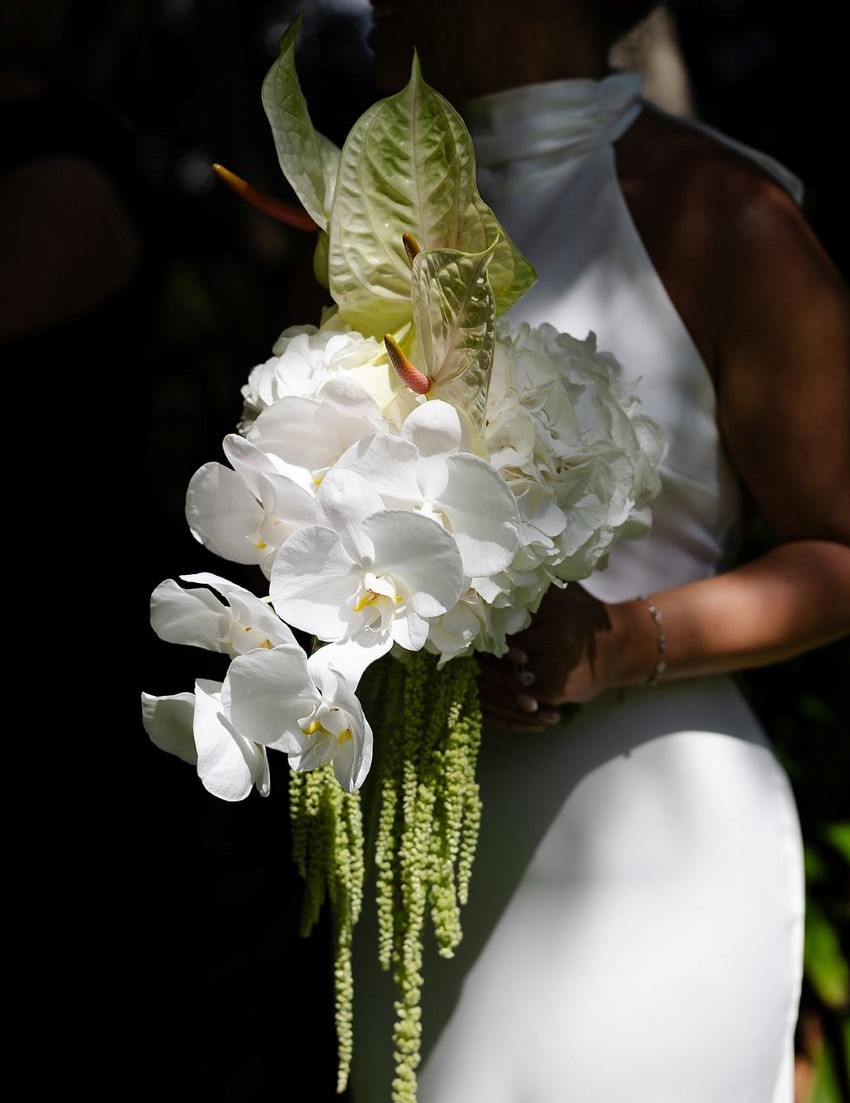
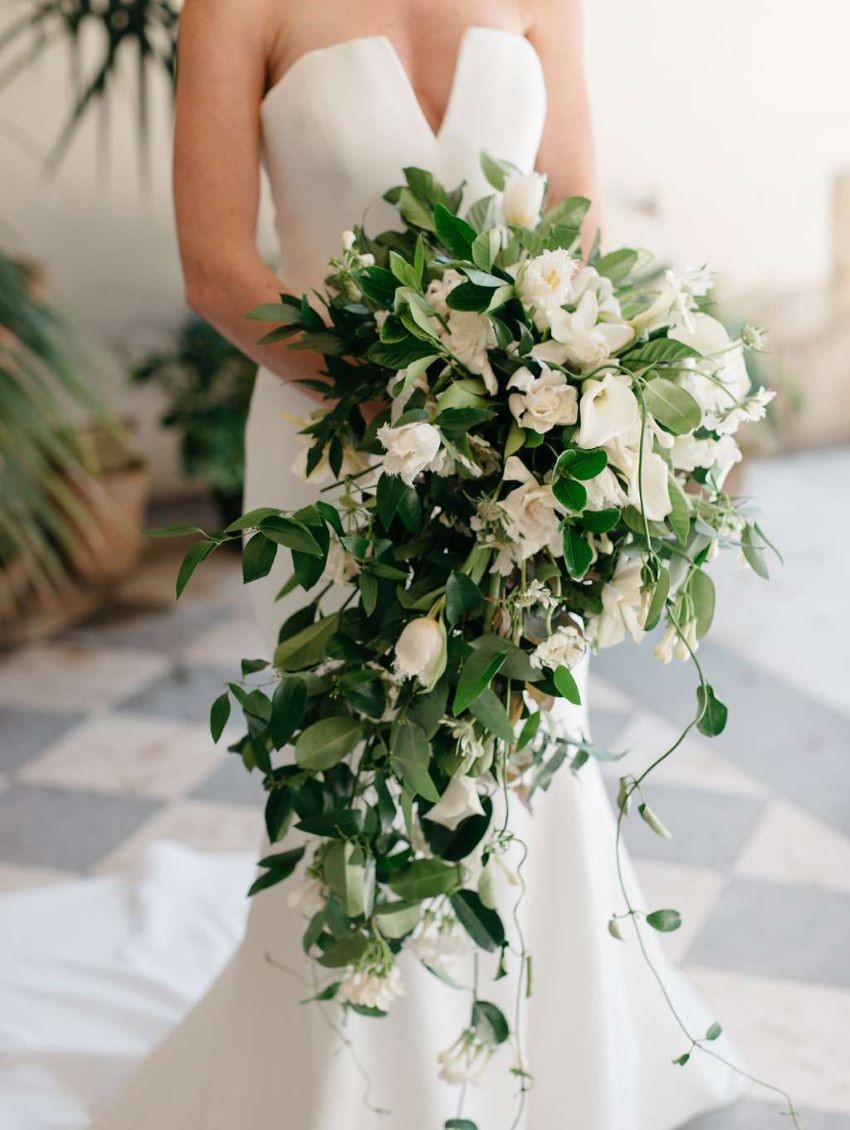
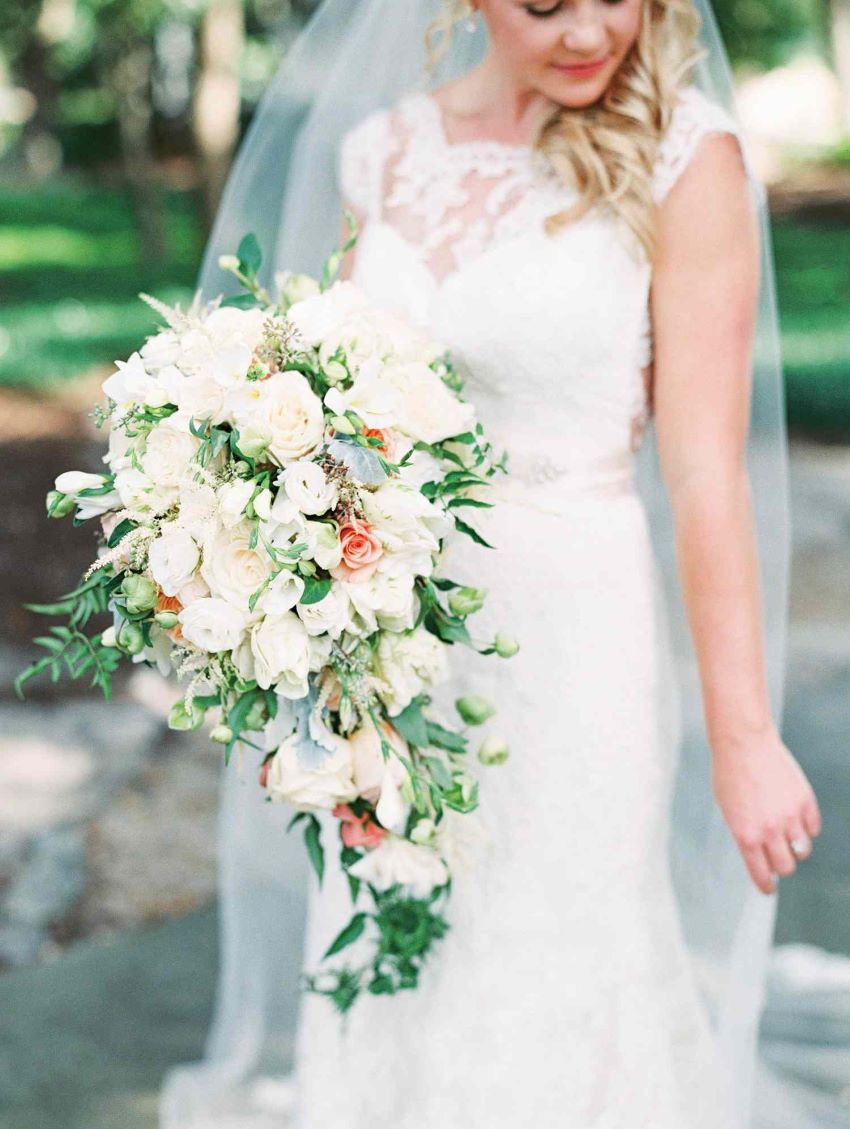
The cascade is back and it's more beautiful than ever. After years of compact, round bouquets dominating the scene, 2026 is bringing back the drama of long, trailing arrangements that flow downwards in a waterfall of blooms and greenery.
Modern cascades are softer than their 1980s predecessors. Instead of stiff, wired flowers pointing outwards, today's version uses natural-looking trailing elements: hanging amaranthus, long-stemmed orchids, draping jasmine vines, climbing roses on the stem, and soft eucalyptus trails.
This is a bouquet that photographs beautifully from every angle, and it feels especially magical when paired with a cathedral or chapel-length veil.
✦ Best for: formal and black-tie weddings, classic venues, and brides who want maximum drama.
With so many gorgeous options, it can feel overwhelming. Here's a simple way to narrow it down:
Think about your venue first. A wildflower bouquet in a grand cathedral can feel slightly lost. A sculptural architectural arrangement in a wildflower meadow might feel a little out of place. Let the setting guide you.
Then think about your dress. Heavily embellished and detailed dresses often shine brightest with a simpler, more restrained bouquet. A minimal gown can handle a bigger, bolder arrangement.
Finally, trust your gut. When you see the one, you'll know. Don't overthink it.
More and more brides in 2026 are asking where their flowers come from and it's a brilliant question. Locally grown, seasonal flowers are always the most sustainable option, and they often end up being the most beautiful too, since they arrive fresh and at their natural peak.
If you want to go a step further, dried and preserved bouquets are zero-waste by nature. And many florists now offer a flower sharing service, where your arrangements are donated to hospitals or care homes after the wedding. A beautiful idea in every sense.
Harmony Jewels. Crafted with love, worn for life. ✦