
- Need Help?
 Virtual Appointment
- Book Appointment
- 0
 Your shopping cart is empty
Login to view previously saved items or track a recent order.
Login to view previously saved items or track a recent order.
 Back
Back04/15/2026
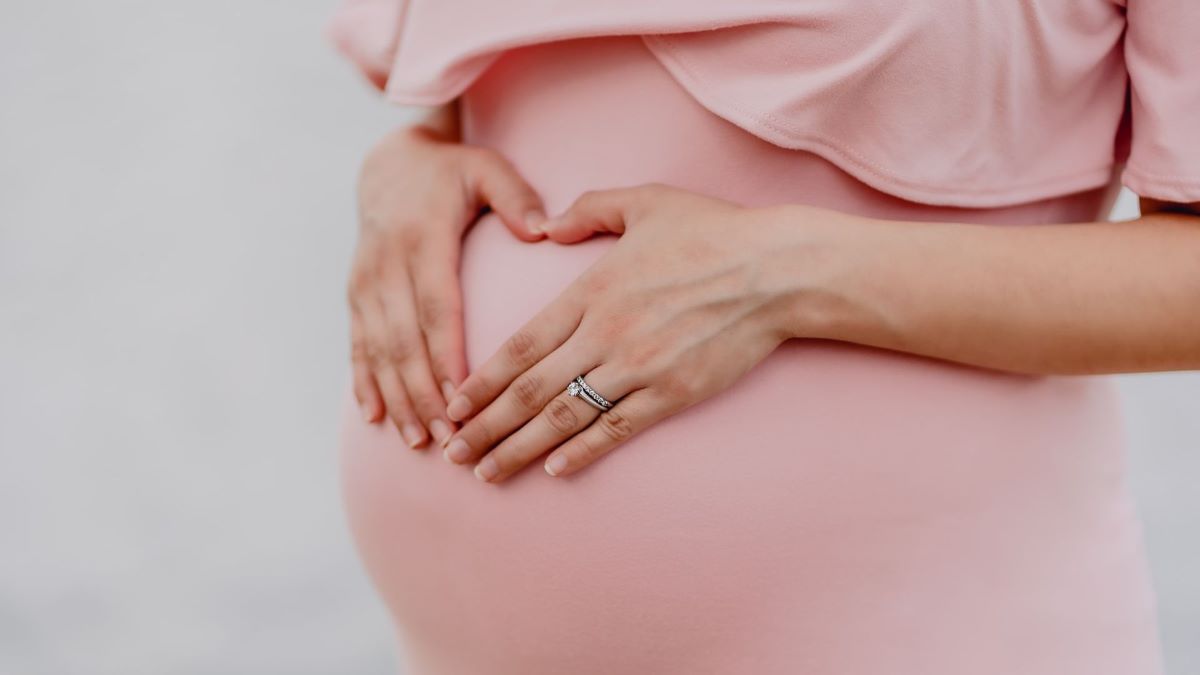
You've got the ring and maybe a baby on the horizon too. Whether you're pregnant, trying, or simply thinking ahead, this is one of those things nobody really tells you about: what happens to your engagement ring when your body starts to change. The good news is, it's completely manageable, and knowing your options in advance makes all the difference.
During pregnancy, your body produces around 50% more blood and fluid than usual to support your growing baby. This extra fluid can build up in your tissues, including your fingers, causing that familiar puffy, tight feeling.
You may also notice swelling in your ankles, feet, and face, particularly as your pregnancy progresses. Hormonal changes, especially the hormone relaxin, also cause your joints and ligaments to loosen, which can subtly alter the shape of your hand.
When is it worst? Swelling typically peaks in the third trimester, and is often worse in the evenings, in warm weather, or after long periods of standing. If your ring fits fine in the morning but feels tight by afternoon: that's completely normal.
Note: If swelling comes on suddenly, is severe, or is accompanied by headaches or visual changes, always speak to your midwife or GP, as this can occasionally indicate a condition called pre-eclampsia.
Not all tightness means you need to act immediately but there are some signs that your ring needs to come off, at least temporarily:
If you're experiencing any of the above, it's time to take action. The sooner you address it, the easier it will be; a ring that's slightly uncomfortable today can become very difficult to remove in a few weeks.
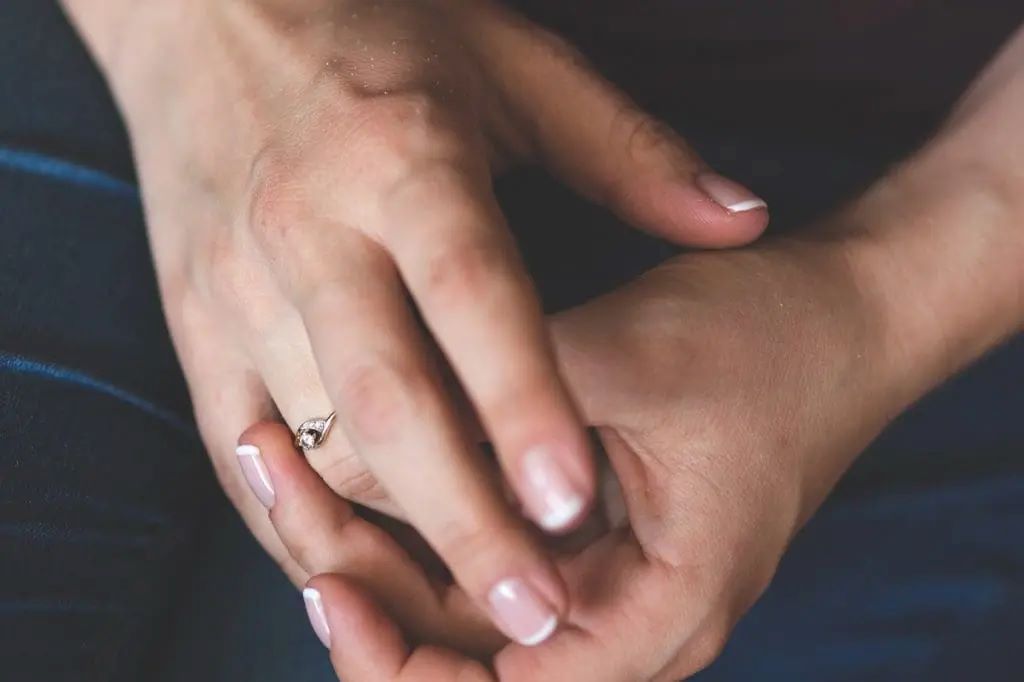
The good news is you have plenty of choices: most of them simple, affordable, and completely reversible.
Ring adjusters (sometimes called ring guards or ring sizers) are small, inexpensive tools that wrap around the inside of your band to temporarily make it larger or more comfortable.
They're available online and in most jewellery shops. They won't damage your ring and can be removed easily.
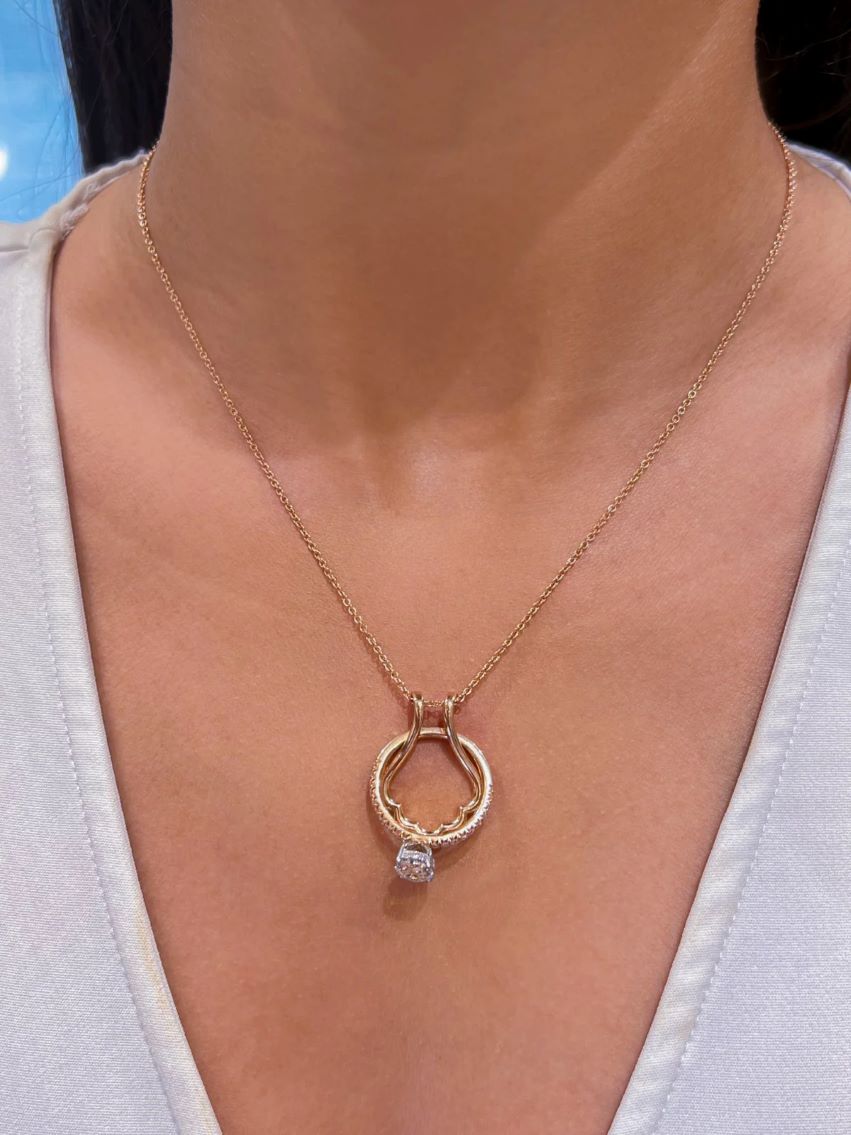
This is one of the most popular options, and honestly one of the most sentimental. Slip your engagement ring onto a fine gold or platinum chain and wear it close to your heart. Many women find this becomes a lovely part of their pregnancy story and a memory they keep long after.
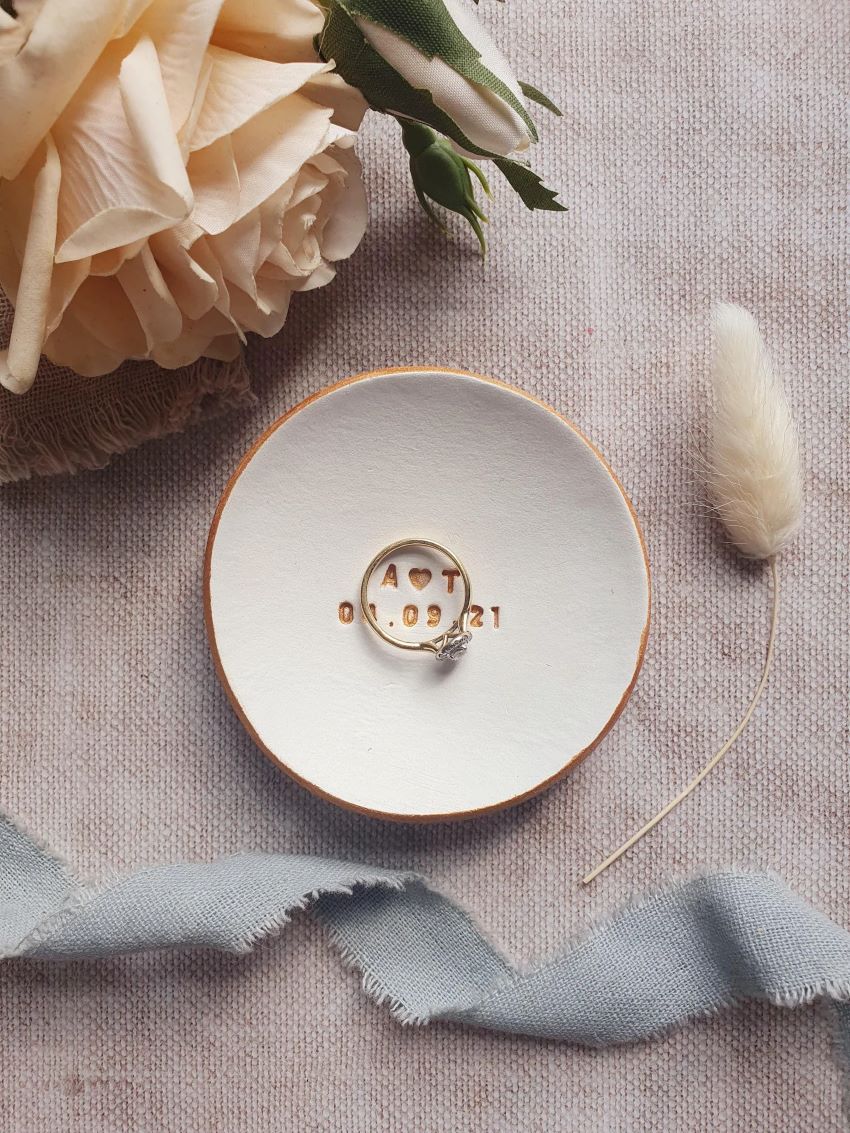
Sometimes the simplest solution is the right one. If your ring is genuinely uncomfortable, there's no shame in placing it safely in a ring dish or jewellery box until after the birth. Your ring will still be beautiful. Your love story will still be intact.
Make sure you store it somewhere safe and specific: pregnancy brain is very real, and the last thing you want is to forget where you put it.
Yes, we can resize your ring during pregnancy but we will gently advise you to wait. Here's why: your fingers are likely to return to their pre-pregnancy size after birth, meaning a resize now could leave you needing another one later. Unless your ring is dangerously tight, it's almost always better to wait.
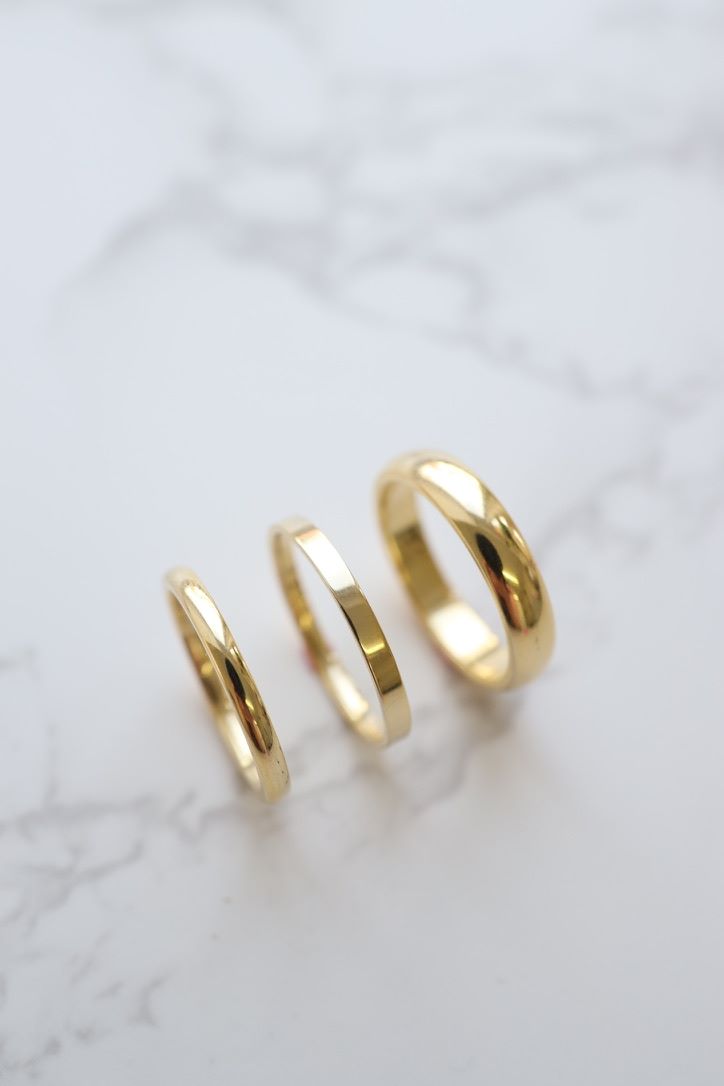
Some women choose a simple, plain wedding-style band to wear during pregnancy: affordable, comfortable, and symbolic. It sits flush against the finger without any raised settings to catch on things, and it takes the pressure off worrying about your engagement ring entirely.
Technically, yes: and if your ring is causing genuine discomfort or restricting circulation, we'd always say come in and we'll help you. But in most cases, our honest advice as jewellers is to wait.
Here's why: every resize puts the metal through a process. We cut the shank, adjust it, and solder it back together; and while we take every precaution, repeated resizing does add cumulative stress to the setting over time. For a ring you want to last a lifetime, fewer interventions is always better.
Pregnancy swelling is also notoriously unpredictable. Fingers that are a full size larger at 34 weeks can return to their exact original size within weeks of giving birth, sometimes even days. If we resize now and your fingers go back, you're looking at a second resize before long. That's two rounds of heat and metalwork on a ring that only needed one.
Our recommendation: unless the fit is truly unmanageable, hold off until at least three to six months postpartum. By then your body has had time to settle, and we can take an accurate measurement and resize with confidence, knowing it's the last time we'll need to.
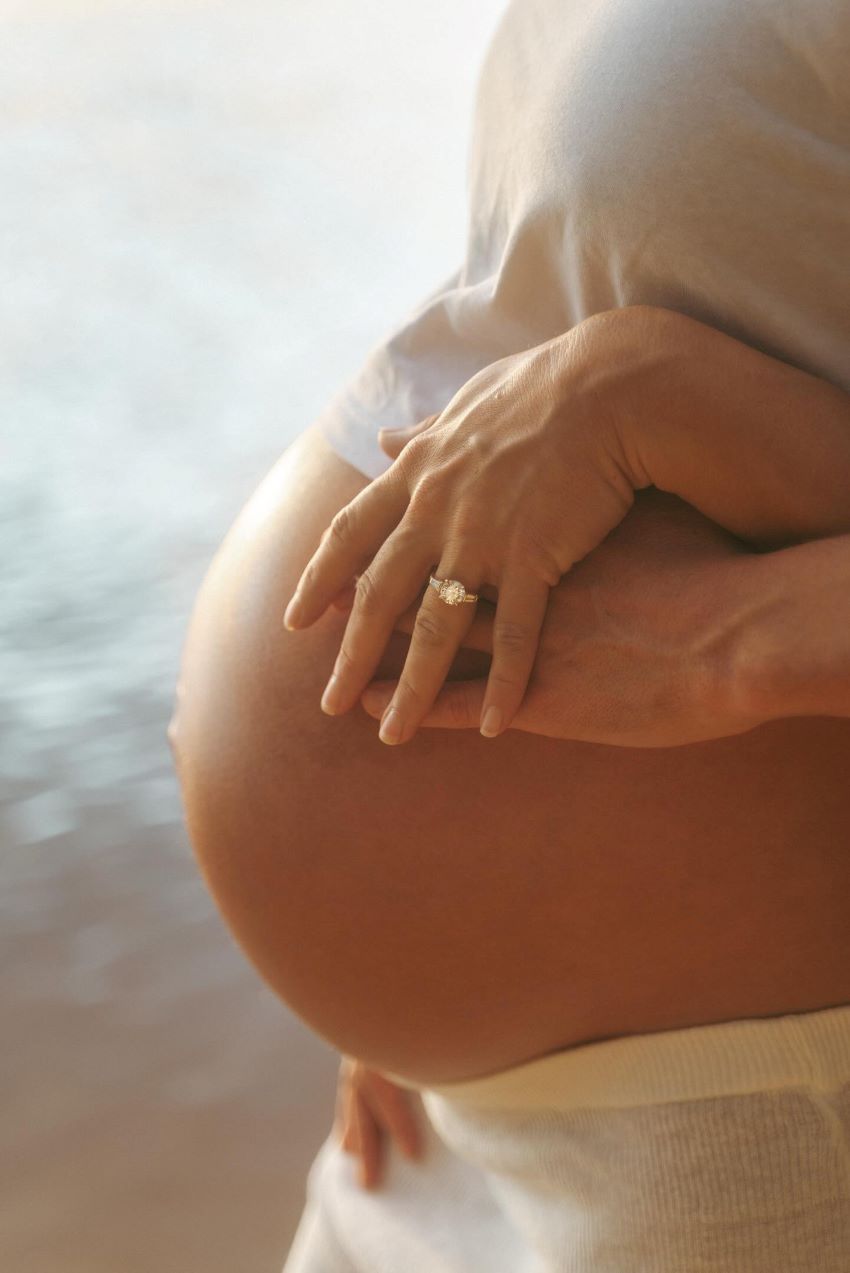
Whether your ring is on your finger or off it, here's how to keep it safe over the coming months:
In most cases, yes, as long as the ring isn't too tight. If you notice swelling, indentation, tingling, or numbness, it's time to take it off. Always prioritise circulation over keeping the ring on.
Swelling most commonly peaks in the third trimester (weeks 28–40), though some women notice it earlier. It can also vary day to day depending on temperature, activity, and hydration levels.
This depends entirely on your jeweller. At Harmony Jewels, we'd encourage you to get in touch directly to discuss your options: we always want to find the best solution for our customers.
Don't panic. Try the string or dental floss method: wrap it tightly around your finger from the tip downward, then thread the other end under the ring and slowly unwind. If this doesn't work, a jeweller or even a paramedic can safely remove a stuck ring. In genuine emergencies, ring-cutting is a last resort but completely safe.
For most women, yes, usually within a few weeks to a few months after giving birth. Breastfeeding can slow this process slightly due to its effect on fluid levels. If swelling persists beyond six months postpartum, it's worth mentioning to your GP.