
- Need Help?
 Virtual Appointment
- Book Appointment
- 0
 Your shopping cart is empty
Login to view previously saved items or track a recent order.
Login to view previously saved items or track a recent order.
 Back
Back04/08/2026
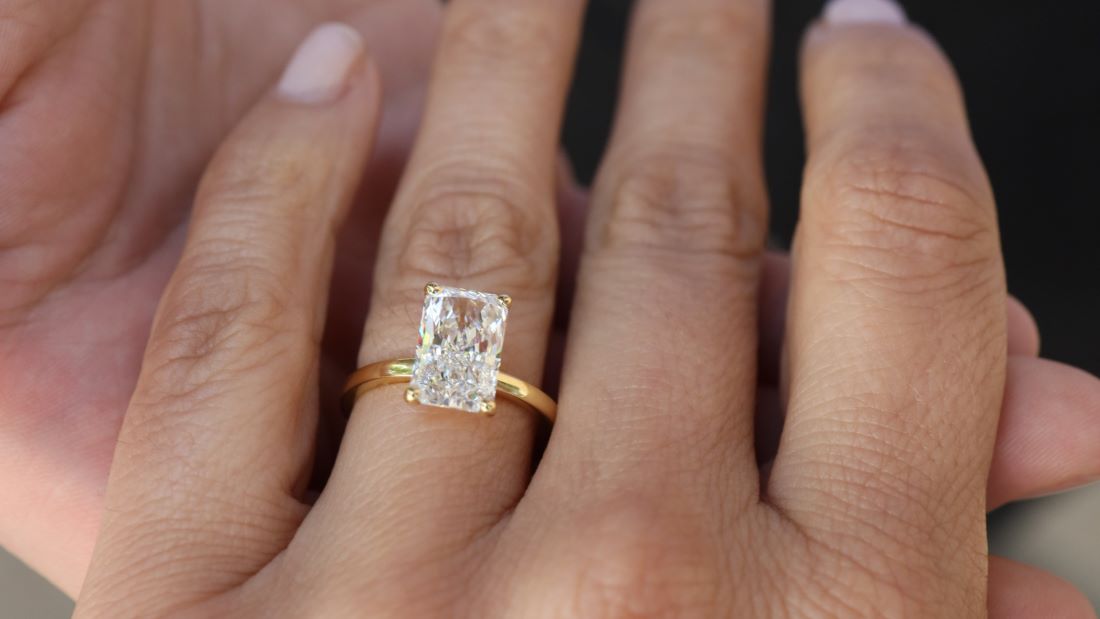
A 3carat diamond is a genuine showstopper. Choosing the wrong wedding band can crowd it, compete with it, or, just as easily, make it look even more magnificent. The secret lies in understanding how your diamond's shape governs every pairing decision you make.
At 3 carats, your centre stone commands serious visual real estate. Unlike smaller diamonds, a stone of this size has a strong presence that shapes the entire character of your bridal stack. The cut of that stone, whether it flows in soft curves, angles in sharp geometry, or steps down in mirrored planes, ] should directly inform the band profile, width, and stone style you choose to sit beside it.
There are three foundational pairing principles to keep in mind for any shape: flush fit (how cleanly the band sits against your ring), visual proportion (whether the band feels balanced against the stone's size), and stylistic harmony (whether the band echoes or intentionally contrasts the ring's personality). With a 3 carat stone, all three carry more weight than usual.
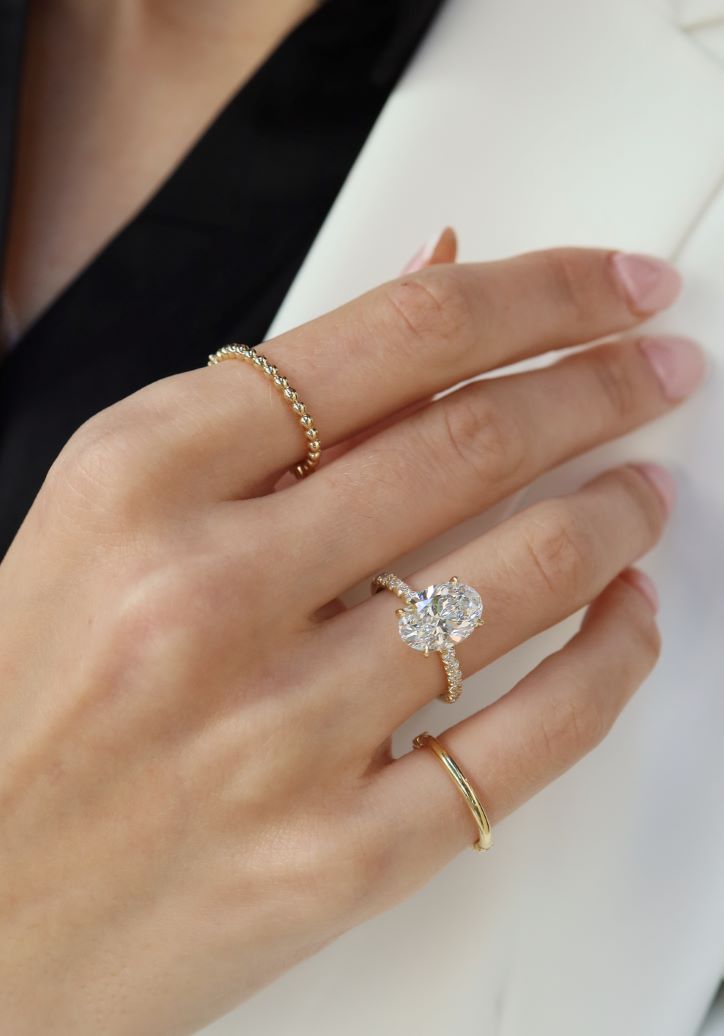
The oval's elongated silhouette is one of its greatest assets: it visually slims and lengthens the finger while delivering brilliant-cut sparkle. Because a 3 carat oval stone sits quite tall and typically extends well beyond the band's edges, a straight band will often gap. A contoured or curved wedding band is the natural solution here, hugging the belly of the oval and creating a seamless bridal stack. For those who prefer a more dramatic look, a pavé or shared-prong eternity band adds complementary sparkle without competing with the stone's own brilliance. If you want contrast, pairing with baguette-cut side stones introduces clean geometric lines that play beautifully against the oval's soft curves.
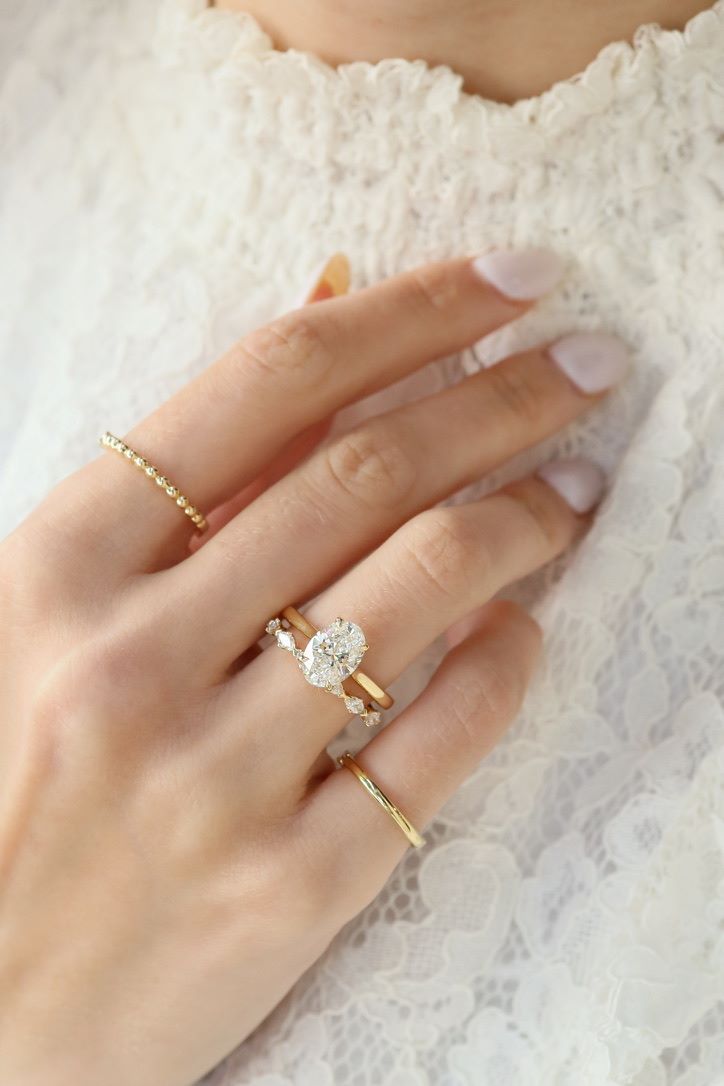
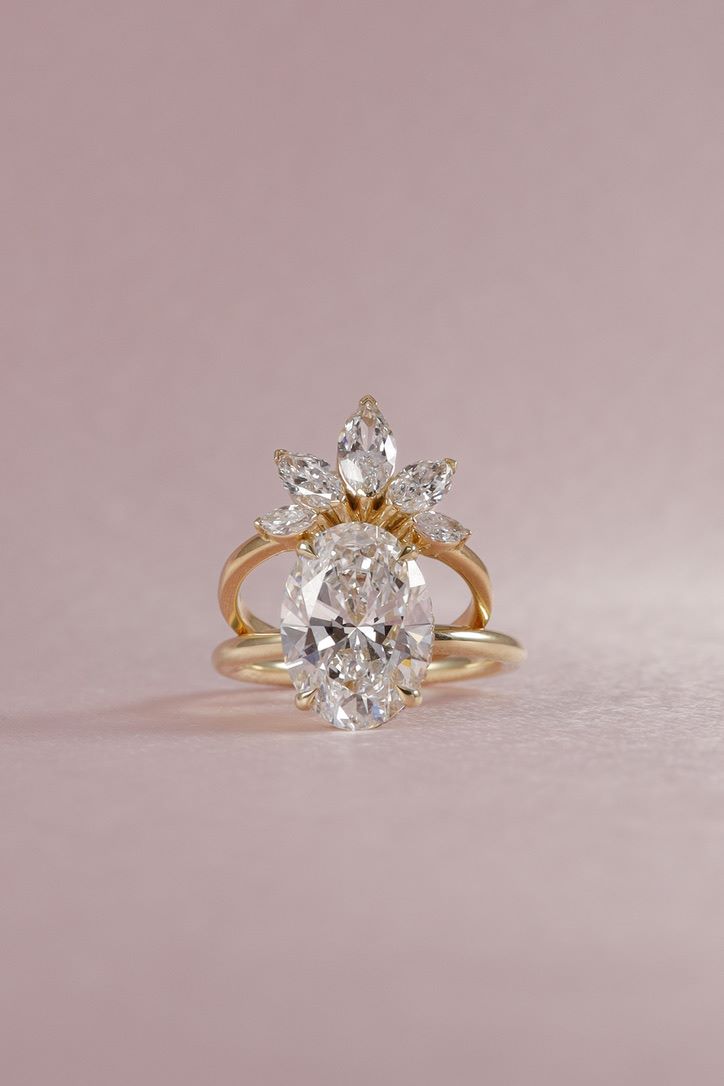
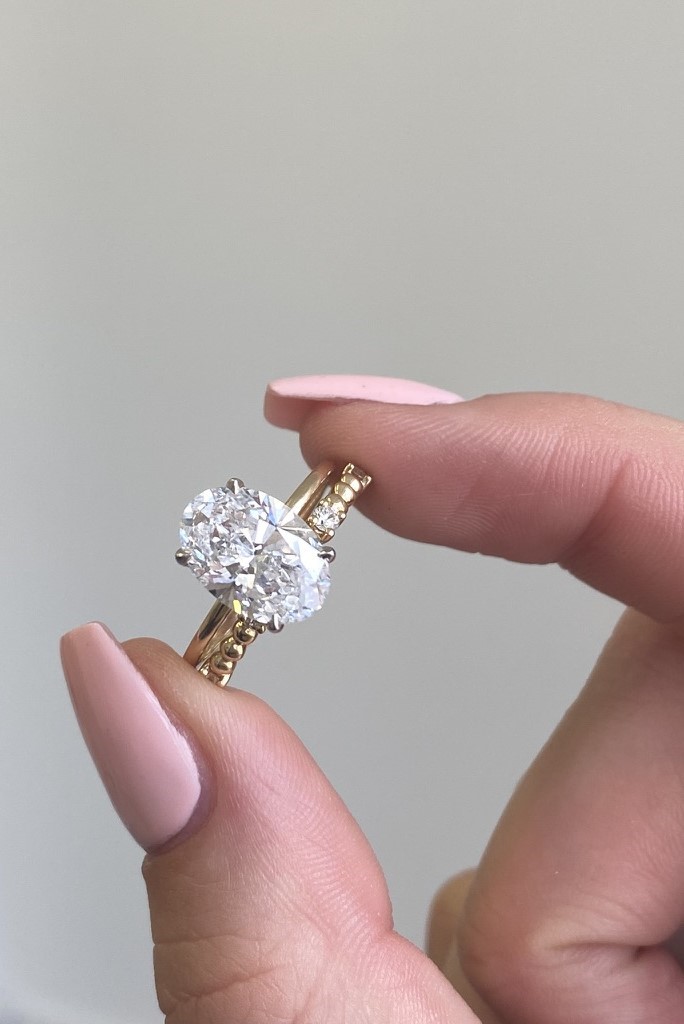
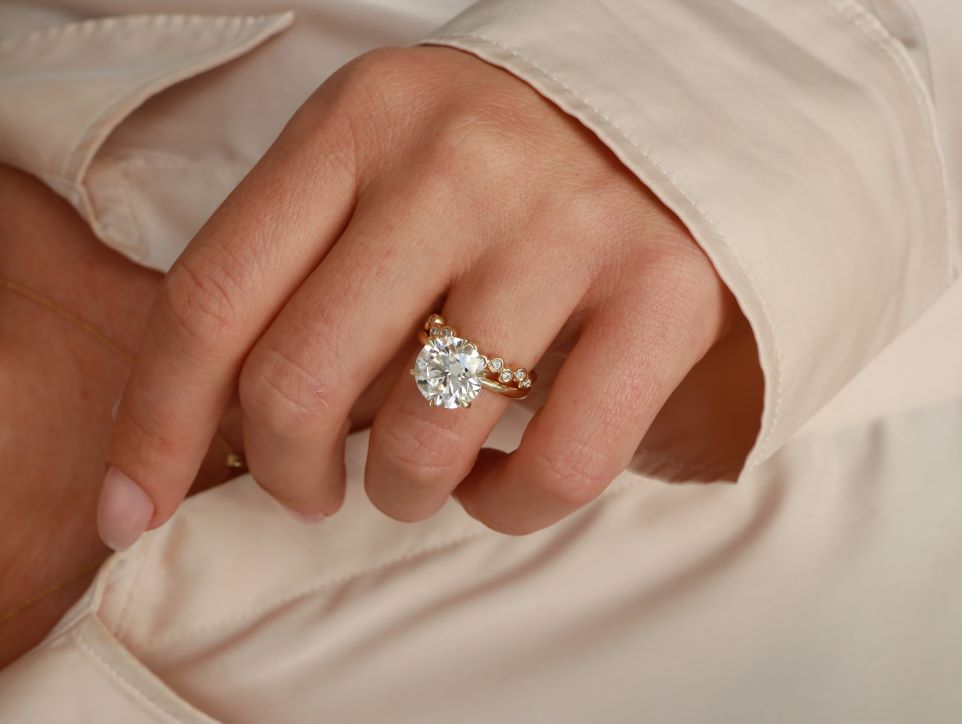
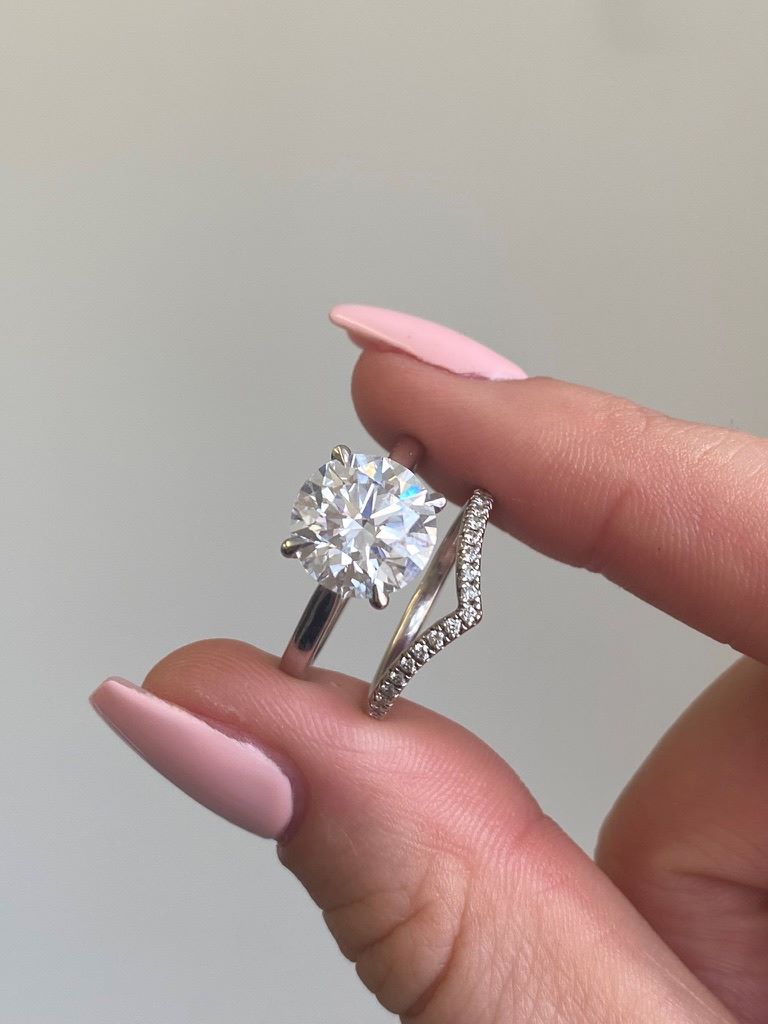
The round brilliant is the most versatile of all shapes, and at 3 carats it is nothing short of breathtaking. Its perfectly symmetrical silhouette means it pairs effortlessly with almost any band style, a rare luxury. A thin diamond pavé band is the most popular choice, keeping the focus firmly on the centre stone while adding a delicate halo of sparkle around the finger. For a cleaner, more timeless aesthetic, a plain polished band in a matching metal lets the round diamond speak entirely for itself. Those who love stacking can layer a slim eternity band on either side for an editorial bridal set that still lets the solitaire dominate.
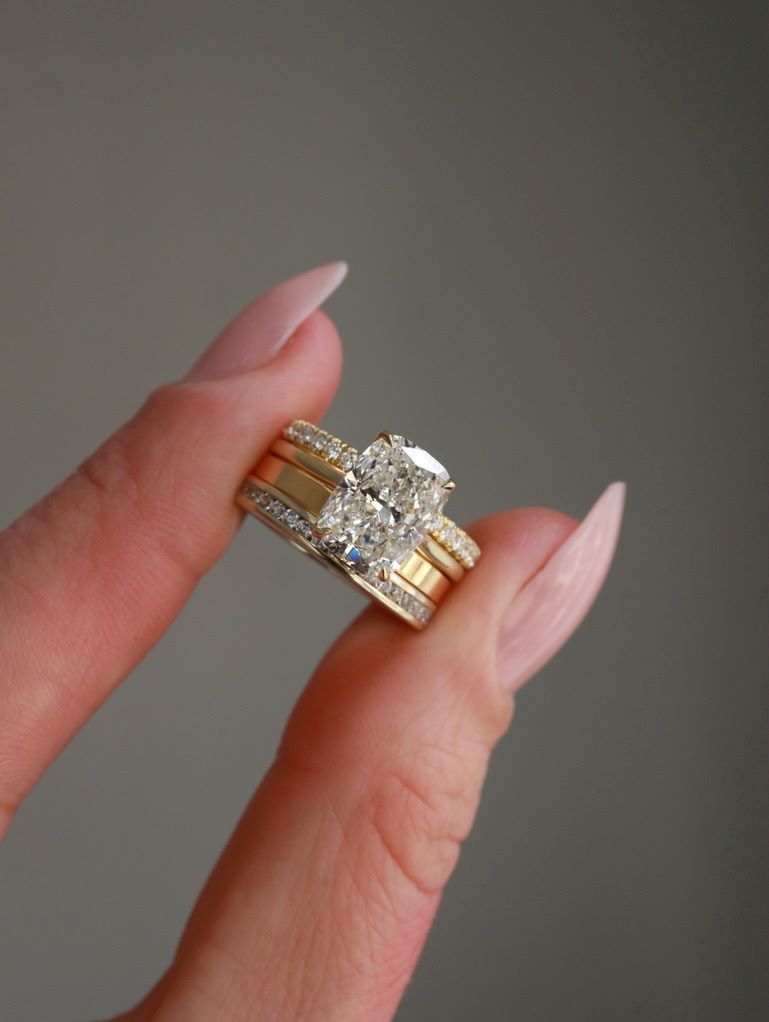
The elongated cushion sits in a beautiful middle ground: it has the soft, pillow-like charm of a classic cushion, but carries the finger-flattering length of an oval or radiant. At 3 carats, the stone's considerable length means flush fit is again a key consideration. Gently contoured bands with rounded pavé work exceptionally well, following the cushion's softened corners without creating awkward gaps. For those drawn to a more structured look, an emerald-cut eternity band provides a striking contrast: the step-cut linear faceting of the band playing against the cushion's dispersed, fiery brilliance. The juxtaposition is intentional and stunning.
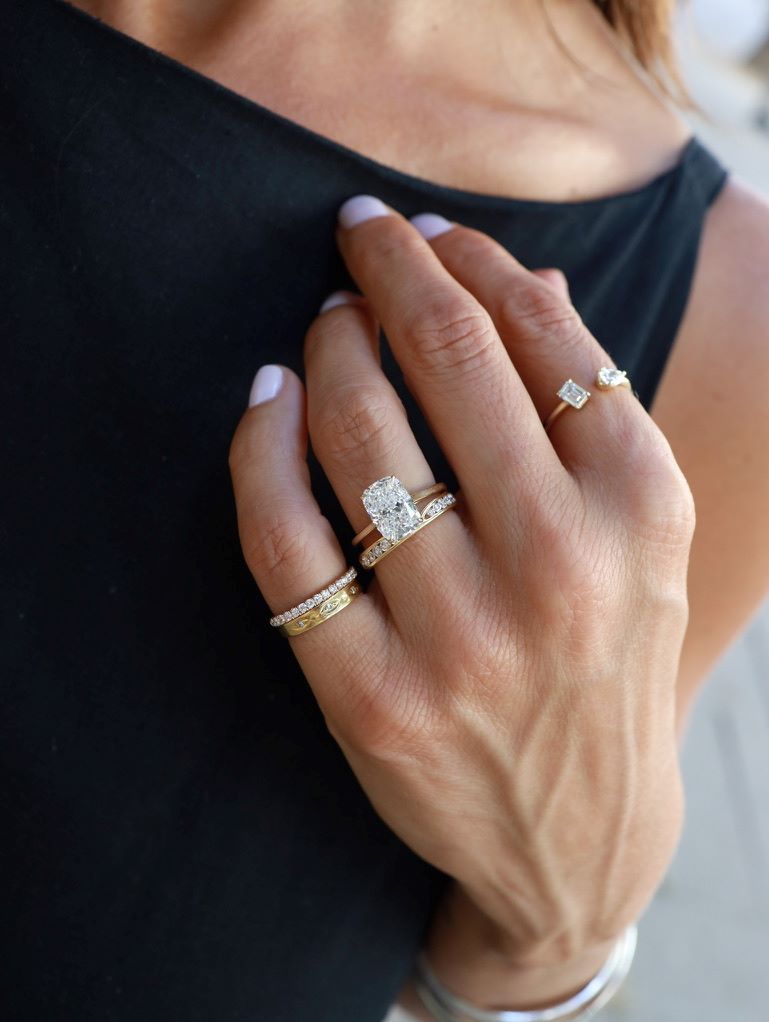
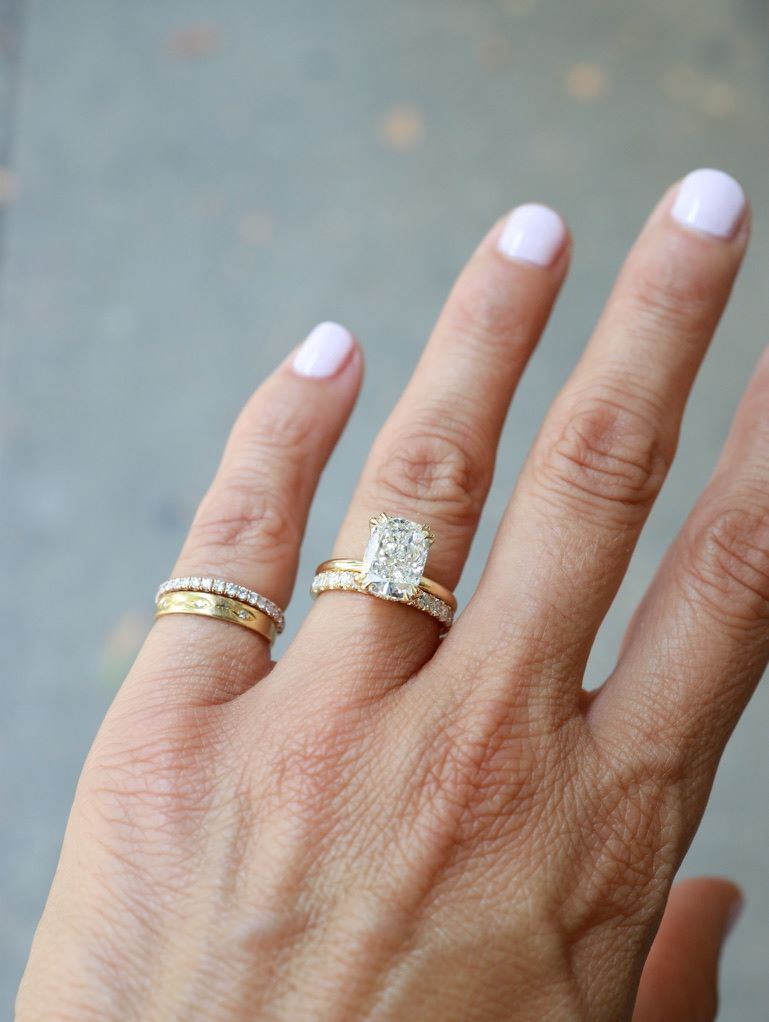
Radiant cut diamonds are known for their exceptional brilliance combined with a bold, architectural shape. The cropped corners eliminate the fragility of sharp points, making them supremely wearable, and at 3 carats, the radiant delivers a powerful, confident presence. Band pairing should honour that energy. Channel-set bands with princess or baguette stones echo the radiant's geometric precision beautifully, creating a cohesive linear aesthetic. A thin pavé band is equally flattering for those who prefer the band to fade into the background. Vintage-inspired bands with milgrain detailing are a wonderful choice for those whose radiant ring leans towards a more Art Deco sensibility.
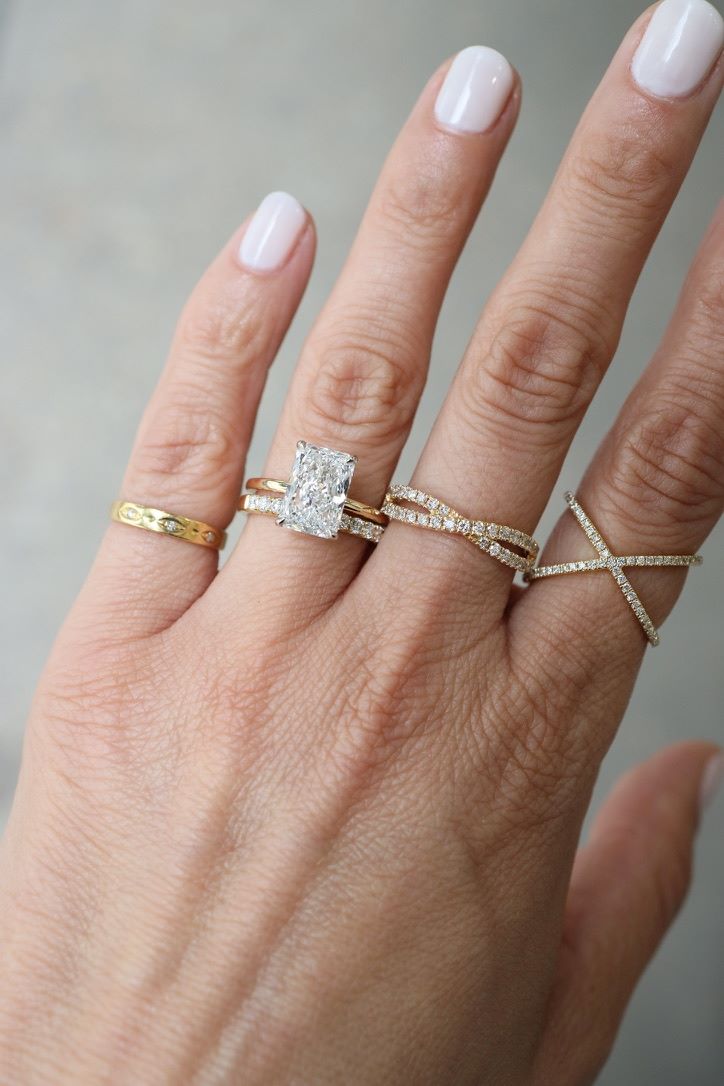
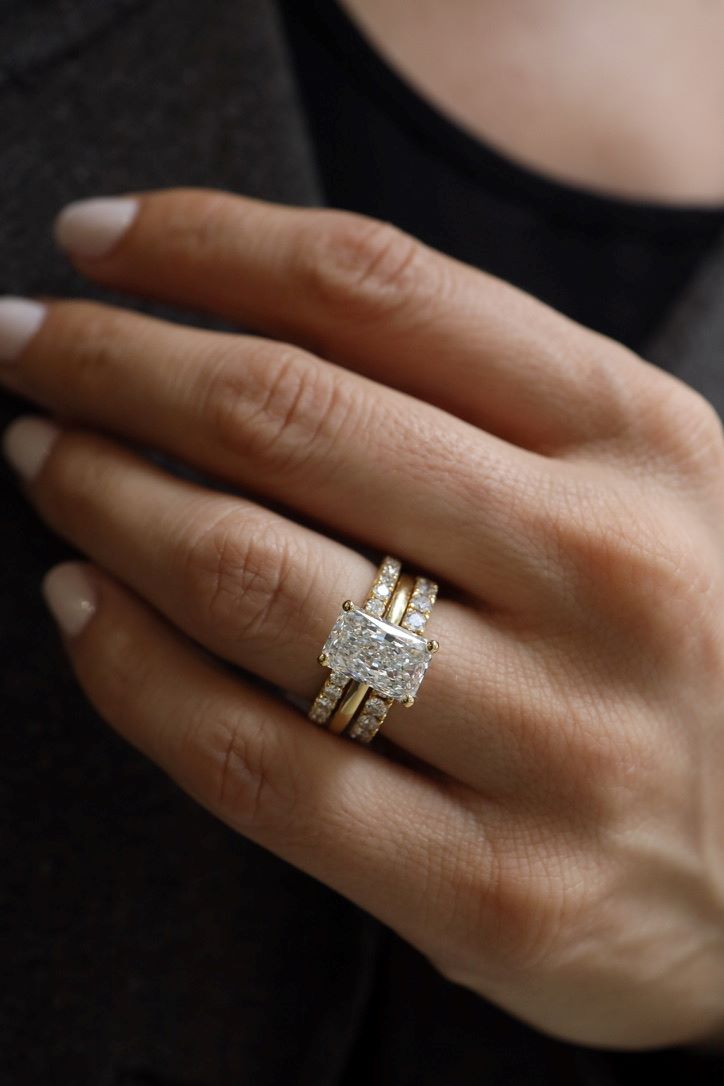
The emerald cut and its modified variations is the definition of understated drama. Its large, open table and step-cut facets produce a hall-of-mirrors effect that no other shape replicates. At 3 carats, a modified emerald has exceptional presence without relying on brilliance to command attention. For band pairing, clean lines are everything. A baguette eternity band is the purest expression of this philosophy: the step-cut facets in both ring and band create a fluid architectural dialogue. A flat, polished metal band in platinum or white gold is equally powerful in its restraint. For a touch of contrast, a very fine round brilliant pavé band introduces warmth and sparkle without disrupting the emerald's cool geometric elegance.
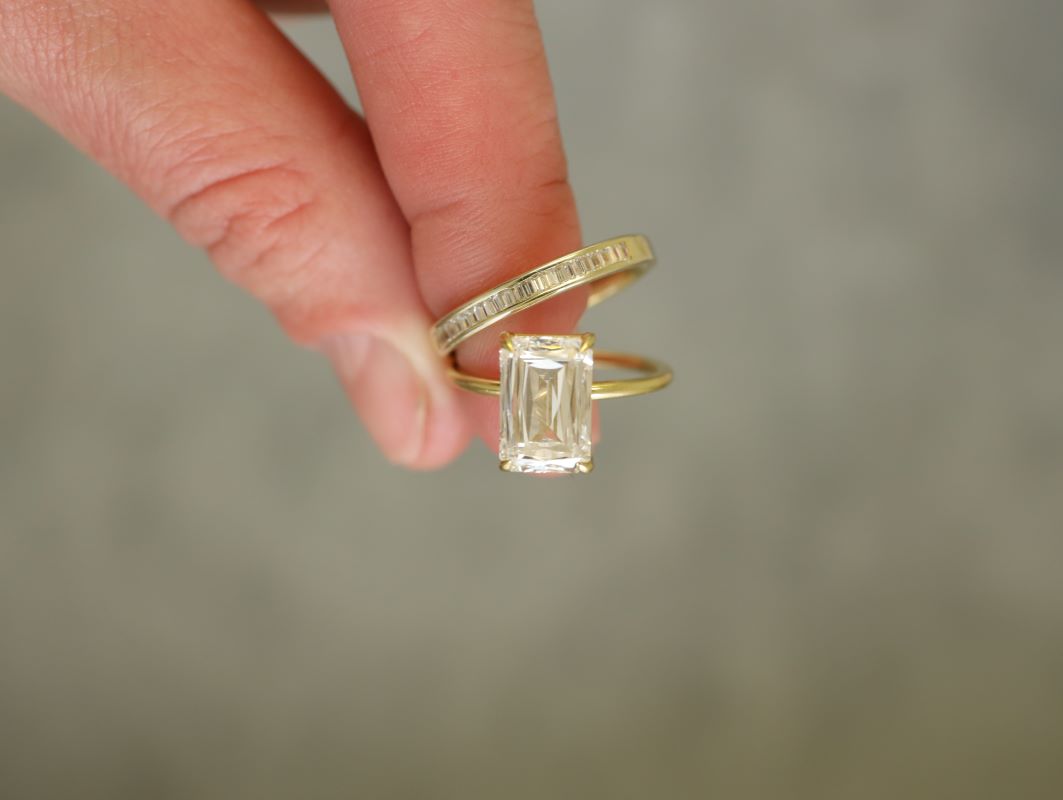
Match your metal. Mixing metals can work beautifully as a deliberate choice, but always ensure your band and engagement ring share the same quality and finish. Platinum against white gold will wear differently over time.
Mind the height. High-set stones, especially ovals, radiants, and emeralds, often need a contoured or notched band so the two rings sit flush without a distracting gap.
Keep band width proportional. For a 3 carat stone, a band that is too wide will compete. Between 1.5mm and 2.5mm is the sweet spot for most shapes, unless you are deliberately stacking.
Try before you decide. What looks perfect in a photograph can feel entirely different on the hand. Proportions, finger length, and skin tone all shift the visual balance significantly.
Pairing a wedding band with a 3 carat engagement ring is ultimately about balance. A stone of this size and investment deserves a companion that either amplifies its magnificence or gracefully steps aside: there is no middle ground. Whether you lean towards a sleek, barely-there band that lets your diamond take full centre stage, or a sparkling eternity that turns your bridal set into a true statement, the pairing should feel intentional and deeply personal.
There is no single correct answer, but understanding how your diamond's shape, setting height, and overall aesthetic should guide your band choice will make the decision far clearer, and far more exciting.
You are more than welcome to visit our Hatton Garden showroom for expert, unhurried guidance or book a virtual consultation from the comfort of home and let our specialists walk you through your options.